
Bathing a newborn: Keeping the Routine Simple and Safe
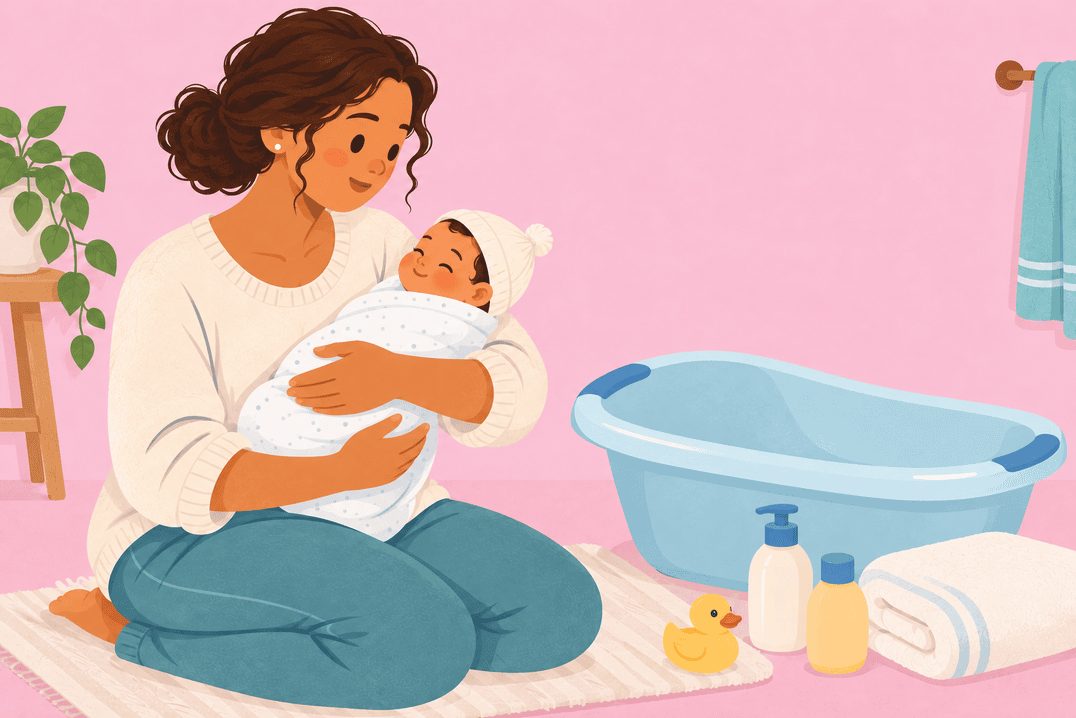
A newborn does not need a full bath every day. Washing the face, neck, hands and diaper area can be enough between baths. Choose a time when you can give your baby your full attention, rather than making bathing another task that must happen on schedule.
Prepare before undressing your baby
Have the bath or clean bowl, towels, cotton wool, a fresh diaper and clothes within reach. Choose a warm room and a stable place to work. If your recovery makes bending or lifting uncomfortable, ask another adult to help with the setup and transfer.
Fill the bath before putting your baby in. Add cold water first, then hot water, and mix thoroughly so there are no hot patches. Check with your wrist or elbow: the water should feel comfortably warm, not hot. Move hot water containers out of the way.
Keep a secure hold throughout
Support the head and shoulders as you lower your baby gently into the water. Keep the head above the surface and use your free hand to wash. Ask your midwife to demonstrate if the hold feels awkward; the newborn holding guide can help you prepare questions.
An adult must stay with the baby throughout. A bath seat, shallow water or an older sibling cannot make an unattended bath safe. If you need to leave, lift your baby out and take them with you. A ringing phone or doorbell can wait.
Use a gentle washing routine
For an uncomplicated newborn, plain water is a good starting point during the first month. You do not need bubble bath, perfume or a collection of cleansing products. Follow individual advice if your baby has a skin condition or was born early.
Clean the face gently and use separate clean cotton wool for each eye when washing around them. Clean around the outer ears without putting cotton buds inside. Wash away any diaper soiling. The cord care guide explains how to clean a dirty stump and dry it afterwards.
Dry, dress and stop if it is not working
Lift your baby carefully onto a towel and pat the skin dry, including the folds. Dress them once dry and empty the bath immediately. You can leave a full bath for another day if your baby is hungry, tired or distressed.
Ordinary newborn peeling does not need scrubbing. If skin becomes sore, blistered or weepy, ask for advice rather than adding more products. Bath time is a chance to clean and connect with your baby, not a test of how long they can stay in the water.
References

Lifeing Editorial
Stories for a little more understanding, a little more reassurance, and the everyday moments in between.
Related posts


Big Emotions After Nursery: A Gentler Transition Home