
Umbilical cord care: Watching Healing and Knowing When to Ask for Help
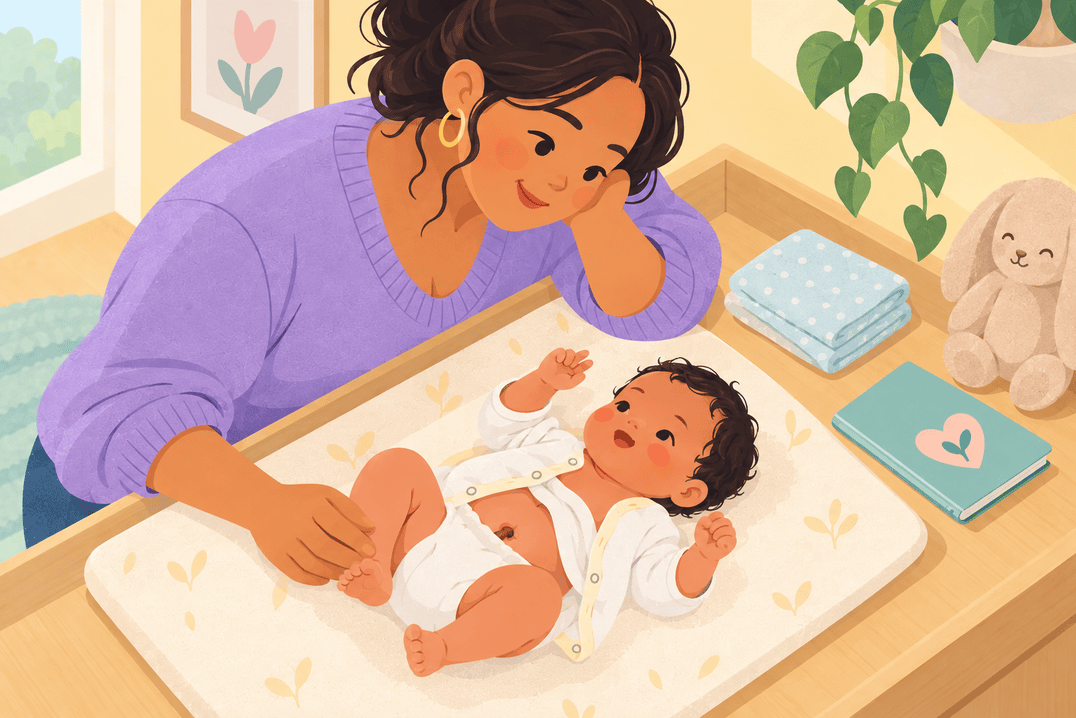
The umbilical stump gradually dries and separates after birth. Everyday care is usually simple: keep it clean, keep it dry and let it come away naturally. Ask your maternity team to show you the area before going home, especially if the clamp makes you nervous about handling it.
Keep care gentle
Wash your hands before touching the stump. Fold the top of the diaper below it so the area is not repeatedly soaked or rubbed. If urine or stool gets on it, clean gently with water and fresh cotton wool, then pat it dry. The newborn bathing guide covers the rest of the washing routine.
Do not pull the stump, even when it seems attached by only a small piece. Avoid putting alcohol, powders, oils or creams on it unless your baby’s own care team has specifically prescribed a treatment. Instructions can differ for a baby with particular clinical needs, so check rather than combining several home remedies.
Watch the skin around it
The stump becomes drier and darker before it falls away. Timing varies, so compare it with the plan your team gave you rather than another baby’s photograph. If it has not separated by around three weeks, arrange a medical review.
A small spot of blood can occur around separation, but active or continuing bleeding needs immediate medical advice. Tell a professional about any discharge you are unsure of. Increasing redness, swelling, pain or a bad smell should not be dismissed as part of drying out.
Get possible infection checked promptly
Seek urgent assessment if the surrounding skin looks inflamed, your baby cries when the area is touched or there is foul smelling yellow discharge. Redness can be less obvious on darker skin, so also notice swelling, tenderness and other changes.
If your baby is difficult to wake, breathing abnormally or seriously unwell, seek emergency help. Do not wait to see whether cleaning the stump improves those symptoms. Keep the discharge paperwork from bringing your baby home handy so you know which service to call.
Ask about tissue that stays moist
Sometimes a small moist lump remains after the stump separates. A clinician can check whether it is an umbilical granuloma or something else and explain whether treatment is needed. Do not attempt to cauterize it or apply a home treatment before it has been assessed.
At a review, describe when the stump separated, what fluid or blood you noticed and whether feeding or behaviour changed. Clear observations help the team decide what examination and follow up are needed.
References
- American Academy of Pediatrics: Umbilical cord care (opens in a new tab)
- University Hospitals Sussex: Newborn care (opens in a new tab)
- NHS: Washing and bathing your baby (opens in a new tab)
- Hertfordshire and West Essex Healthier Together: Umbilical cord care (opens in a new tab)
- NHS: Urgent medical help for babies and children (opens in a new tab)

Lifeing Editorial
Stories for a little more understanding, a little more reassurance, and the everyday moments in between.
Related posts
Unplanned cesarean: Understanding Why Birth Plans Can Change