
Newborn skin peeling: When Everyday Changes Need Advice
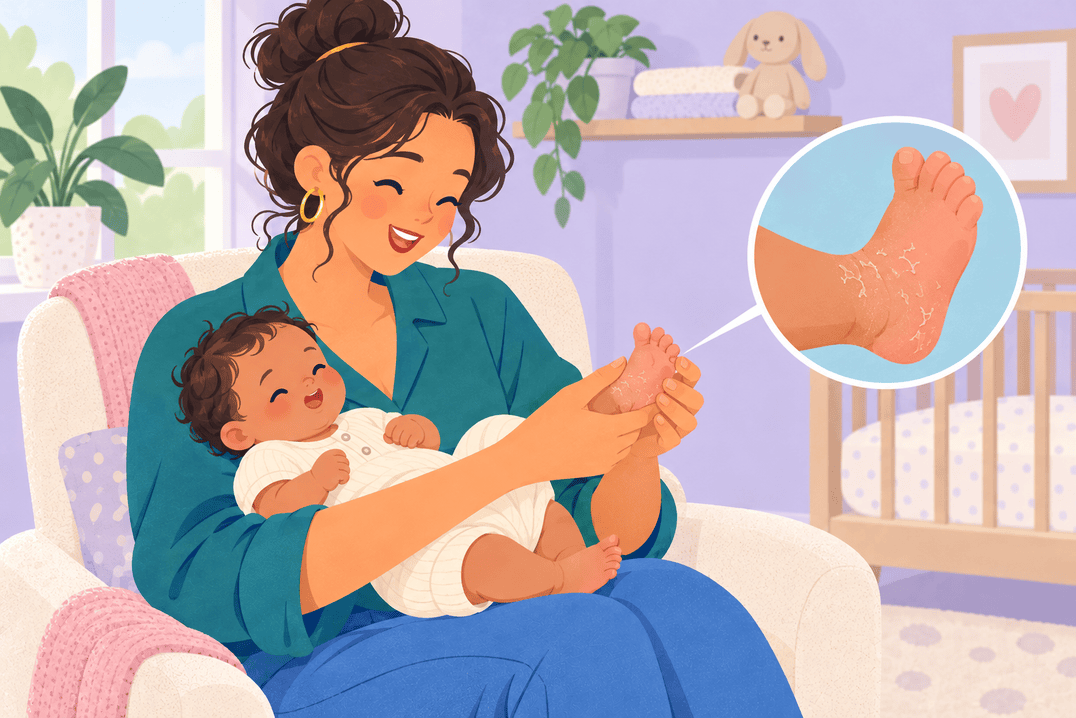
Fine flakes of skin can appear during the first days or weeks after birth. The outer layer is adjusting to life outside the womb, and ordinary superficial peeling may settle without treatment. It is still important to notice whether your baby is comfortable and whether the skin underneath looks healthy.
Look at the whole picture
A few dry flakes on an otherwise well baby are different from skin that is painful, swollen, blistered or weeping. Peeling alone cannot identify a skin condition. If you are unsure, show your midwife or health visitor rather than choosing a cream from a photograph online.
Describe where it started, whether it is spreading and any changes in feeding or behaviour. Mention anything recently applied to the skin, including products described as natural. A short note about changes is more useful than repeatedly checking every patch.
Keep washing simple
Use plain water for routine washing during the first month unless your baby’s clinician recommends something different. Gently pat the skin dry instead of rubbing or pulling off flakes. Vernix, the white coating sometimes present at birth, can be left to absorb naturally.
A full bath every day is unnecessary. Our bathing guide explains a simpler routine. Clean the diaper area when needed and dry skin folds gently. For the belly button, follow the separate umbilical cord guidance rather than putting skincare products on the stump.
Ask before treating persistent dryness
If dryness is persistent, cracked, itchy or uncomfortable, ask a professional to assess it. They may recommend an emollient or investigate a condition such as eczema. Routine newborn peeling and eczema do not always need the same care.
Avoid trying several products at once, especially perfumed soaps, bubble baths or lotions. If a product has been prescribed, ask where to use it, how often and when to return if the skin does not improve. Do not stop an individual treatment plan simply because general newborn advice favours fewer products.
Know which changes need help
Seek medical advice promptly for broken, inflamed, blistered, crusted or weeping skin. Get urgent help if a rash accompanies poor feeding or a baby who seems unwell. Breathing difficulty, inability to wake or a rash that does not fade under pressure require emergency assessment.
There is no need to wait for peeling to become extensive before asking. Gentle care and a clear explanation of what has changed are enough to start the conversation.
References

Lifeing Editorial
Stories for a little more understanding, a little more reassurance, and the everyday moments in between.
Related posts

Newborn sneezing and hiccups: Common Behaviours and When to Seek Advice