
A Baby’s First Dental Visit: When to Book and What to Ask
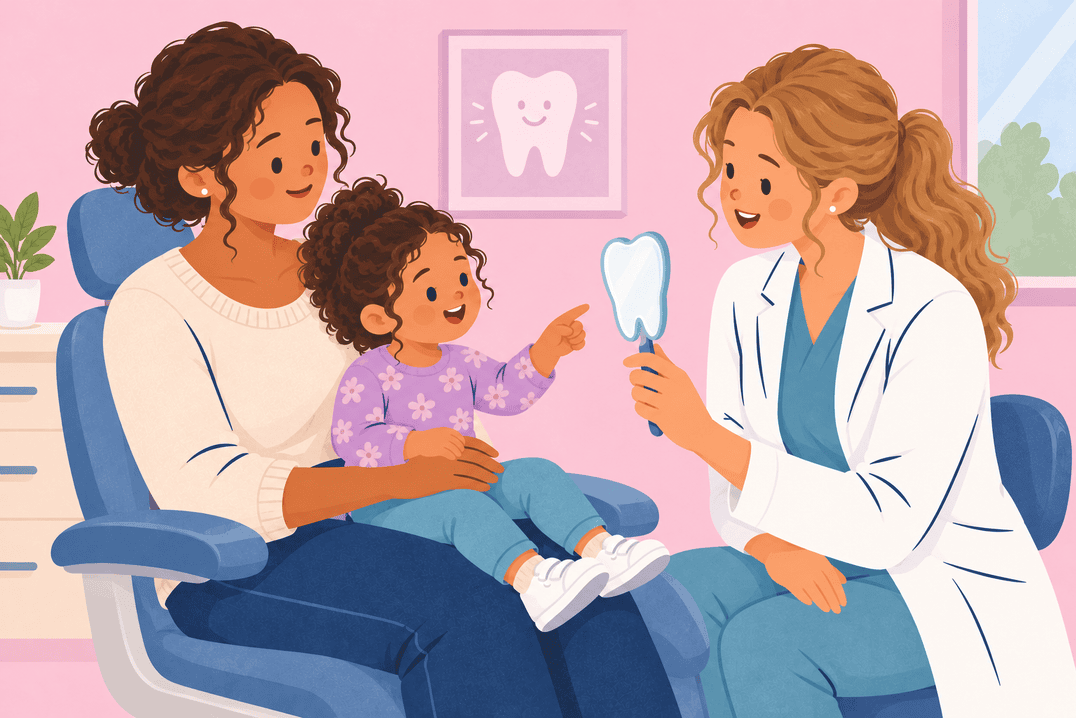
Book a baby’s first dental visit when the first tooth appears and by their first birthday. The appointment is an opportunity to build a prevention routine and ask questions before a painful problem develops. Your child does not need to speak, sit perfectly still or have all their teeth for the visit to be useful.
Contact a practice before there is urgency
Ask whether the practice sees infants and how to arrange the first appointment. If finding a dentist is difficult, contact your local dental service or child health team for help locating care. Keep the practice’s advice line or urgent contact details once you have them.
Do not postpone the first visit indefinitely because no teeth have appeared. Bring the timing question to the dentist. Our first tooth guide explains why variation is common and why a calendar alone cannot diagnose a problem.
Bring a brief picture of daily care
Prepare a list of medicines, allergies, health conditions and any feeding or developmental concerns. Tell the team about previous mouth injuries or a family history of dental problems if you know it. Mention what you have noticed rather than trying to name a diagnosis.
Bring your child’s toothbrush and toothpaste or photographs of their labels. Describe how often you brush, where your baby sits and which part is difficult. This makes it easier to get advice that fits the routine you already have.
Choose a time when your child is usually reasonably rested if appointments allow. A familiar comfort object and a little time to arrive without rushing can help. Ask the practice how the examination is usually carried out so you know what to expect.
Expect conversation as well as an examination
The dentist can look at the teeth, gums and developing mouth and discuss the risk of decay. They may ask about milk feeds, bottles, drinks, snacks, pacifiers and thumb sucking. These questions help shape prevention advice; they are not a score for how well you are parenting.
Ask for a brushing demonstration if you are uncertain about positioning or how firmly to brush. Our toothbrushing and fluoride guide can help you identify the points you want to practise. An examination and recommendations should fit your child’s age and needs rather than a fixed package of treatment for every baby.
Leave with answers you can use
Useful questions include which fluoride concentration to choose, how much toothpaste to use and whether your child needs any additional prevention. Ask about the drinks or feeding habits you find hardest to change and what a realistic first step would be.
If the dentist recommends fluoride varnish or another procedure, ask what it is for and how often it is needed. Find out when the next review should be and which symptoms mean contacting the practice sooner. Recall intervals depend on individual needs; do not assume every child needs exactly the same schedule.
Follow up when the plan is difficult
Tell the dental team if an instruction is not working at home. Persistent toothbrushing refusal, difficulty handling the brush or uncertainty about a product can often be addressed with a practical adjustment.
Pain, swelling, injury or difficulty feeding should not wait for the next routine appointment. Contact the dentist promptly and describe what has changed. Early care means having both a daily prevention plan and somewhere to ask for help when the situation is different.
References
- American Academy of Pediatric Dentistry: Parent questions (opens in a new tab)
- NHS: Taking care of children’s teeth (opens in a new tab)
- American Academy of Pediatrics: Facts about your baby’s first tooth (opens in a new tab)
- American Academy of Pediatrics: Preventing cavities in young children (opens in a new tab)
- American Academy of Pediatrics: Early oral health care (opens in a new tab)

Lifeing Editorial
Stories for a little more understanding, a little more reassurance, and the everyday moments in between.
Related posts

First fertility appointment: What to Bring and What to Ask