
Toddler Toothbrushing Refusal: Making the Routine More Manageable

A toddler who clamps their mouth shut is not necessarily rejecting clean teeth. The taste, foam, position or interruption of play may be the difficult part. Looking for that specific obstacle can be more useful than changing everything at once or turning brushing into a test of obedience.
First consider whether something hurts
If refusal starts suddenly, ask whether your child seems to have mouth pain, a sore area, an injury or difficulty eating. A dentist should assess persistent pain or swelling. Do not assume that every new struggle is behavioral or caused by teething.
Facial swelling, fever with a suspected dental infection, or a painful swollen gum needs urgent dental advice. Trouble breathing or swallowing, substantial mouth swelling or swelling affecting an eye needs emergency care. Changing the toothbrush is not enough for those symptoms.
Make the sequence familiar
Choose two regular brushing times, including bedtime, and use a simple sequence your child can recognize. You might show the brush, explain what comes next, clean, then move to the usual story or cuddle. A short song or a picture sequence can make the end easier to anticipate.
Offer a small choice that does not remove the cleaning: which suitable brush to use, which song to hear or whether to sit on your lap. Try one adjustment for several attempts so you can tell whether it helps. A very tired child may cope better if the evening routine begins earlier.
Change the sensation when that is the obstacle
A mild or unflavored fluoride toothpaste may help when strong mint is unpleasant. A low foaming version can be useful for children bothered by foam. Check that a different taste still comes with the fluoride concentration your dentist recommends.
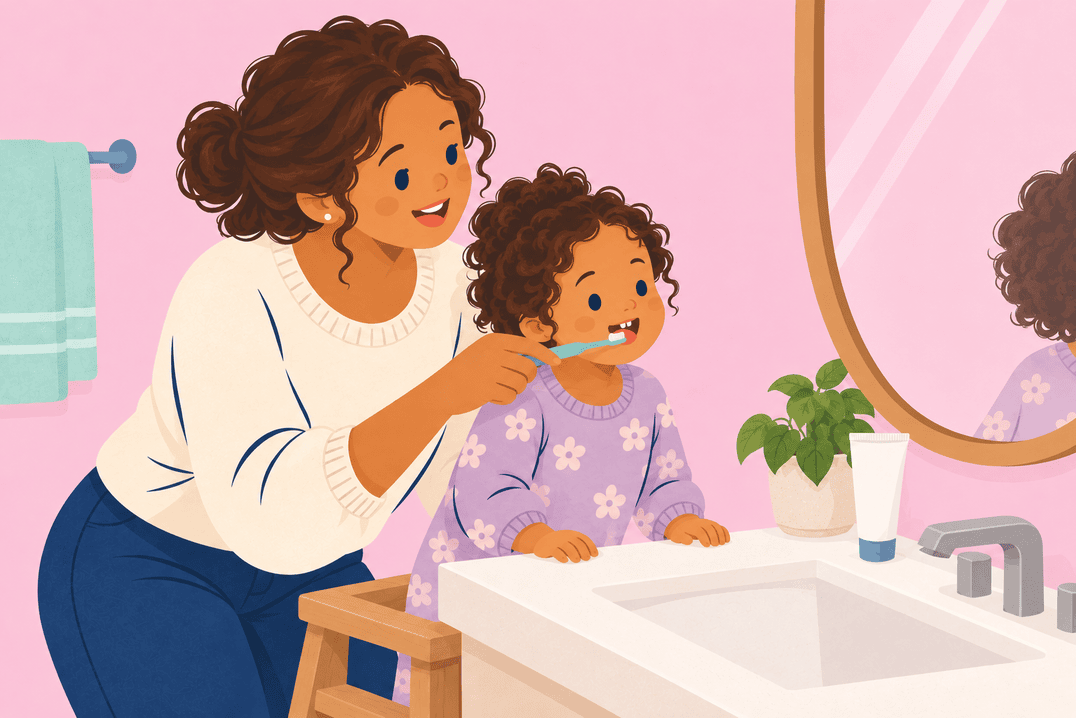
Use a small, soft brush and a comfortable supported position. If gagging is a problem, start with easier front surfaces, work gradually and take brief breaks. Ask the dental team to demonstrate an approach if this repeatedly prevents cleaning; do not push through severe distress or pry the mouth open with an object.
The baby toothbrushing guide explains toothpaste amounts and adult help. A sensory preference does not by itself identify a developmental condition, but an existing care team can help adapt the routine to a child’s needs.
Let participation support the adult’s job
Your toddler can hold another brush, look in a mirror or watch you brush your own teeth. Let them have a turn, then explain that you will finish the cleaning. Independence grows through practice, but young children still need an adult to reach the tooth surfaces effectively.
Notice cooperation in specific terms, such as opening briefly or letting you reach the back teeth. Avoid framing a difficult session as being naughty or failing. If one attempt becomes overwhelming, pause, help your child settle and return to it calmly rather than treating the confrontation as the goal.
Ask for practical help early
If brushing remains incomplete most days, book dental advice instead of waiting for a cavity. Explain which part is hardest and bring your usual brush and toothpaste. The team may suggest an adapted brush, positioning changes or additional support.
A dental visit can include demonstration and discussion, not only examination. Tell the dentist about feeding patterns too, including frequent sipping or bottles around sleep. Our bottle and decay guide helps you prepare those questions without abruptly changing needed feeds.
References
- NHS: Taking care of children’s teeth (opens in a new tab)
- NHS: Looking after your baby’s teeth (opens in a new tab)
- Bradford District Care NHS Foundation Trust: Toothbrushing advice (opens in a new tab)
- University Hospitals Sussex: Oral health care for children with health problems and behavioral challenges (opens in a new tab)
- NHS: Dental abscess (opens in a new tab)

Lifeing Editorial
Stories for a little more understanding, a little more reassurance, and the everyday moments in between.
Related posts

Toddler Transitions: Moving Between Activities With Less Conflict