
Bottles and Tooth Decay: Changing Habits While Protecting Nutrition

Tooth decay can begin in baby teeth. A bottle is relevant because frequent or prolonged contact with sugary liquids gives the teeth repeated exposure, particularly when a child goes to sleep with it. Prevention involves how drinks are offered as well as daily brushing.
This is a reason to review the routine, not to blame a parent or remove milk that a young child still needs.
Understand the exposure you are changing
Bacteria in dental plaque use sugars and produce acids that damage the tooth surface. Repeated exposures leave less opportunity for the mouth to recover between them. Bottles containing milk, formula or sweet drinks can keep liquid in contact with teeth when they are used for prolonged sipping.
The upper front teeth are often affected, although decay can involve other teeth too. Baby teeth still matter for comfort, eating and later dental development, even though they will eventually fall out. Waiting for them to be replaced is not treatment for a cavity.
Move the bottle away from falling asleep
Finish a bottle before settling into bed rather than leaving it in the mouth or sleep space. Where possible, make the evening sequence feed, brush, then another form of settling such as a cuddle or story. If a bottle has become the main sleep cue, changing that cue may need repeated, calm practice.
Never add sugar, honey or sweet flavoring to formula or a bottle. Do not dip a pacifier in something sweet. Juice and other sweet drinks are not suitable replacements for a bedtime milk bottle.
For a baby who still needs night feeds, discuss age, growth and feeding needs with the appropriate clinician and dentist. Dental prevention should be planned around adequate nutrition. Do not withhold needed milk or replace it with water to solve a dental concern, and never dilute formula beyond its preparation instructions.
Reduce constant sipping during the day
Notice whether the bottle accompanies your child throughout play rather than being used for a feed. Describe that pattern at the dental visit. A gradual plan can separate feeding, thirst and comfort instead of expecting one abrupt change to solve all three.
As drinking skills develop, moving from bottles to cups can support the transition. A cup is not automatically protective if it contains a sweet drink that is sipped continuously. The contents and frequency still matter.
Changing bottle habits does not require stopping direct breastfeeding. If night feeding or a medical feeding plan makes the routine complex, ask for advice that considers both oral health and nutrition rather than making an unsupported change alone.
Keep fluoride brushing in the plan
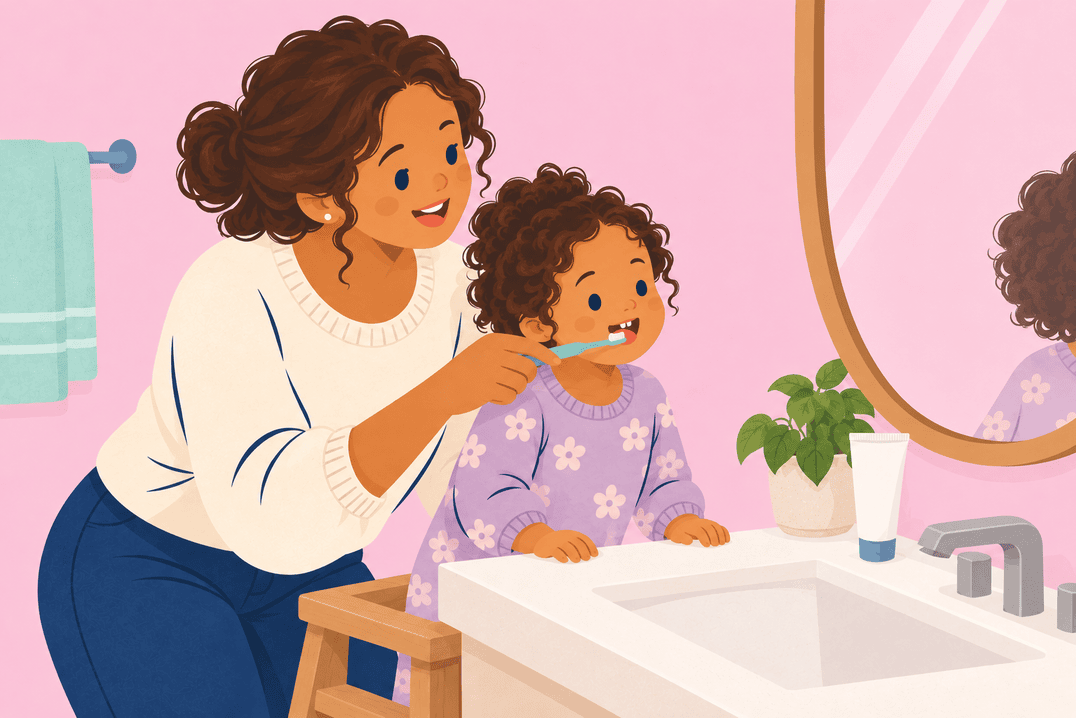
Brush twice each day from the first tooth, including before bed, with an age appropriate amount of fluoride toothpaste. The adult should do or help with the cleaning. The toothbrushing guide explains the amount and concentration questions to check.
Arrange early dental care and tell the dentist about any visible white, brown or dark area on a tooth. A color change is not something a photograph alone can diagnose. Early decay may not hurt, so comfort does not prove the teeth are healthy.
Get problems assessed instead of brushing harder
A dentist can decide whether a tooth needs preventive treatment or other care. A visible cavity is not repaired by scrubbing it or by changing bottles alone. Pain, swelling or difficulty eating needs prompt dental assessment.
Suspected infection with facial swelling or fever needs urgent dental advice. Difficulty breathing or swallowing, marked mouth swelling or eye involvement requires emergency care. A first dental visit establishes where to seek help and gives you a prevention plan suited to your child.
References
- American Dental Association: Tooth decay with baby bottles (opens in a new tab)
- American Academy of Pediatrics: Preventing tooth decay in babies (opens in a new tab)
- National Institute of Dental and Craniofacial Research: Tooth decay (opens in a new tab)
- NHS: Looking after your baby’s teeth (opens in a new tab)
- NHS: Taking care of children’s teeth (opens in a new tab)
- NHS: Dental abscess (opens in a new tab)

Lifeing Editorial
Stories for a little more understanding, a little more reassurance, and the everyday moments in between.
Related posts

Braxton Hicks contractions: Understanding Practice Tightenings