
Moving from bottles to cups: A Gradual Feeding Transition
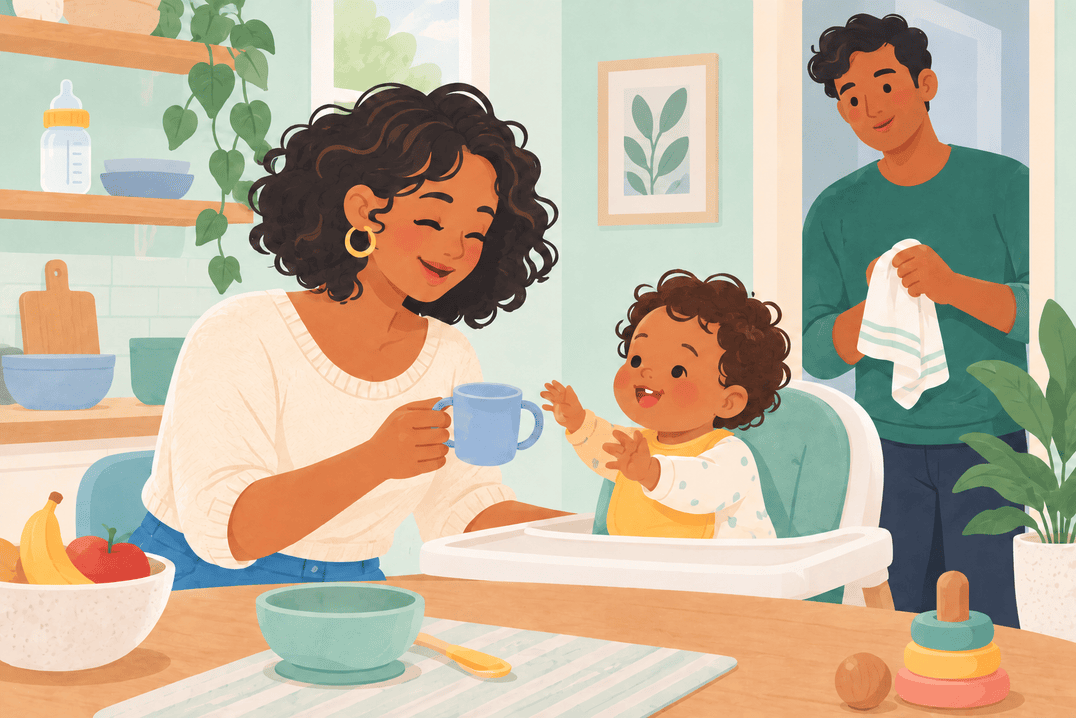
Learning to drink from a cup takes practice. At first, your baby may need you to hold it and may spill more than they swallow. Introducing the skill gradually lets cup drinking become familiar before you expect it to replace a bottle.
Begin with supported practice
You can start offering a cup around six months, alongside the introduction of solid foods. Sit your baby upright with support and stay with them. Start with a small amount of their usual milk or sips of water with meals, helping them control the cup rather than pouring liquid into their mouth.
An open cup or a cup with a freely flowing lid can help them learn to sip. A straw cup is another option. A training cup is a possible step, not something every child must use before an open cup. Our starting solids guide explains how these new skills fit around milk feeds.
Make early practice easy to repeat
Place a small cup on the table at a familiar meal, with only a little liquid inside. Help your baby hold it and take breaks between sips. You can model drinking from your own cup, then let them try again without expecting an independent drink straight away.
Early cup practice is a skill to build, not a reason to cut milk feeds. Our water guide explains suitable offers and why a cup of water cannot replace needed milk. If drinking repeatedly causes coughing or distress, ask for a feeding assessment before continuing to experiment with cup styles.
Keep nutrition appropriate for age
Moving to a cup does not mean replacing needed breast milk or infant formula with water. Before 12 months, breast milk or suitable infant formula remains the main milk drink. Ordinary cow’s milk is not a replacement as the main drink before the first birthday.
After 12 months, discuss suitable milk and food choices if your child has an allergy, restricted diet or growth concern. Many children can move to a varied diet and suitable drinks without toddler formula. Continuing direct breastfeeding is also compatible with learning to use a cup; stopping bottles does not require stopping breastfeeding.
Reduce bottles in manageable steps
Offer cup practice at meals and gradually replace a bottle your child finds easiest to change. Keep the experience calm and repeat it over time. Praise their attempts and expect spills instead of treating an unfinished cup as a failure.
The NHS advises discouraging bottles after the first birthday. The American Academy of Pediatrics describes completing the transition between 12 and 18 months. These are guides for developing the skill, not reasons to abruptly remove a child’s reliable nutrition when they cannot yet manage a cup. Ask for support if the transition is difficult.
Replace the comfort routine too
A bottle can be part of settling, not just drinking. Offer a cuddle, song or story as that routine changes. Avoid putting your child to bed with a bottle or allowing milk to be sipped from it throughout the day, because prolonged contact with teeth can contribute to decay.
If you are also changing breastfeeding, our gradual stopping guide considers nutrition and comfort together. Our milk intake guide helps if you are uncertain whether your younger baby is getting enough while practising.
Repeated coughing with drinks, distress, reduced intake or concerns about development needs assessment. A child with a medical feeding plan may need different equipment or timing, so arrange a transition that fits their abilities and health.
References
- NHS: Drinks and cups for babies and young children (opens in a new tab)
- CDC: Fingers, spoons, forks and cups (opens in a new tab)
- American Academy of Pediatrics: Moving from bottles to cups (opens in a new tab)
- CDC: Feeding from a bottle (opens in a new tab)
- ASHA: Feeding and swallowing disorders in children (opens in a new tab)

Lifeing Editorial
Stories for a little more understanding, a little more reassurance, and the everyday moments in between.
Related posts
Moving from cot to bed: Planning for Readiness and Safety