
Moving from cot to bed: Planning for Readiness and Safety
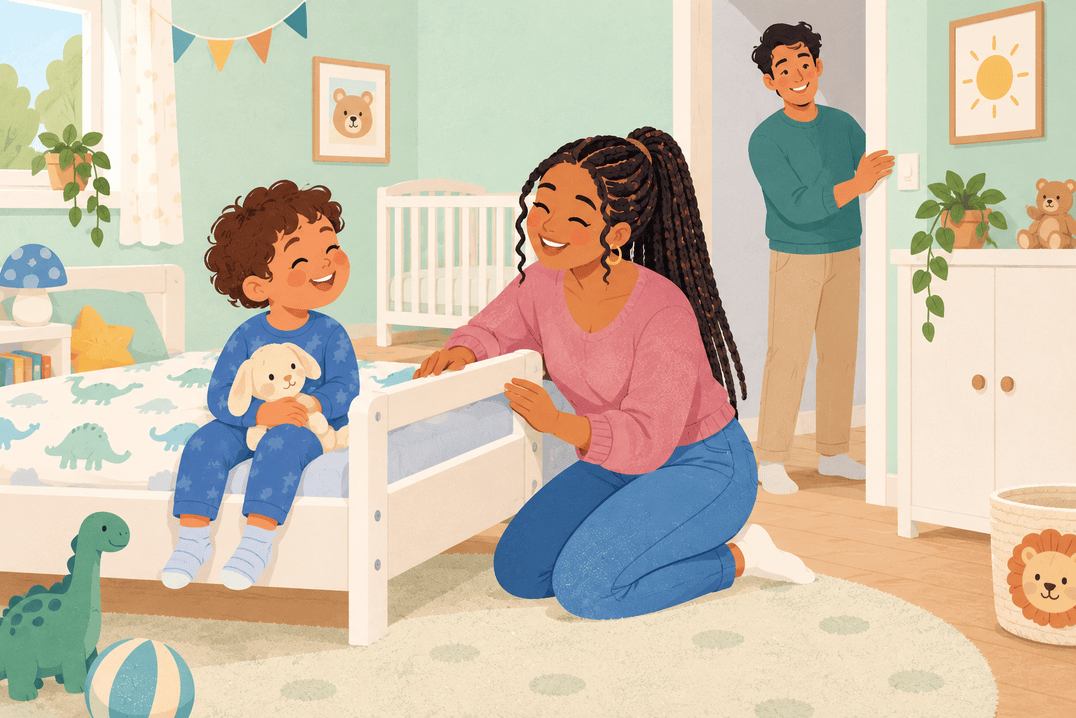
Moving from a cot to a bed changes more than where your toddler sleeps. They may now be able to reach the whole room while adults are asleep. Readiness therefore includes the cot’s limits, your child’s mobility and a room that is prepared for independent movement.
Check the cot before choosing a date
Follow the manufacturer’s height, weight and developmental limits. If your child can climb out, the cot no longer provides the containment you were relying on. Do not wait for a particular birthday or a fall before addressing that risk.
Do not add a tent, restraint or extra barrier to prevent climbing. Remove objects that could act as steps, but do not assume that doing so makes a cot suitable once your child has outgrown its instructions. Seek product or professional advice if you are unsure about the next safe sleep arrangement.
Choose equipment that fits the child
Use a bed and mattress suitable for your child’s age and development, assembled exactly as instructed. Check the condition of parts and avoid gaps where a child could become trapped. A cot that converts to a bed should be changed only using the manufacturer’s intended configuration.
Portable bed rails are not a universal solution for babies or young toddlers. US safety guidance describes them for children who can get in and out of bed without help, typically ages two to five. Check the specific product’s age limits, mattress compatibility and fitting instructions; do not improvise a rail with pillows or furniture.
Prepare the room as a reachable space
Secure furniture that could tip, keep cords out of reach and move climbable furniture away from windows. Put medicines, small objects and other hazards somewhere inaccessible. Check the route from the bedroom, including stairs and doors to unsafe areas.
Use suitable safety gates according to their instructions and your child’s abilities. Keep adult access and a fire escape plan in mind. A gate or closed door does not remove the need to make the room itself safe.
Introduce the change in daylight
Show your toddler the bed and explain the evening in simple terms. You might let them choose a book for the first night while keeping the familiar bedtime routine.
Practise getting in and out safely while you are present. At night, calmly guide them back if they get up, while still checking pain, fear or another care need. Our bedtime separation guide can help if the change brings extra anxiety.
Review the setup after the first nights
Notice what your child can now reach and adjust hazards promptly. Settling may take practice, but unsafe climbing or gaps require an immediate change. Ask your health visitor for help when the transition is difficult or your child’s additional needs make standard arrangements unsuitable.
References
- American Academy of Pediatrics: Moving from a crib to a bed (opens in a new tab)
- Health Canada: Cribs, cradles and bassinets (opens in a new tab)
- US Consumer Product Safety Commission: Children’s portable bed rails (opens in a new tab)
- NHS: Baby and toddler safety (opens in a new tab)
- County Durham and Darlington NHS Foundation Trust: Childhood injury prevention (opens in a new tab)

Lifeing Editorial
Stories for a little more understanding, a little more reassurance, and the everyday moments in between.
Related posts


Losing the mucus plug: What It Does and Does Not Predict