
Separation anxiety at bedtime: Offering Reassurance With Consistency
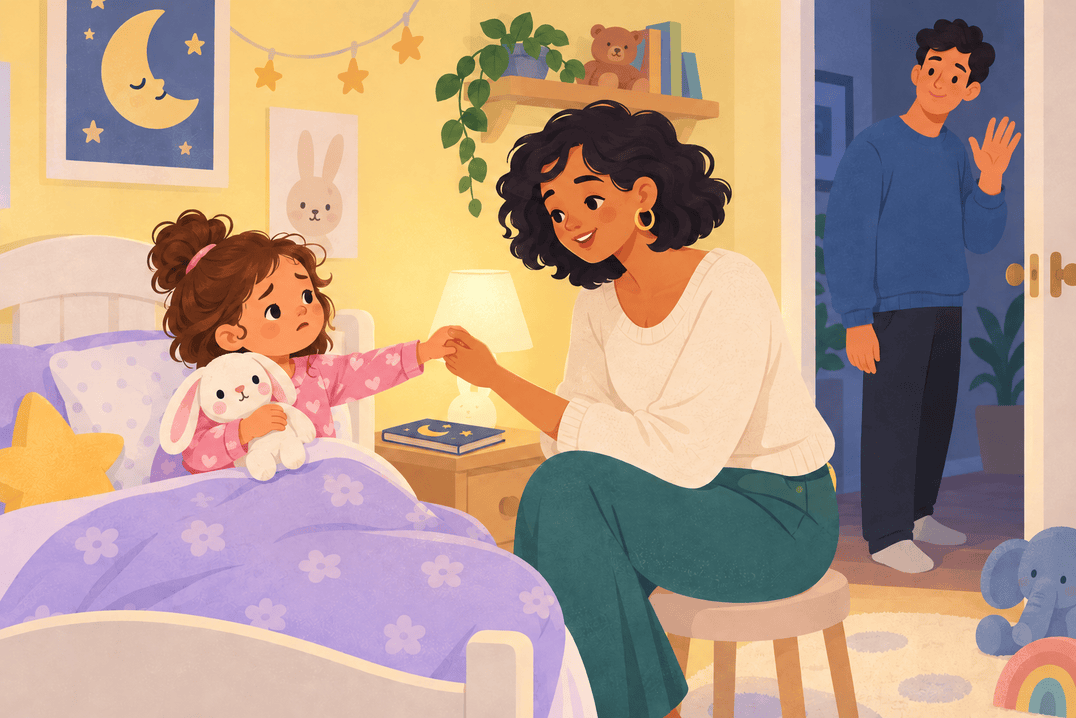
Your toddler may be comfortable playing during the day and still become distressed when you leave at bedtime. Separation anxiety can make ordinary departures feel difficult. It is common in early childhood, but the amount of reassurance a child needs varies.
Name what is happening without blame
A child who reaches for you or cries as you move away is communicating distress. This does not mean you have caused the problem by being affectionate. Avoid treating the moment as a contest that one of you must win.
Use a short, truthful explanation: “I am going to the next room. You are safe, and I will come back to check on you.” Only promise a check you can follow through on. Familiar words are easier to repeat than a new explanation at every request.
Make the evening predictable
Keep a manageable sequence of care and connection. A story, cuddle and goodnight phrase can help your child understand what comes next. Our toddler bedtime guide covers clear limits around the routine while still responding to needs.
If another caregiver is taking over, allow time for them to connect before the final goodbye. Share the familiar sequence, but let them comfort in their own way. A sudden handover to someone unfamiliar at the most tired part of the day can be harder to manage.
Practise manageable separations while awake
Short periods with a familiar caregiver can offer experience of leaving and returning. Explain the departure rather than slipping away without saying anything. Build gradually around your child’s response and your family’s needs.
If nursery is part of the change, speak with the key person about settling and rest. The nursery nap guide offers a practical way to share observations between settings.
Keep comfort compatible with safety
For a toddler, a suitable comfort object may help, provided it has no loose parts or cords and fits the sleep setting. Do not place a scarf or an item of adult clothing around a child’s neck or near their face to provide your scent.
For a baby under one, keep soft objects and loose bedding out of the cot. A reassuring routine does not change safer sleep guidance. If your child wakes after a scary dream, respond to that fear rather than assuming it is simply another request for attention.
Seek support when distress is persistent
Speak with your health visitor if your child remains very upset after separations, the pattern continues for weeks or anxiety is interfering with ordinary activities. Mention major changes, illness or a frightening experience.
You can ask for help before the situation feels extreme. The aim is a secure, workable routine, not a promise that your child will stop needing reassurance at a particular age.
References
- NHS: Separation anxiety (opens in a new tab)
- American Academy of Pediatrics: Separation anxiety and sleeping (opens in a new tab)
- NHS: Anxiety in children (opens in a new tab)
- NHS: Sleep and young children (opens in a new tab)
- NHS Best Start in Life: Safer sleep (opens in a new tab)
- American Academy of Pediatrics: Toddler bedtime difficulties (opens in a new tab)

Lifeing Editorial
Stories for a little more understanding, a little more reassurance, and the everyday moments in between.
Related posts
Seven month old baby: Floor Time, Feeding, and New Interests