
Nightmares in toddlers: Comforting Your Child After a Scary Dream

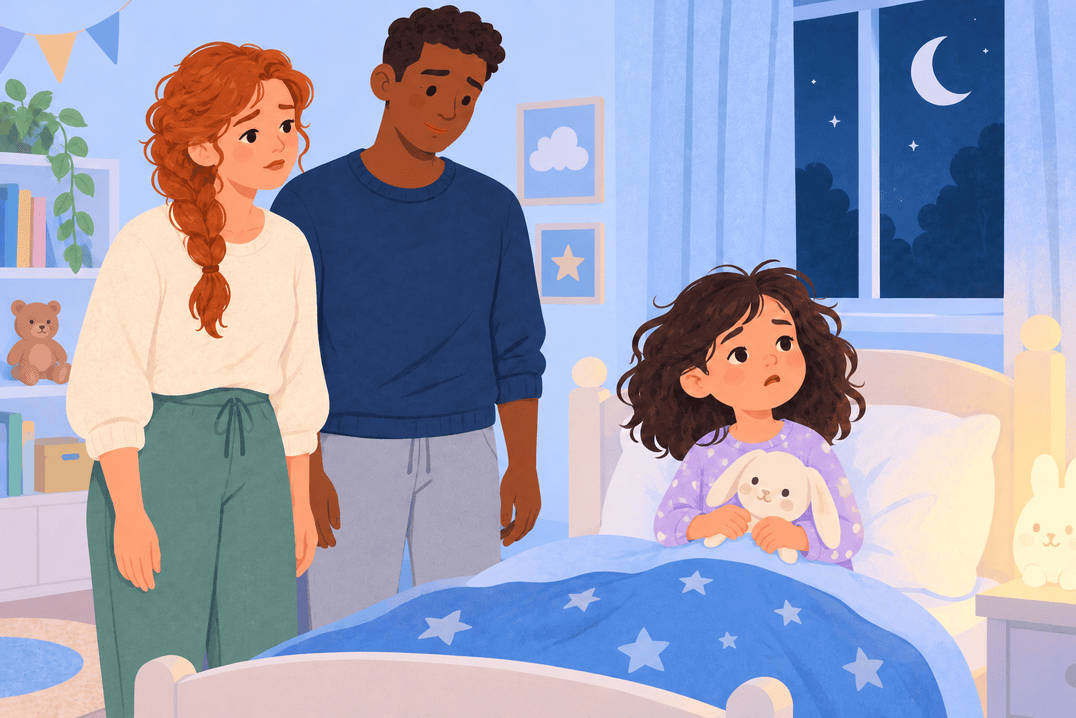
A toddler who wakes frightened after a dream may need you to help them feel safe again. They may describe what happened, or simply cry and reach for you. You do not need a detailed account before offering comfort.
Begin with reassurance
Go to your child, check they are safe and speak calmly. You could say, “That felt scary. You are here with me now.” If they want a cuddle, offer one. A dim light may help them recognise their room without turning the night into a busy activity.
If your child can explain the dream, listen without insisting on every detail. Remind them gently that a dream is not happening now. Avoid laughing at the fear or promising to search the room for a creature that might make the threat seem real.
Notice whether your child is awake
Nightmares usually wake a child, who can respond to comfort and may remember the dream. They often occur later in the night. During a night terror, a child may scream or have open eyes while still asleep and may not recognise you.
These differences can guide your observations, but they are not a diagnosis based on one episode. If you are unsure what is happening, describe the event to a clinician rather than assuming every frightened awakening has the same cause.
Help the night become quiet again
Once your child is calmer, return to a familiar settling step, such as a short song or reassuring phrase. Keep the response manageable for both of you. There is no need to turn every nightmare into a new routine that lasts for hours.
If fear of being alone remains part of bedtime, our separation anxiety guide offers ways to provide reassurance while keeping the evening understandable.
Look for patterns during the day
Consider whether a story, video, family change or other worry might be contributing. Our screens before bed guide can help you replace stimulating or frightening content with a calmer activity.
A brief note of when the dream occurred and how your child was the next day can be useful. If they want to talk about it later, listen at their pace. Do not press for an explanation they may not have the words to give.
Ask for help when distress keeps returning
Speak with your health visitor or clinician about frequent nightmares, fear that is affecting daily life or dreams that begin after an upsetting event. Support can address the worry as well as sleep.
A child who is frightened after a dream is usually able to reconnect with you. If an episode does not fit the expected pattern, seek medical advice. A child who is difficult to wake, has serious breathing difficulty or turns blue or grey needs emergency help, not repeated reassurance alone.
References
- NHS: Night terrors and nightmares (opens in a new tab)
- American Academy of Pediatrics: Nightmares, night terrors and sleepwalking (opens in a new tab)
- Cambridgeshire Community Services NHS Trust: Sleepwalking, nightmares and night terrors (opens in a new tab)
- NHS: Sleep and young children (opens in a new tab)
- NHS: Anxiety in children (opens in a new tab)
- NHS: Urgent medical help for babies and young children (opens in a new tab)

Lifeing Editorial
Stories for a little more understanding, a little more reassurance, and the everyday moments in between.
Related posts

Nighttime Dryness: Why It Can Follow Daytime Toilet Skills Later