
Night terrors: Understanding Why a Child May Seem Awake but Unresponsive
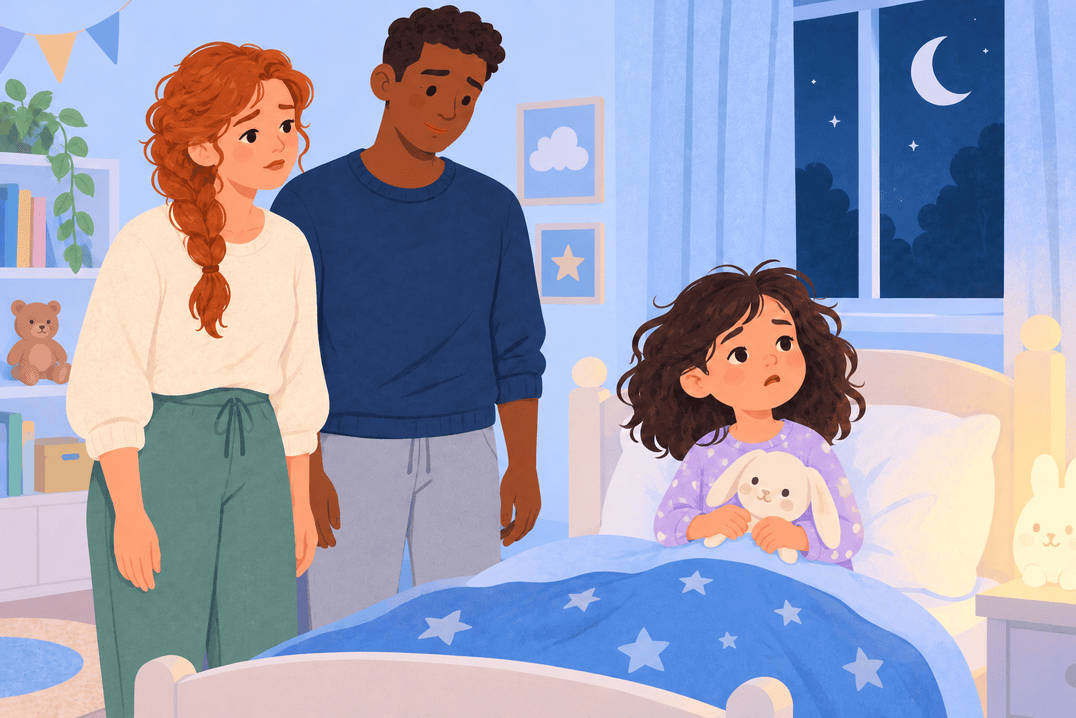
A child may suddenly scream, sit up or thrash in bed while seeming not to recognise you. This can be frightening to watch. A night terror is one possible explanation: the child is still asleep, even if their eyes are open. Unusual nighttime behaviour should not automatically be given that label without considering the whole event.
Understand the usual pattern
Night terrors tend to occur during deeper sleep earlier in the night. A child may look alarmed, sweat and resist comfort, then settle back into quieter sleep. They usually do not remember the episode afterwards.
By contrast, a child who wakes from a nightmare is awake and may be able to describe a dream. Timing and memory are useful clues, not a way to rule out illness, seizures or a breathing problem at home.
Focus on preventing injury
Stay nearby and calm. Move hazards away and intervene only as needed to prevent injury. Do not shake your child, insist they answer questions or try to wake them to end a typical episode. Attempts to force comfort can make them more agitated.
Keep the surrounding area safe if they move around. Tell other caregivers what you have observed and the approach your clinician recommends. If the event is new, unusual or you are unsure, seek advice instead of assuming that no response is always normal sleep behaviour.
Record a few useful details
Afterwards, note roughly how long after falling asleep it happened, what your child did and how they recovered. Include illness, disrupted sleep and any new medicine. Do not stop a prescribed medicine without advice, but mention a possible connection to the prescriber.
You might keep the notes beside the ordinary bedtime routine plan so every caregiver can add observations. The notes support assessment; they do not establish the diagnosis themselves.
Review sleep and possible triggers
Lack of sleep, stress or illness can be associated with episodes. A predictable routine and enough opportunities to rest may help. Frequent snoring or gasping also deserves attention because a breathing disorder can disrupt sleep.
For recurring episodes at a similar time, a clinician may discuss planned awakenings. Ask for an individual plan rather than repeatedly waking your child throughout the night on your own.
Know when to seek medical help
Discuss frequent episodes, injury risk, unusual movements or an uncertain diagnosis with your child’s clinician. Do not wait for a routine appointment if your child has serious breathing difficulty, turns blue or grey, remains unusually unresponsive or has a first suspected seizure; seek emergency help.
The instruction not to wake a child during a typical night terror does not mean ignoring signs of a medical emergency. If something appears seriously wrong, act on that concern.
References
- NHS: Night terrors and nightmares (opens in a new tab)
- American Academy of Pediatrics: Nightmares, night terrors and sleepwalking (opens in a new tab)
- Cambridgeshire Community Services NHS Trust: Sleepwalking, nightmares and night terrors (opens in a new tab)
- American Academy of Pediatrics: Sleep apnea in children (opens in a new tab)
- NHS: Urgent medical help for babies and young children (opens in a new tab)
- NHS: Febrile seizures (opens in a new tab)

Lifeing Editorial
Stories for a little more understanding, a little more reassurance, and the everyday moments in between.
Related posts

Nightmares in toddlers: Comforting Your Child After a Scary Dream