
Water for babies: When to Offer It and How

Water joins a baby’s routine in small amounts once solids begin around six months. It does not replace the nutrition in breast milk or infant formula. The aim is to offer an appropriate drink and practise a new skill, not to make your baby finish a bottle of water.
Keep early feeding centred on milk
Before about six months, healthy babies generally obtain the fluid they need from breast milk or correctly prepared infant formula. Fully breastfed babies do not need extra water in hot weather; they may want more frequent breastfeeds.
Advice for young formula fed babies in hot weather differs between countries. NHS guidance allows small sips of cooled boiled water alongside usual feeds, while US guidance generally introduces water around six months. Ask your baby’s clinician about early water offers rather than choosing an amount yourself, especially for a very young or medically vulnerable baby.
Offer sips when meals begin
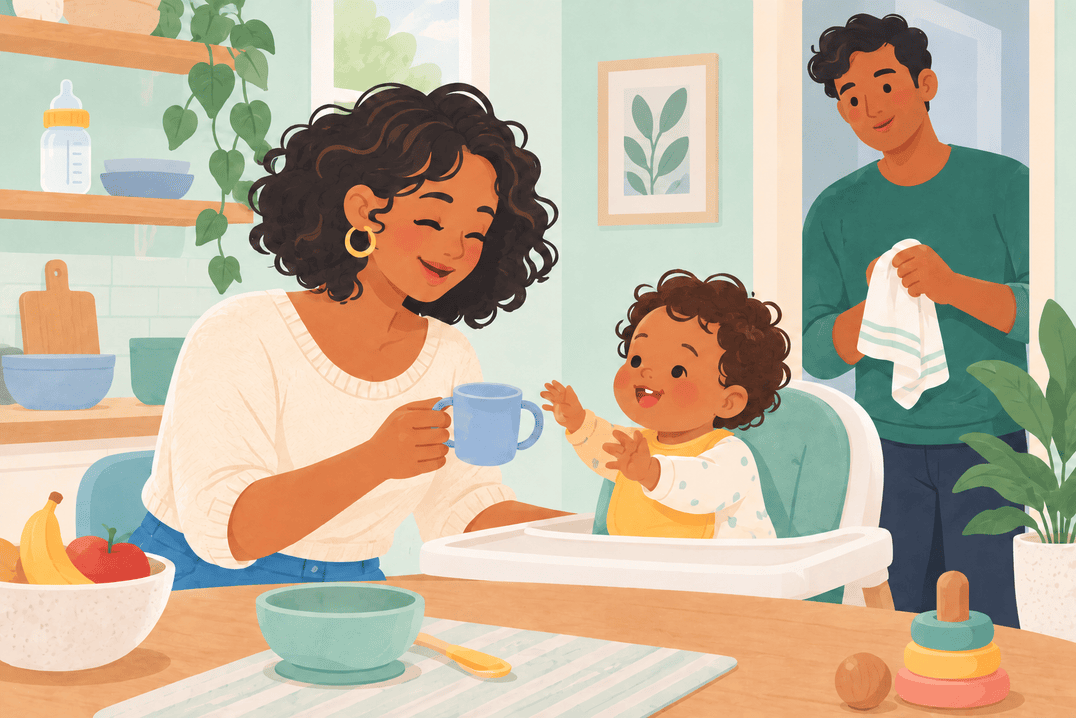
From around six months, offer a little plain water with meals in an open cup or a suitable training cup. Sit your baby upright and support the cup, allowing them to sip rather than pouring liquid into their mouth. Our cup practice guide covers this gradual learning process.
The American Academy of Pediatrics gives a general range of 4 to 8 ounces, roughly 120 to 240 mL, a day for babies aged six to twelve months. This is not a minimum to force into every baby or an amount to add after every feed. Most fluid still comes from milk, and individual needs vary.
Use safe water and the correct formula recipe
NHS guidance says safe drinking water for babies over six months does not need boiling before drinking. Follow local water safety notices and individual medical advice. Water for drinking and water used to prepare powdered formula are different questions.
Never add extra water to formula to manage heat, thirst or constipation. Follow the product’s exact water and powder instructions. Our formula preparation guide explains why concentration and preparation method matter. Plain water is preferable to sweetened drinks; babies do not need juice, tea or herbal drinks.
Treat signs of dehydration as a health concern
Seek urgent advice if your baby has fewer wet diapers than usual, few tears, a sunken soft spot or unusual drowsiness. Difficulty waking, breathing difficulty or blue, grey or markedly pale skin requires emergency help.
Vomiting or diarrhoea can require a specific rehydration plan. Do not try to correct significant dehydration by giving large amounts of plain water or weakening formula. A clinician or pharmacist can advise on a suitable oral rehydration product when needed. Our meal routine guide is for ordinary feeding, not a replacement for assessment during illness.
References
- NHS: Drinks and cups for babies and young children (opens in a new tab)
- American Academy of Pediatrics: Recommended drinks for young children (opens in a new tab)
- American Academy of Pediatrics: Water and healthy hydration (opens in a new tab)
- NHS: Dehydration (opens in a new tab)
- CDC: Infant formula preparation and storage (opens in a new tab)

Lifeing Editorial
Stories for a little more understanding, a little more reassurance, and the everyday moments in between.
Related posts

Water immersion in labor: Questions About Eligibility and Support