
Toddler Tantrums: Helping Your Child Through Big Feelings
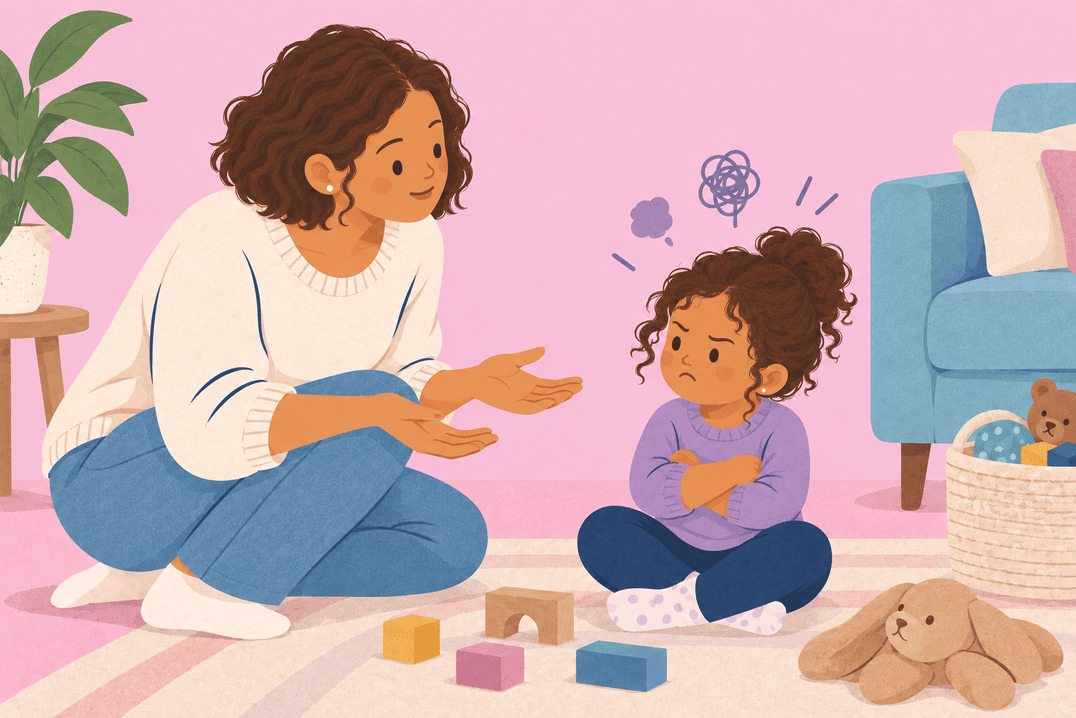
A toddler tantrum can interrupt getting dressed, leaving a park or waiting in a shop. A young child may want something strongly while still learning how to cope with disappointment and communicate a need. Your response can provide both protection and reassurance, even when the limit stays the same.
You do not need a perfect phrase that stops every tantrum. It helps to have a short response you can repeat and a plan for what to change afterward.
Start with safety and fewer words
Move away from traffic, sharp objects or anything your child could throw and use to hurt someone. Stay close enough to supervise. If hitting or biting starts, step in to stop the harm rather than waiting for the child to calm down independently.
Keep your voice steady and your explanation brief. You might say, “You wanted another turn. We are leaving, and I am here.” An upset toddler may not be able to take in a long reason or answer a series of questions. Offer comfort if they want it without demanding a hug.
Keep the limit while acknowledging the feeling
You can accept disappointment while preventing an unsafe action. “You are upset about the toy. I will keep it away from the baby’s face” names both the feeling and the boundary. Comfort does not require reversing a reasonable decision.
Avoid hitting, threatening, humiliating or shouting back. These responses do not teach the calm behavior you want your child to learn. If the original request was unrealistic, you can adjust it thoughtfully; consistency does not mean ignoring a child’s actual needs.
When your child is calmer, explain the next step simply. The guide to small choices and clear limits gives examples for routines that repeatedly become a struggle.
Help when words are not enough
Frustration can rise when a child understands what they want but cannot make another person understand. Watch their gesture or where they are looking, then offer a short interpretation: “The lid is stuck. You need help.” Allow time for a sound, gesture or word in response.
Demonstrate useful requests such as “help,” “more” or “finished” during ordinary play. Do not make a thirsty or distressed child produce a perfect word before responding to a need. Shared books, songs and conversation create practice without turning every interaction into a test.
If you are concerned about understanding, hearing, speech or skills that have been lost, ask your child’s clinician for an assessment. Tantrums alone do not diagnose a language difficulty, and a communication concern should not be dismissed as bad behavior. Our early communication guide explains what to notice.
Make a plan for tantrums in public
Before an outing, consider meals, rest and how much waiting the trip involves. Keep an errand manageable and explain the simple sequence: choose food, pay, then go home. Give your child a small role, such as spotting an item you need, rather than expecting long periods of quiet waiting.
If distress builds, pause in a quieter safe place when possible. You can shorten or end the trip if that is the sensible way to keep everyone safe. Leaving to regroup is not a reason to punish your child later or a promise that every refusal will change the family’s plans.
Keep your attention on your child rather than the audience. A brief “We need a moment” is enough for other adults. Do not leave a toddler alone in a car, shop aisle or other public place while you take a break.
Learn from the pattern after everyone settles
Notice what happened before the difficult moment. Was there hunger, tiredness, a noisy setting, a sudden transition or an instruction too complicated to follow? Try one practical adjustment, such as a warning before leaving or one direction at a time.
Notice successful moments too. “You gave me your hand when we reached the road” tells your child exactly what helped. Share the same short plan with caregivers while allowing for differences between home and nursery.
Ask for support when the pattern is hard to manage
Speak with a health visitor or clinician when outbursts frequently lead to injury, prevent everyday activities or feel unmanageable. Seek help sooner if you fear for anyone’s safety. The hitting and unsafe play guide explains when an immediate safety response is needed.
If you feel close to losing control, have a trusted adult take over if possible and make sure your child remains safely supervised. Ask for support for yourself as well as your toddler. A manageable plan should protect both of you, not depend on endless patience from an exhausted caregiver.
References
- NHS Best Start in Life: Helping toddlers with emotions (opens in a new tab)
- NHS: Temper tantrums (opens in a new tab)
- CDC: Giving directions to toddlers (opens in a new tab)
- CDC: Routines and rules (opens in a new tab)
- American Academy of Pediatrics: Language delays in toddlers (opens in a new tab)
- American Academy of Pediatrics: Preventing aggressive behavior in young children (opens in a new tab)
- American Academy of Pediatrics: Guidance against physical punishment (opens in a new tab)

Lifeing Editorial
Stories for a little more understanding, a little more reassurance, and the everyday moments in between.
Related posts

Trying for a Baby After Contraception: The Pill and Other Methods