
From Babbling to First Words: Supporting Your Child’s Communication
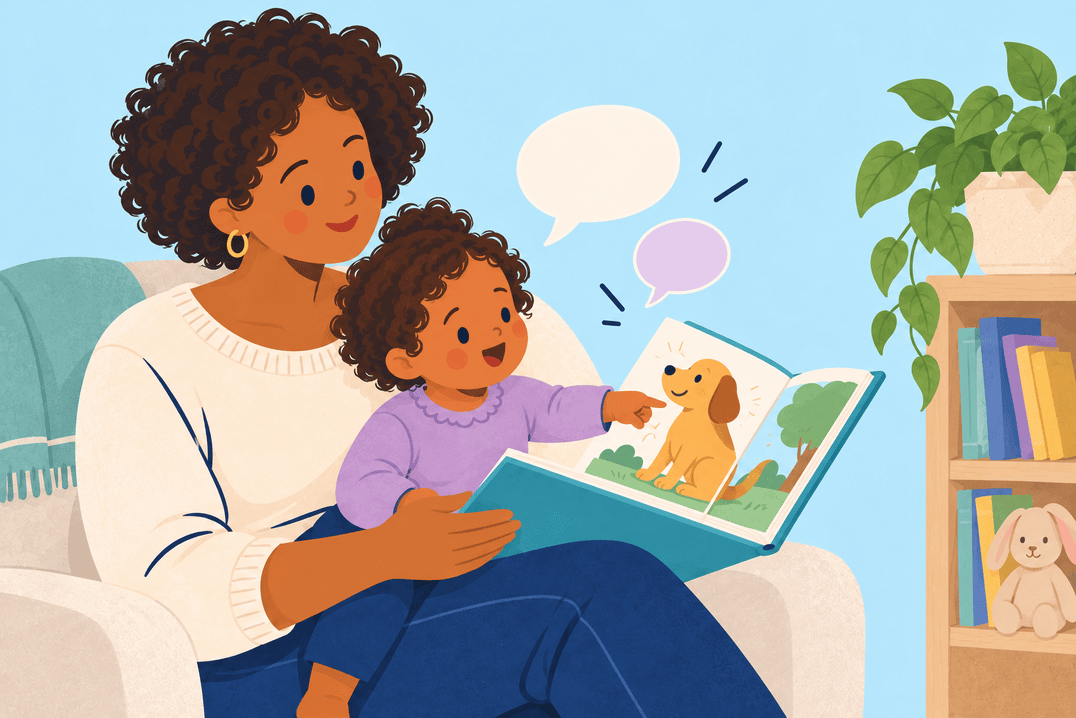
Communication begins before clear words. A look, sound or gesture can start a little exchange between you and your child. Everyday care offers chances to respond, whether you are changing a nappy, putting away clothes or enjoying a quiet moment together.
Notice how sounds become more varied
Early coos, squeals and other vocal sounds gradually make room for strings of syllables. By nine months, most babies make repeated sounds such as “mamama” or “bababa”. A familiar syllable does not necessarily mean your baby is using a word for a specific person yet.
Listen to the variety and the way your baby joins in. They may make a sound, pause and then start again after you answer. These observations are useful to share at developmental visits. You do not need to record every sound or compare one day’s noise with another baby’s performance.
Respond to a sound and leave a turn
When your awake baby makes a sound, move where they can comfortably see you. Repeat it gently or give a short answer, then pause. A response may be another noise, a movement or an interested expression. Let the exchange continue while your baby seems comfortable.
For example, during dressing you might answer a little squeal with “You found your sock,” then wait. The meaning of the sentence is less important at first than your responsive voice and attention. You do not need to speak constantly or insist that your baby copies a particular syllable.
Follow their interest and their need for a break
If your child looks towards a pet, toy or passing vehicle, name what has caught their attention. Keep background television or radio off during a conversation when possible. Familiar songs and simple games give you an easy way to return to an enjoyable pattern.
If your baby turns away, becomes unsettled or needs feeding or sleep, pause the game and respond to that need. A quiet interval does not need to be filled with another lesson. Our gesture guide explains more about communication beyond sounds.
Encourage first words without quizzing
Early words may be incomplete. When your child consistently tries a word, respond to its meaning and model the full version naturally. If “shoo” means a shoe, you can say, “Your shoe is here,” while helping them get ready. There is no need to demand a clearer repetition before handing it over.
Offer a simple choice during a real activity, such as which of two books to share, and allow a gesture or sound to count as a response. Avoid repeatedly asking your child to perform a word for visitors. Conversation works best when they have something they want to communicate.
Use milestones to open a discussion
Most children try one or two words beyond names such as mama or dada by fifteen months, and three or more by eighteen months. Milestone guidance describes skills to discuss with a clinician; it cannot diagnose a child or replace an assessment.
Understanding, gestures, play and response to sound matter alongside spoken words. If an expected skill is missing, or something concerns you earlier, ask for advice now. Do not assume that being quieter than a sibling means there is either definitely a problem or definitely nothing to check.
Keep support practical and timely
Our late talking guide explains hearing and language assessment. A passed newborn hearing screen does not rule out later hearing changes. Mention reduced responses to sound or any communication skill your child has lost; lost skills need prompt assessment.
You can continue warm, ordinary interaction while arranging help. Our reading guide offers another way to share attention without testing your child. Everyday conversation supports learning, but a concern does not mean you have failed to talk enough, and home activities do not replace professional support when it is needed.
References
- NHS: Helping your baby learn to talk (opens in a new tab)
- NHS Best Start in Life: Early sounds and everyday interaction (opens in a new tab)
- ASHA: Communication during the first year (opens in a new tab)
- CDC: Developmental milestones at nine months (opens in a new tab)
- CDC: Developmental milestones at fifteen months (opens in a new tab)
- CDC: Developmental milestones at eighteen months (opens in a new tab)
- American Academy of Pediatrics: Language delays and assessment (opens in a new tab)
- NIDCD: Hearing screening and ongoing hearing checks (opens in a new tab)
- CDC: Getting help with developmental concerns (opens in a new tab)

Lifeing Editorial
Stories for a little more understanding, a little more reassurance, and the everyday moments in between.
Related posts

Gestational Diabetes Explained: Screening, Blood Sugar, and Daily Care