
Pointing and gestures: Why Nonverbal Communication Matters

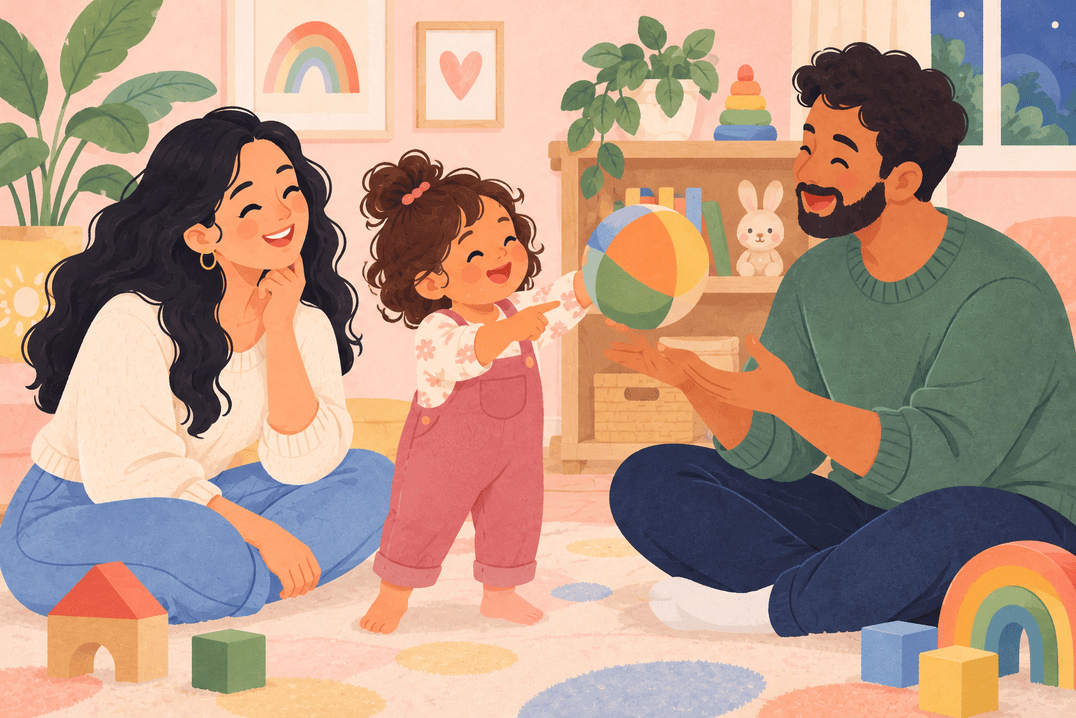
A child can tell you a great deal without a clear word. Reaching up, offering an object, waving or pointing can express a request or invite you to notice something. Watching these messages helps you respond and gives you useful examples to discuss during developmental visits.
Notice what the gesture is doing
A point towards a cup may mean “I want that.” A point towards a passing animal may mean “Look at this with me.” Both are meaningful, but asking for an object and sharing an interest are different uses of communication.
Your child may also bring something over, lift it to show you or look between you and an activity. You do not need to label every gesture while it happens. Simply notice the kinds of exchanges that occur naturally across the day.
Respond with attention and a few words
Follow the gesture when it is safe to do so and say what you think your child means. You might answer a reach towards a coat with “You want to go outside,” while acknowledging whether that is possible now. A spoken response can accompany the action without requiring your child to repeat it.
Do not withhold an essential need until they point perfectly or say the word. If you have misunderstood, give them another chance to show you. Our vocabulary guide explains how gestures and speech contribute different information.
Model gestures during real routines
Wave when someone leaves, point to something interesting on a walk or show an object during play. Familiar songs with actions offer another opportunity to join in. Let your child watch, try or pause without physically forcing their hand into a position.
Our reading guide describes sharing a picture without repeated questions. You can point and comment yourself rather than asking “Where is it?” on every page. Make it easy for your child to participate in a way they can manage.
Use milestone guidance thoughtfully
Most children point to request something or get help by fifteen months, and point to share interest by eighteen months. By two years, a wider range of gestures can appear alongside words. These observations help guide a conversation, but one gesture cannot confirm or exclude a developmental condition.
Ask for advice if an expected skill is missing or communication concerns you earlier. The overall pattern includes understanding, play, hearing and how your child connects with others. A checklist does not replace a professional assessment.
Make space for different abilities
A movement or vision difficulty can affect how a child points or shows an object. Describe what they do instead and ask their team about accessible ways to communicate. Do not assume that a child has nothing to say because a particular gesture is difficult.
Our late talking guide explains hearing and language review when needed. Loss of gestures, words or other established skills requires prompt assessment. You can continue responsive interaction while arranging help, without turning every exchange into a test.
References
- ASHA: Communication during the first year (opens in a new tab)
- ASHA: Social communication development (opens in a new tab)
- CDC: Developmental milestones at fifteen months (opens in a new tab)
- CDC: Developmental milestones at eighteen months (opens in a new tab)
- CDC: Developmental milestones at two years (opens in a new tab)
- CDC: Getting help with developmental concerns (opens in a new tab)
- NIDCD: Speech, language and developmental assessment (opens in a new tab)
- NHS: Accessible toys and play (opens in a new tab)

Lifeing Editorial
Stories for a little more understanding, a little more reassurance, and the everyday moments in between.
Related posts

Pool Safety for Toddlers: Planning Several Layers of Protection