
Toddler vocabulary: Looking at Communication Beyond Word Counts
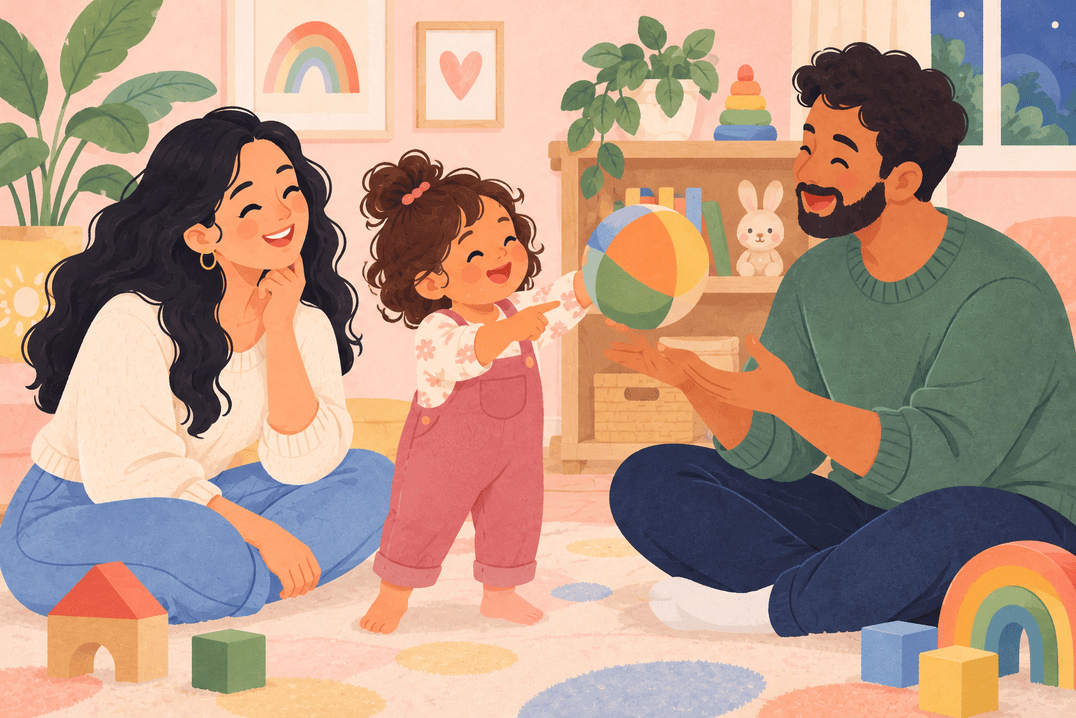
A list of words can help you notice progress, but it cannot describe everything your toddler communicates. Understanding a request, sharing an interest, asking for help and joining words together provide different information. Look at these abilities together rather than treating one total as a verdict.
Record examples, not a score for the day
If you want to keep notes, write down a few words or phrases your child uses spontaneously and what they seem to mean. Include approximate pronunciations so the clinician can understand what you hear. You do not need a running tally during every meal or game.
For example, note that your child says a familiar word to request a toy, rather than only repeating it immediately after you. This distinction can help a conversation about how they use language. It is not a home diagnostic test, and a therapist can explain how a particular assessment counts words.
Notice understanding separately
Observe how your child responds during ordinary routines. Do they understand familiar words, follow a suitable request or recognise something you name? Understanding language and producing speech are related but different skills, so mention concerns about either.
By two years, most children combine at least two words. Later combinations become more varied and can include an action word. A checklist is a guide to discussion, not a reason to ignore difficulty because another item is present. Our late talking guide explains how assessment considers the wider picture.
Look at the purpose of communication
A toddler may use a word to ask, protest, comment or call someone. Notice whether their messages work for them and whether they can share something simply because it interests them. Songs or memorised sequences alone do not show everything about everyday communication.
Our pointing and gestures guide covers other ways children share meaning. Gestures are worth describing, but do not use them to dismiss a concern about missing spoken language or understanding.
Include every language your child uses
A child may know a word in one language and a different word in another. Share examples from all their languages and tell the clinician about the opportunities they have to hear and use each one. Looking only at English can miss part of their communication.
Ask how the service will assess the languages fairly, including interpreter support where needed. Do not add up translations on your own and use the result to rule a problem in or out. Clinical assessment considers language experience as well as the words themselves.
Make conversation useful to your child
When your child says something, answer the message and add a little detail. If they say “car”, you might say, “The car is stopping.” Our first words guide offers more examples without repeated quizzing.
Arrange advice when expected skills are missing, progress is limited or you are worried about hearing or understanding. A loss of established words or other abilities needs prompt assessment. Comfortable everyday interaction can continue alongside professional help; reaching an online word target is not a substitute for it.
References
- ASHA: Communication milestones and their limits (opens in a new tab)
- NIDCD: Speech, language and developmental assessment (opens in a new tab)
- CDC: Developmental milestones at two years (opens in a new tab)
- CDC: Developmental milestones at thirty months (opens in a new tab)
- American Academy of Pediatrics: Language delays and assessment (opens in a new tab)
- American Academy of Pediatrics and ASHA: Young children learning multiple languages (opens in a new tab)
- CDC: Getting help with developmental concerns (opens in a new tab)

Lifeing Editorial
Stories for a little more understanding, a little more reassurance, and the everyday moments in between.
Related posts
Tooth Injuries in Toddlers: What to Do and When to Get Help