
Toddler Hitting and Unsafe Play: Stopping Harm and Teaching Alternatives
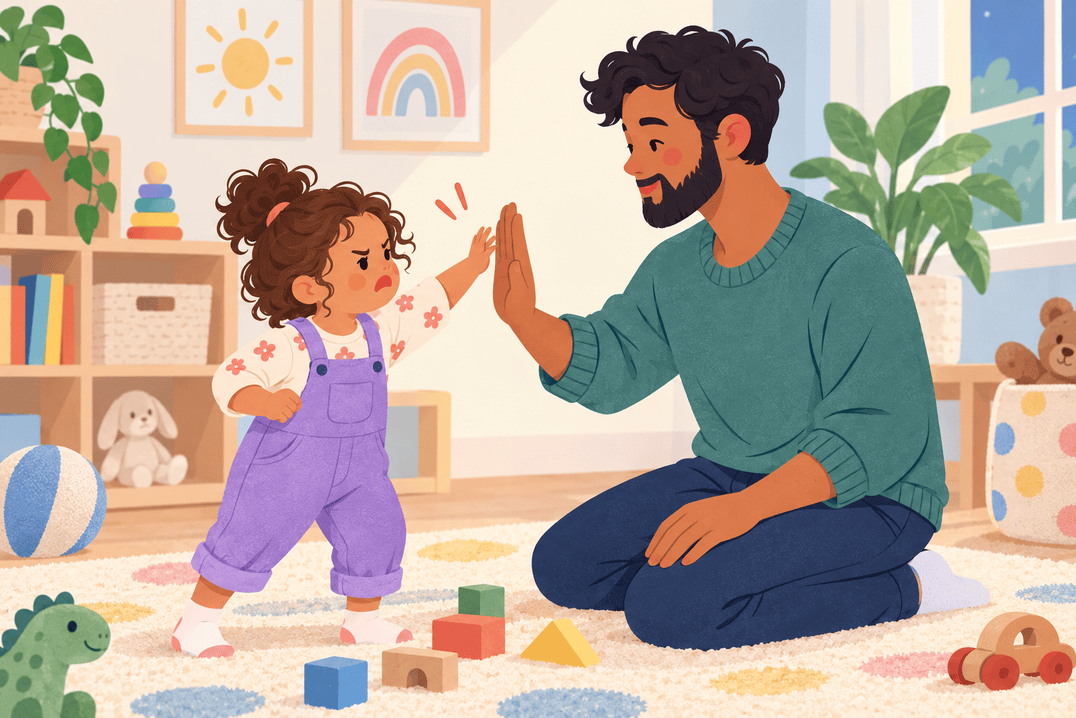
A toddler can lash out before they have the words or control to handle a difficult moment. That helps explain the behavior, but another child still needs protection. Respond to hitting with a clear safety limit and teach alternatives when your child is ready to listen.
Stop the action without hitting back
Move close, prevent another blow if you can do so safely and separate the children. Use a short statement such as, “I will not let you hit. We need some space.” Check the child who was hurt and give comfort and appropriate first aid.
Do not hit, slap or threaten your toddler to demonstrate why hitting is wrong. Avoid calling them violent or bad. Describe the action and what must happen next. If there is immediate danger you cannot manage safely, get urgent help rather than attempting a restraint technique you have not been taught.
Distinguish active play from unsafe play
Running, chasing and energetic movement are not automatically aggression. Look at whether the activity remains safe and welcome. Step in when someone is frightened, hurt, trying to get away or asking for the game to stop. A young child may need your help to notice these signals.
Pause a game that repeatedly turns into pushing or hitting. Offer a different activity with more space and closer adult supervision. You might move from a crowded climbing game to taking turns rolling a ball. Do not require an injured or upset child to resume playing with the person who hurt them.
The goal is not to remove all energetic play. It is to keep bodies safe and help children learn when to stop. Our sharing and turn taking guide offers ideas for practising cooperation in calmer moments.
Look at what came before the hit
For a few incidents, note the setting, what happened just before and how adults responded. Include successful play sessions so you can identify what helped. Competition for a toy, crowding, fatigue or difficulty asking for help may call for different adjustments.
Share observations with nursery staff without deciding in advance that one child or caregiver is to blame. Agree who will stay close during a difficult transition and which brief words everyone will use. A specific plan is easier to carry out than “be stricter” or “watch more carefully.”
Practise a replacement while calm
Show your child how to step back, seek an adult or use a word or gesture for “stop” or “help.” Use language they can manage. Rehearse with toys or a simple game, without recreating a frightening situation.
Notice a safer response when it happens: “You came to me when the toy was taken.” A toddler who can repeat the rule may still need help using it when upset. The tantrum guide explains why teaching works better after the strongest feelings settle.
Seek help when safety keeps being affected
Contact your child’s clinician or health visitor if aggression is persistent, causes injuries, leads to exclusion from play or makes you afraid for others. Do not wait several weeks if someone is already at risk. Mention concerns about communication, sleep, pain or changes in the child’s life.
Biting needs its own wound check as well as a behavior response. The toddler biting guide explains when broken skin requires medical advice. Support can help the adults respond consistently while investigating what the child finds difficult; it does not require assigning a diagnosis from a single incident.
References
- American Academy of Pediatrics: Preventing aggressive behavior in young children (opens in a new tab)
- American Academy of Pediatrics: Guidance against physical punishment (opens in a new tab)
- NHS: Dealing with child behavior problems (opens in a new tab)
- NHS Just One Norfolk: Behavior troubleshooting (opens in a new tab)
- NHS Healthier Together: A healthy day for a child (opens in a new tab)

Lifeing Editorial
Stories for a little more understanding, a little more reassurance, and the everyday moments in between.
Related posts
Toddler Jealousy After a New Baby: Keeping Connection and Safety