
Toddler Sharing: Practising Turns at a Manageable Pace
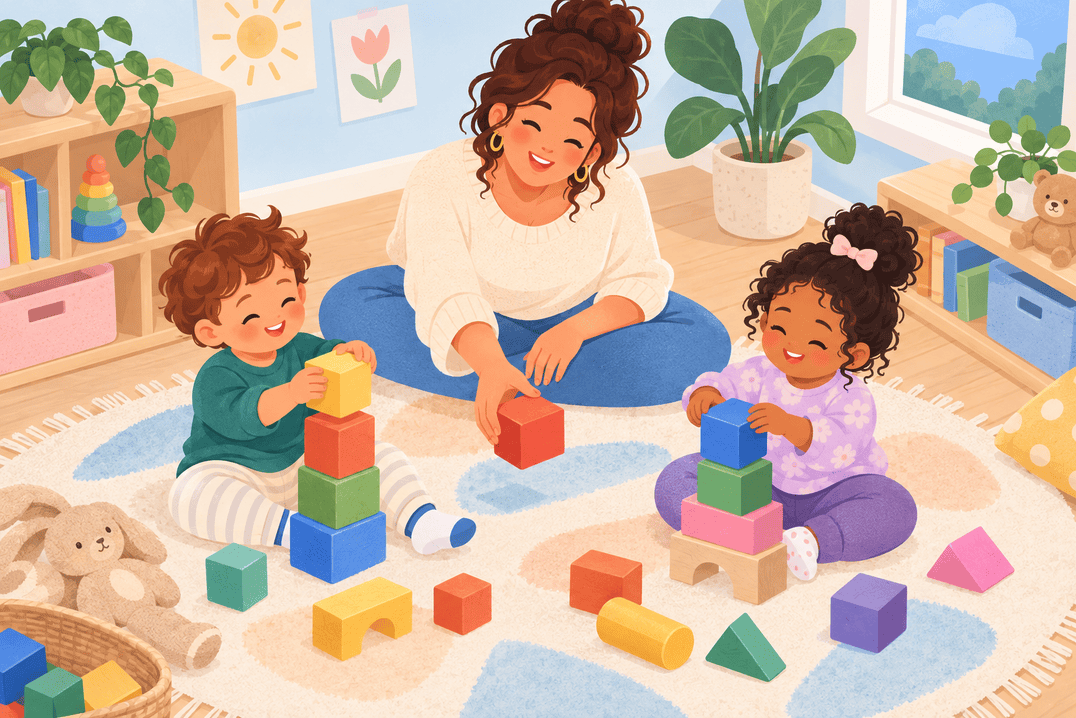
A toddler can enjoy being beside another child and still protest when that child picks up a toy. Sharing involves noticing someone else’s wishes, waiting and tolerating uncertainty about getting an object back. Those skills develop through repeated experience and adult support.
Expecting reliable sharing from a very young child can ask more than they can manage. You can teach cooperation without calling a child selfish for finding it difficult.
Begin with play your child already enjoys
Sit alongside your toddler and follow their interest. At first, you may each have your own blocks or cars rather than exchanging one prized item. Playing beside someone is a useful experience; it does not need to become a formal group game to count.
Look for a moment when your child is interested in your action. Copy something they do, pause and give them time to respond. A look, sound or movement can be a turn before spoken conversation is established.
Make early turns short and visible
Try rolling a ball back and forth or placing pieces into a simple container. Use brief words to show whose turn it is, and pause rather than filling every space with instructions. Stop while the game is still manageable instead of extending the waiting until your child becomes distressed.
As the skill grows, try a small shared task such as adding blocks to a tower. There is no need to require the same turn length from every child in every situation. Adjust the game so everyone has a chance to participate successfully.
Our communication guide explains how everyday exchanges support interaction. Practising turns in a game is different from demanding that a toddler immediately hand over their most important comfort item.
Plan for a visit before the dispute starts
Set out a few suitable activities with enough space. If possible, have more than one of an item that reliably causes a struggle. Put away something your child is not ready to share before visitors arrive, rather than introducing that decision in the middle of a conflict.
Explain the plan simply and stay nearby. Short, supported play can be more useful than a long visit in which adults repeatedly intervene after frustration has already built. Give each child room for a separate activity when they need it.
Step in calmly when a toy is contested
Describe what is happening without assigning a character label: “You both want the truck.” Help arrange a turn, offer another activity or pause the game. A young child may need you to show what waiting looks like rather than hearing only “share nicely.”
Stop hitting, pushing or biting immediately. Check the child who was hurt and give both children space with supervision. Our guides to hitting and unsafe play and biting explain the safety response. Do not force an injured child to accept a hug as proof that the disagreement is over.
Notice progress and ask about persistent concerns
Point out a specific success, such as passing a piece or waiting while someone finishes. Model the same behavior in ordinary family activities. Children may manage a turn well when rested and struggle with it later; practice does not produce instant consistency.
If play repeatedly leads to injury or distress, discuss it with your health visitor and nursery team. Mention broader concerns about communication or interaction rather than diagnosing a problem from sharing alone. A supportive plan should fit your child’s development and help other children feel safe too.
References
- American Academy of Pediatrics: Social development at one year (opens in a new tab)
- American Academy of Pediatrics: Sharing and cooperation in preschoolers (opens in a new tab)
- Alder Hey Children’s NHS Foundation Trust: Encouraging turn taking (opens in a new tab)
- NHS Bedfordshire and Luton Children’s Health: Play and social skills (opens in a new tab)
- NHS Best Start in Life: Play and bonding with toddlers (opens in a new tab)
- American Academy of Pediatrics: Preventing aggressive behavior in young children (opens in a new tab)

Lifeing Editorial
Stories for a little more understanding, a little more reassurance, and the everyday moments in between.
Related posts

Toddler sleep after travel: Rebuilding the Usual Routine