
Iron rich first foods: Making Them Part of Everyday Meals
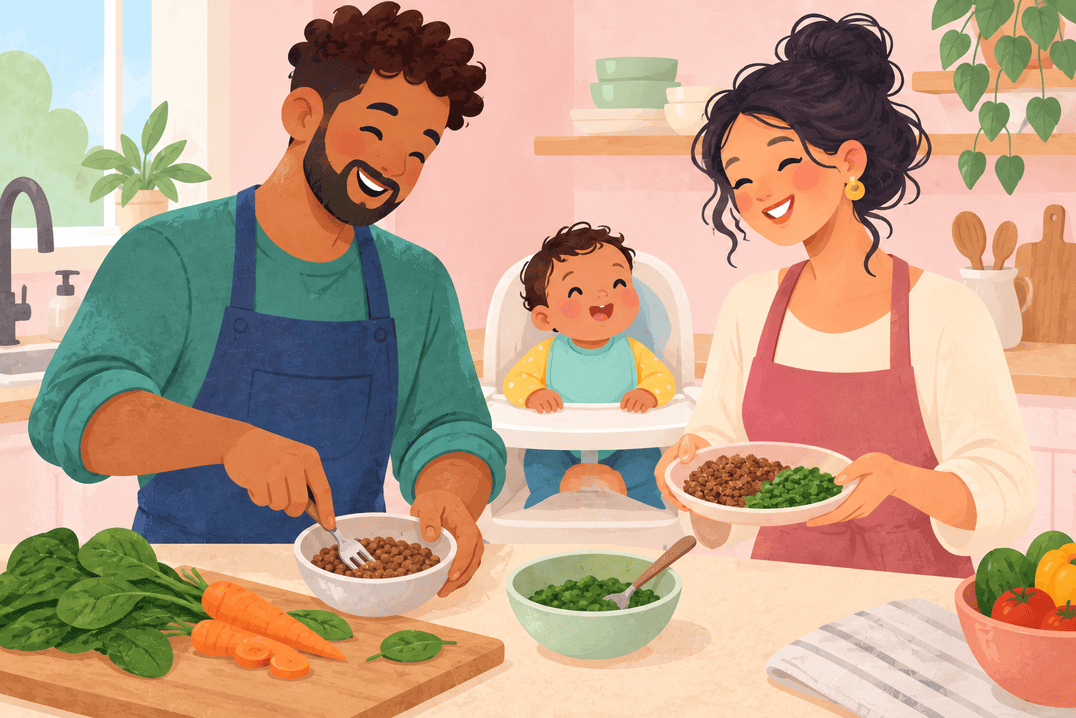
Iron deserves a regular place in your baby’s meals as solids begin around six months. It helps the body make red blood cells and supports development. Fruit and vegetables offer valuable nutrients, but a menu made mainly of fruit puree is not enough to cover every need.
Include an iron food as meals develop
Useful choices include soft cooked meat, poultry or fish, well cooked beans and lentils, tofu and infant cereals fortified with iron. Choose a preparation your baby can manage. Meat can be finely minced or mashed into a moist dish, while beans should be softened and mashed rather than served as firm whole pieces.
You do not need to build the entire menu around one ingredient. Keep a few workable options in mind and rotate them. For example, fortified oat cereal at one meal and mashed lentils at another offer different tastes and textures. Our first food guide helps place these choices within a varied menu.
Help your baby use iron from plant foods
The body absorbs iron from plant foods less readily than iron from meat. Pairing a plant source with food containing vitamin C helps absorption. Soft cooked broccoli with lentils, or appropriately prepared fruit alongside fortified cereal, are practical combinations.
This does not require juice or a separate vitamin C product. Choose the whole food in a suitable texture. Our vegetarian meal guide looks at iron alongside the other nutrients that need attention when meat and fish are excluded.
Keep milk and solids working together
Breast milk or infant formula remains important during the first year. Iron fortified formula contributes iron, while complementary foods provide an increasing contribution as eating develops. Ordinary cow’s milk is not a replacement for infant formula or breast milk as the main drink before 12 months.
Avoid dropping needed milk feeds just to make your baby hungrier for an iron food. Our meal routine guide explains gradual progression. Offer food responsively rather than insisting on a particular number of spoonfuls.
Ask about supplements rather than guessing
Iron needs and supplementation depend on factors including milk feeding, prematurity, birth weight and medical history. Some babies need supplemental iron before solids begin. Ask your baby’s clinician what is appropriate; do not wait for a visible symptom or assume that every baby needs the same product.
A growth or feeding concern needs assessment, and iron deficiency cannot be reliably diagnosed from appearance alone. If iron is prescribed, confirm the exact product and dose. Too much can be dangerous, so keep supplements securely out of children’s reach and never use an adult dose for a baby. Meals support nutrition, but they do not replace treatment for a diagnosed deficiency.
References
- CDC: Iron in infant and toddler nutrition (opens in a new tab)
- NIH Office of Dietary Supplements: Iron (opens in a new tab)
- CDC: When, what and how to introduce solid foods (opens in a new tab)
- NHS Best Start in Life: Feeding from around six months (opens in a new tab)
- Royal Berkshire NHS Foundation Trust: Complementary feeding your baby (opens in a new tab)

Lifeing Editorial
Stories for a little more understanding, a little more reassurance, and the everyday moments in between.
Related posts
IUI discomfort and side effects: What to Ask and When to Seek Help