
Vegetarian baby meals: Planning Nutrients and Variety
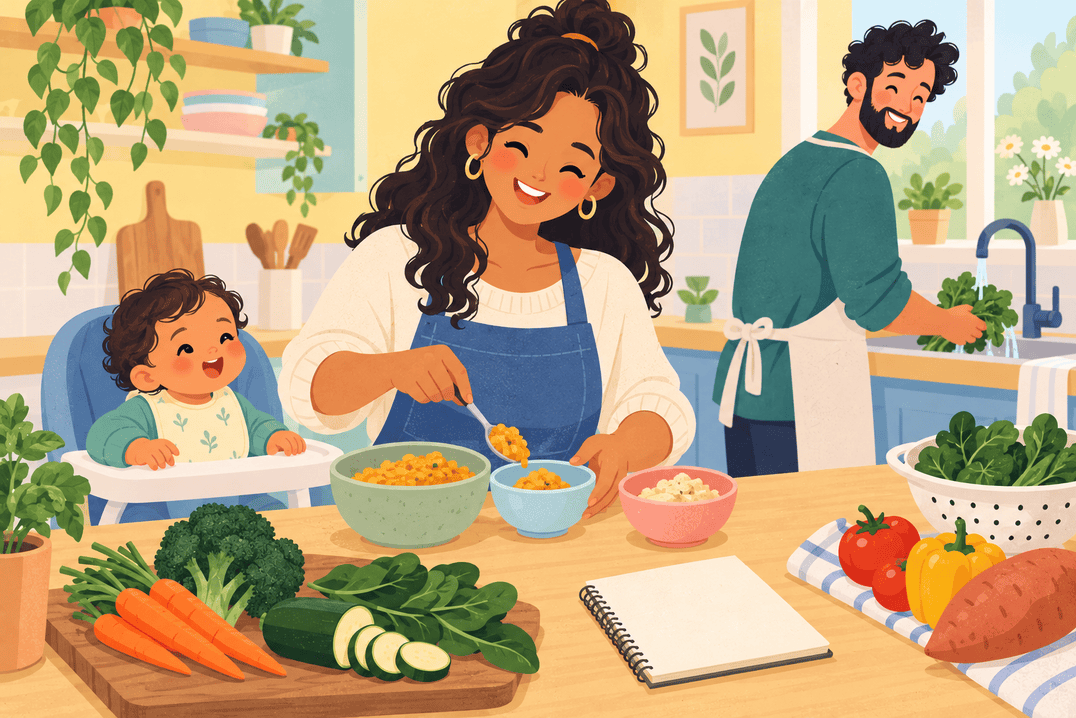
Vegetarian first meals can include many familiar family ingredients. The important step is replacing the nutrients that meat and fish would provide, rather than simply leaving them off the plate. A baby needs enough energy as well as a varied mix of vitamins, minerals and protein.
Build meals around more than vegetables
From around six months, suitable foods include well cooked mashed lentils or beans, tofu, thoroughly cooked egg and plain full fat pasteurised yogurt if these fit your family’s diet. Add a starchy food and vegetables or fruit, with preparation matched to your baby’s eating skills.
For example, soft lentils and potato with cooked broccoli offer a different combination from egg with soft toast fingers. These are meal ideas, not fixed portions or a complete nutritional prescription. Introduce new allergenic ingredients thoughtfully, especially if your baby has eczema or a known allergy, and keep tolerated foods in the diet.
Make iron a deliberate choice
Include foods such as fortified infant cereal, lentils, beans or tofu regularly. Vitamin C from fruit or vegetables helps the body absorb plant iron. Our iron food guide explains practical combinations and when to ask about supplements.
Avoid relying on a large amount of bulky vegetables alone. They can fill a small stomach before enough energy has been eaten. Full fat dairy foods, where suitable, and other appropriate energy sources help make meals more nourishing without making portions much larger. Ask a dietitian for an individual plan if growth or intake is a concern.
Keep the right main milk
Before 12 months, breast milk or an appropriate infant formula remains the main milk drink. Ordinary oat, almond, soy or other plant drinks are not substitutes for infant formula. A carton described as fortified still does not make it nutritionally equivalent to infant formula.
If dairy is excluded because of allergy, discuss suitable formula and complementary foods with the clinical team. Do not replace milk casually while experimenting with symptoms. Our meal routine guide explains how solids and needed milk feeds fit together.
Get extra support for a vegan diet
Excluding eggs and dairy as well as meat and fish requires additional planning. Ask a paediatric dietitian to check energy, protein, iron, calcium, iodine, zinc, vitamin D and vitamin B12, including which infant supplements are needed. Unfortified plant foods are not a reliable source of B12.
B12 also matters during breastfeeding: a breastfeeding parent’s deficiency can affect the baby. Discuss the parent’s intake and supplementation as well as the baby’s needs. Do not use adult supplement doses or wait for symptoms before asking.
Bring a short account of milk feeds, meals and supplements to that conversation. Our first food guide can help you build variety while a professional checks the nutrients that need particular attention.
References
- NHS Just One Norfolk: Weaning your vegetarian or vegan baby (opens in a new tab)
- Royal Berkshire NHS Foundation Trust: Complementary feeding your baby (opens in a new tab)
- CDC: Iron in infant and toddler nutrition (opens in a new tab)
- CDC: Vitamin B12 and breastfeeding (opens in a new tab)
- British Dietetic Association: Complementary feeding statement (opens in a new tab)
- NHS Best Start in Life: Feeding from around six months (opens in a new tab)

Lifeing Editorial
Stories for a little more understanding, a little more reassurance, and the everyday moments in between.
Related posts
Vegetarian pregnancy nutrition: Planning a Balanced Plate