
Breast milk storage: Labeling, Cooling and Keeping Track
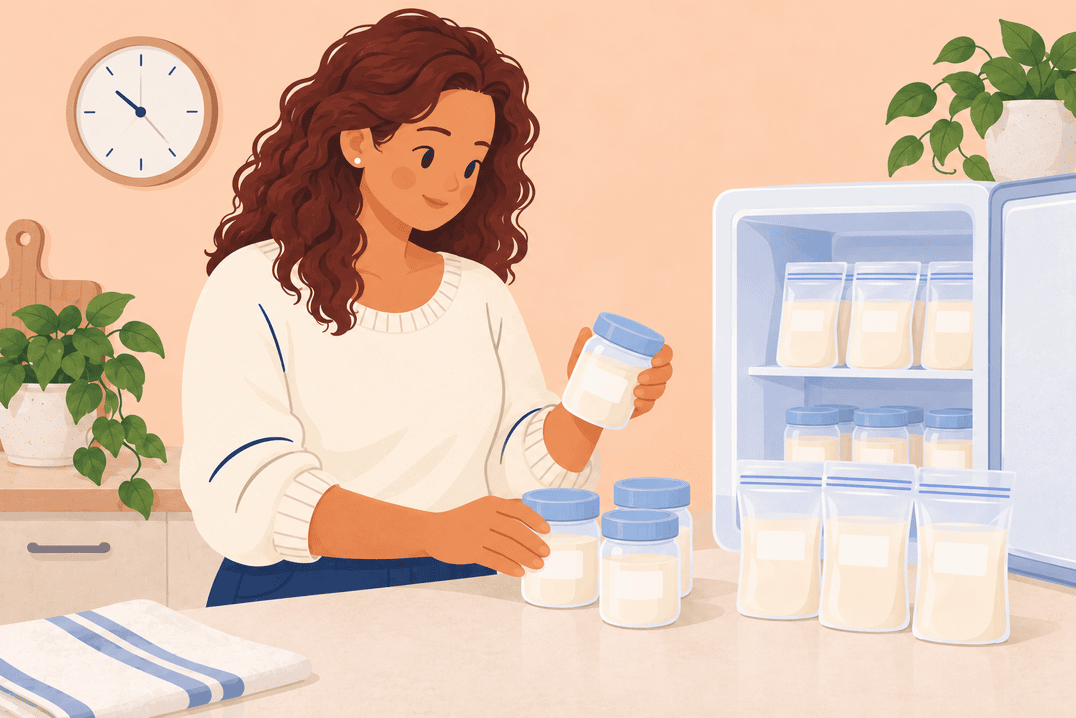
Safe breast milk storage depends on how the milk was collected, its temperature and what has happened to it since. A bottle that has just been expressed is different from one that has thawed or already been offered to your baby. Clear labels help every caregiver make the same decision.
Choose one guide for your situation
Use your local health service’s storage instructions consistently. Published limits differ, and taking the longest allowance from each guide does not create a tested storage plan. If your baby is premature, unwell or in hospital, follow the care team’s specific instructions.
For healthy babies born at term, the United States CDC advises up to four hours for freshly expressed milk at 25°C or cooler, up to four days refrigerated at 4°C or cooler, and preferably use within six months when frozen at minus 18°C or colder; up to twelve months is acceptable under that guidance. These are limits, not targets. Refrigerate promptly when milk will not be used soon, especially in a warm room.
Prepare containers and labels before expressing
Use containers intended for food and suitable for storing milk, with secure lids, or bags specifically made for breast milk storage. Follow local cleaning and sterilizing instructions. Ordinary disposable bottle liners or general storage bags are not a substitute for purpose made milk bags.
Record the date and time of expression. Add your baby’s name and any required details for childcare or hospital use. Smaller portions let a caregiver prepare another amount if needed instead of warming a large container that may not be finished. Leave expansion space when freezing, following the container instructions.
Keep temperatures reliable
An appliance thermometer is useful when a dial does not show the actual temperature. Place milk towards the back of the fridge or freezer rather than in the door. Freeze milk promptly if you do not expect to use it within your chosen refrigerator limit.
If combining freshly expressed milk with an older chilled batch, cool the new milk first and keep the older batch’s date and deadline. Adding fresh milk does not restart the clock. When transporting milk, use an insulated cooler with frozen ice packs and a plan for refrigeration on arrival. Our workplace feeding guide covers practical arrangements.
Make the next step clear
Keep fresh storage instructions separate from thawing and warming instructions. Once milk is fully thawed, warmed or used for a feed, different limits apply. Do not apply the fresh milk timetable again.
Good storage starts with clean equipment. Our pump cleaning guide explains that routine. If a label is missing or the temperature history is uncertain, check with your health service rather than guessing a new expiry time.
References
- CDC: Breast milk storage and preparation (opens in a new tab)
- CDC: Breast milk storage questions and answers (opens in a new tab)
- Australian Breastfeeding Association: Storing expressed breast milk (opens in a new tab)
- NHS: Expressing and storing breast milk (opens in a new tab)
- CDC: Cleaning and sanitizing breast pumps (opens in a new tab)

Lifeing Editorial
Stories for a little more understanding, a little more reassurance, and the everyday moments in between.
Related posts


Breast pump fit: Finding Comfortable Suction and Flange Size