
Thawing and warming breast milk: Preparing the Next Feed

Frozen milk becomes easier to use when you plan a feed before your baby is very hungry. Thawing changes the storage rules, and warming is optional. The useful questions are which portion to use, how it will be prepared and when any remaining milk must be discarded.
Check the label before taking milk out
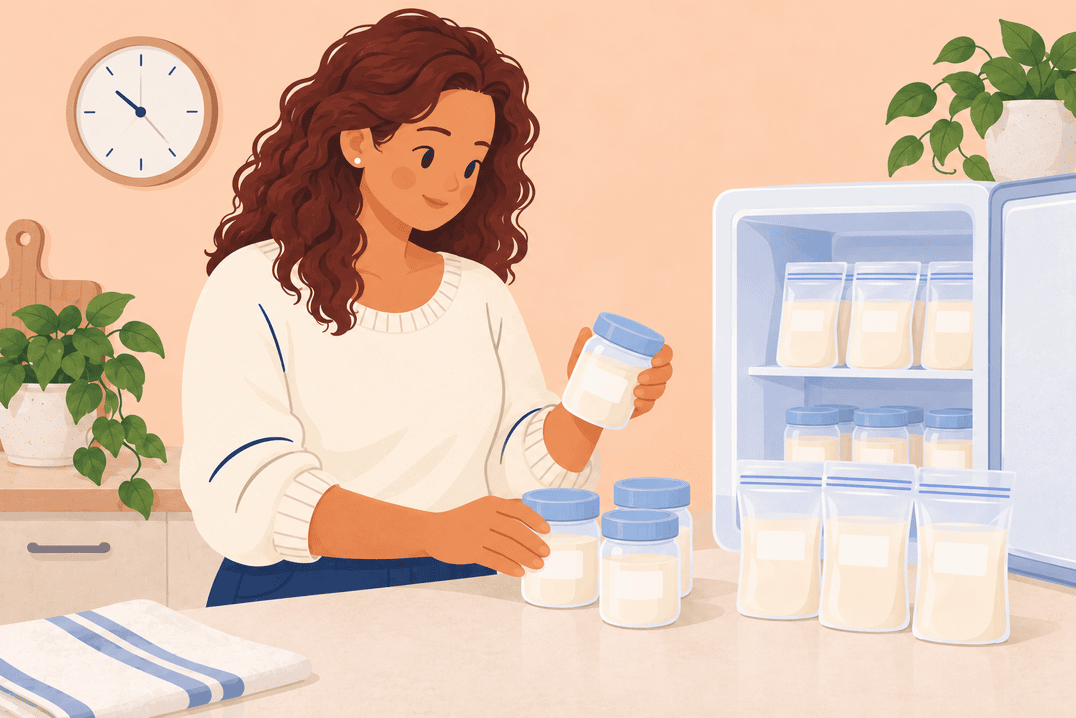
Choose the oldest suitable portion within your storage guidance. Check that it belongs to your baby if several families share a fridge or freezer. If the container has no reliable date or has had an uncertain temperature history, ask for advice rather than assuming freezing has made it safe.
Our breast milk storage guide covers collection and labeling. These instructions concern ordinary home feeding; a hospital team may give a different plan for a premature or unwell baby.
Thaw in the fridge or prepare for immediate use
For a planned feed, move a portion to the refrigerator and allow time for it to thaw, often overnight. If you need it sooner, stand the sealed container in warm water or hold it under lukewarm running water. Do not leave it on the kitchen counter for hours to defrost.
Never use a microwave or heat the milk directly on a stove. Uneven heating can burn a baby’s mouth even when the container does not feel very hot. Do not refreeze fully thawed milk. A smaller portion is easier to use without waste; prepare another if your baby wants more.
Warm only if your baby prefers it
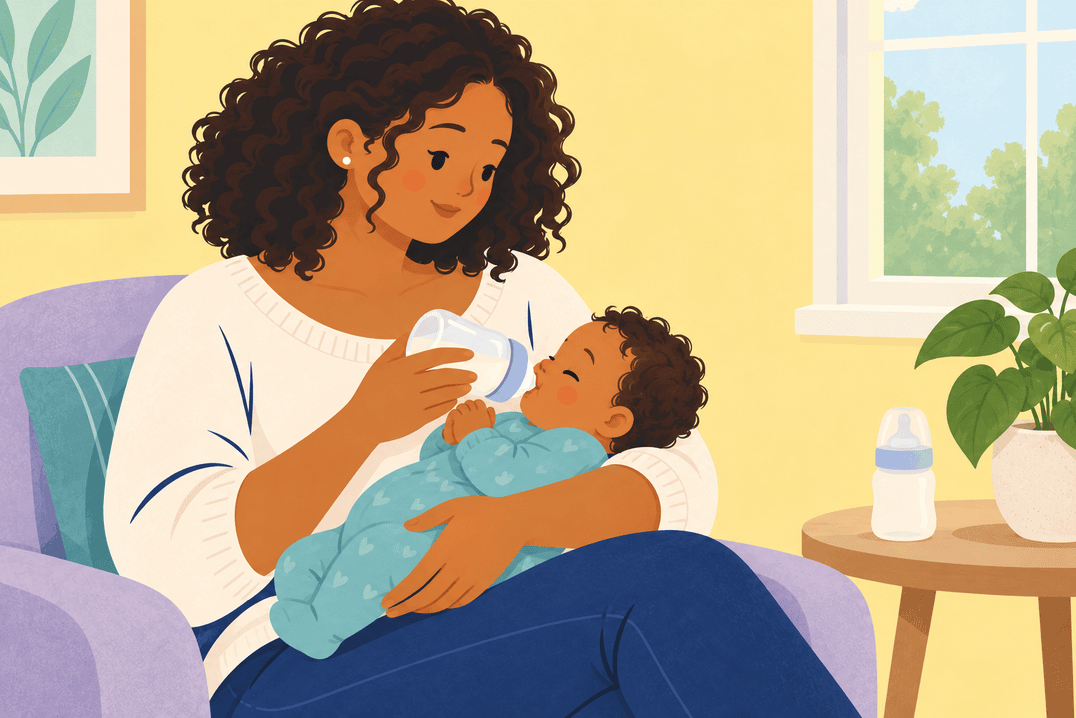
Safely stored milk can be offered cold. If you choose to warm it, keep the container closed and use warm water rather than boiling water. Gently swirl to mix separated fat, then test a few drops on your wrist. The milk should not feel hot.
Avoid repeatedly warming and cooling the same portion. Prepare milk when you are ready to feed, and follow your local instructions for leftovers. The bottle introduction guide explains how to offer milk without encouraging your baby to finish more than they want.
Keep a consistent timing plan
Storage authorities use different limits. Under United States CDC guidance, milk thawed in the refrigerator should be used within 24 hours after it has completely thawed. Once brought to room temperature or warmed, use it within two hours. Keep the earliest applicable deadline; warming does not create extra time beyond the thawed milk limit.
CDC guidance allows unfinished breast milk within two hours after the baby finishes feeding. NHS guidance is stricter: use thawed milk straight away and use a bottle within one hour once the baby has drunk from it. Australian Breastfeeding Association advice is to discard what remains after a feed. Follow the plan given by your local service, rather than switching between these limits.
Write the relevant time on the container or a note for the next caregiver. When a feed is over, deal with the leftover milk and equipment then, so nobody mistakes a partly used bottle for an untouched one.
References

Lifeing Editorial
Stories for a little more understanding, a little more reassurance, and the everyday moments in between.
Related posts
Third trimester overview: Monitoring, Preparation, and Birth Decisions