
Cervical mucus after ovulation: Why Texture May Change
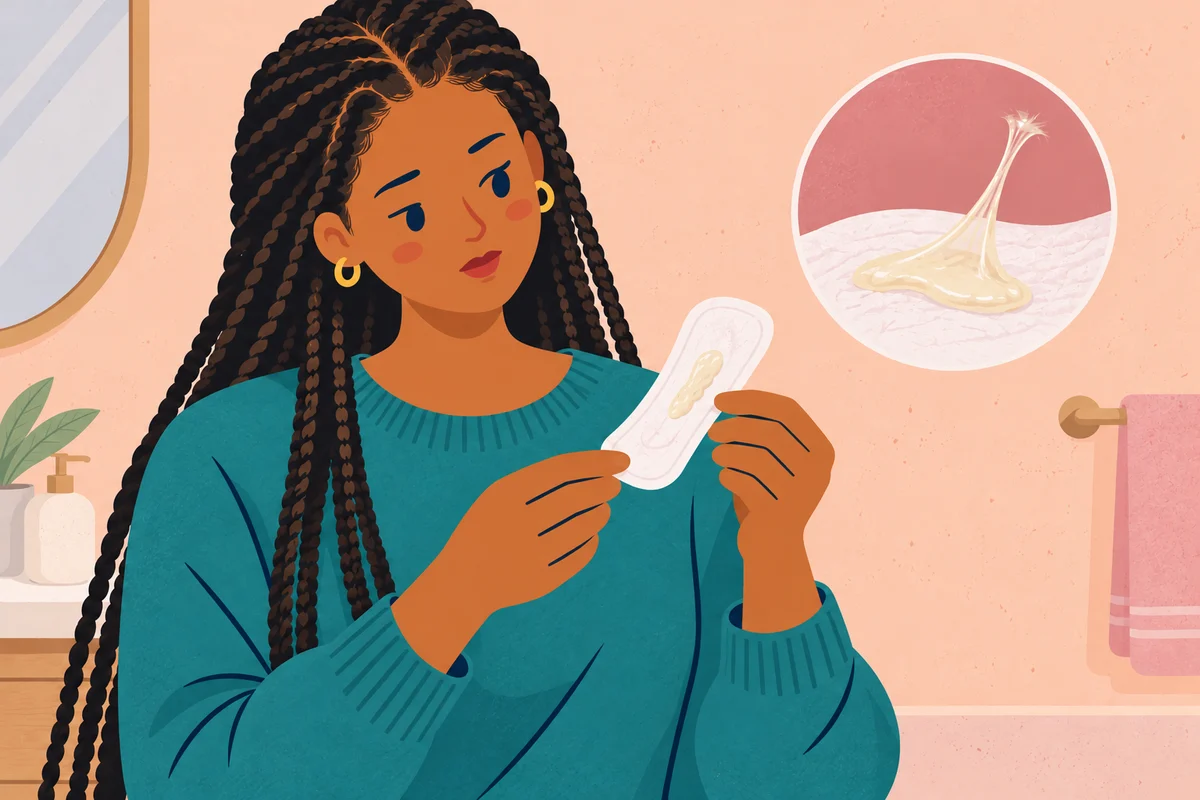
After a few days of slippery discharge, you may notice thicker mucus or much less visible fluid. That can fit an ordinary cycle pattern. The change is still an observation, rather than proof of an exact ovulation date or the outcome of that cycle.
Hormones can change the texture
Rising estrogen before ovulation is associated with wetter mucus. After ovulation, progesterone tends to make cervical mucus thicker and less noticeable. The sequence and what you see can vary between people.
A textbook example is not a daily checklist your body must follow. For the earlier part of the pattern, see clear and stretchy discharge. Describe your own experience in ordinary words rather than trying to assign every day to a picture.
Keep the word presumed when timing is uncertain
If an app estimated ovulation, later creamy discharge does not independently prove that the estimate was correct. If a urine test was positive, it detected a hormone rise rather than the egg itself. Our ovulation confirmation guide explains those distinctions.
This matters when you are deciding whether a period is late. A record can include both the estimated date and what you observed, without treating either as a confirmed biological timestamp.
Do not use discharge as a pregnancy test
Discharge can change during pregnancy, but its amount or texture cannot establish pregnancy. Similar appearances can occur in cycles that do not result in pregnancy. Repeated inspection may leave you with more descriptions but no clearer answer.
Use a pregnancy test from the first day of a missed period. If you do not know when the next period is due, test at least twenty one days after the relevant sex. Follow the instructions and repeat an early negative result after a few days if pregnancy still seems possible.
Notice symptoms that need their own assessment
A change accompanied by itching, soreness, an unpleasant odor, pain when urinating, or unexpected bleeding should not simply be labeled a normal hormone effect. Ask for advice about the symptoms.
Keep external washing gentle and avoid douching or scented products inside the vagina. If you bring a record to an appointment, include recent medicines, products and sexual activity that may affect how discharge looks. You do not need to decide the diagnosis before seeking help.
References

Lifeing Editorial
Stories for a little more understanding, a little more reassurance, and the everyday moments in between.
Related posts
Cervical mucus versus BBT: What Each Tracking Method Adds