
Changing newborn diapers: Cleaning, Comfort, and Skin Protection

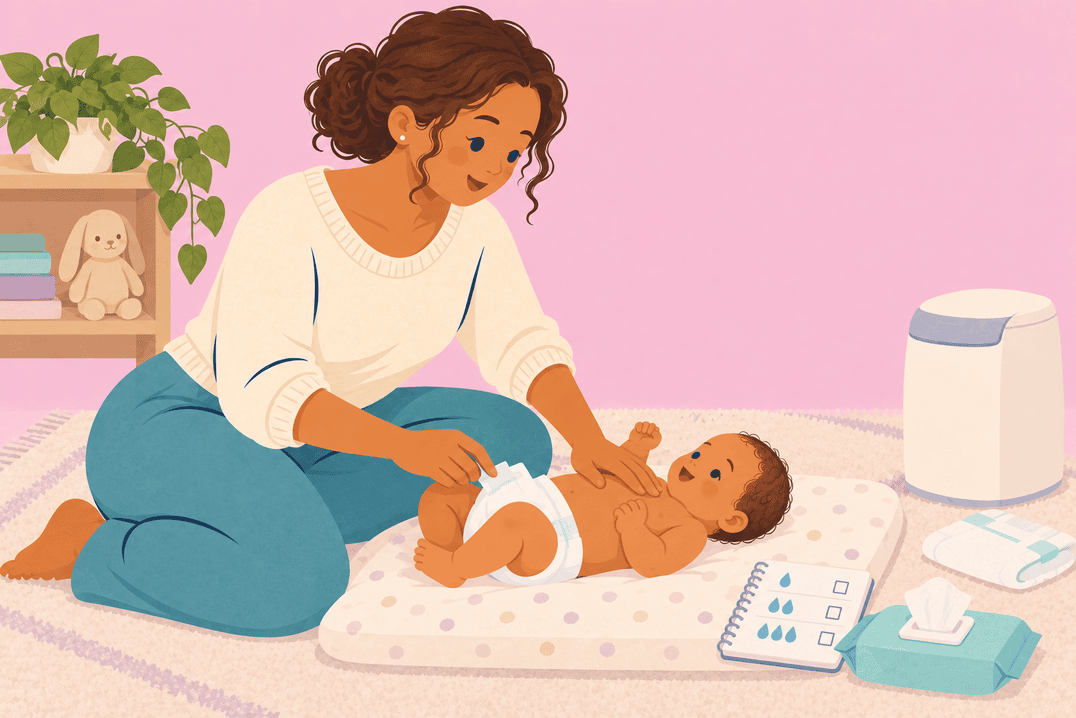
Changing a newborn diaper becomes easier when everything is within reach before you begin. You need a clean diaper, a washable changing surface, water and cotton wool or suitable wipes, and a way to dispose of the used diaper safely. The routine can stay simple even when it needs repeating often.
Choose a safe place to change
A mat on the floor is a safe option because your baby cannot fall from a height. If you use a raised surface, keep a hand on your baby and never leave them there alone. Take them with you if you need to fetch something. A strap is not a substitute for supervision.
Wash your hands before and after changing. Keep creams, wipes and plastic disposal bags out of reach. Thin nappy sacks can obstruct a baby’s breathing, so store them securely and never leave them in a cot or where a baby could grab them during a change.
Clean gently and dry the folds
Remove the dirty diaper and clean away urine or stool using warm water and cotton wool, or wipes without alcohol or fragrance. Clean from front to back and take care around the skin folds. Do not pull back a baby boy’s foreskin to clean underneath it.
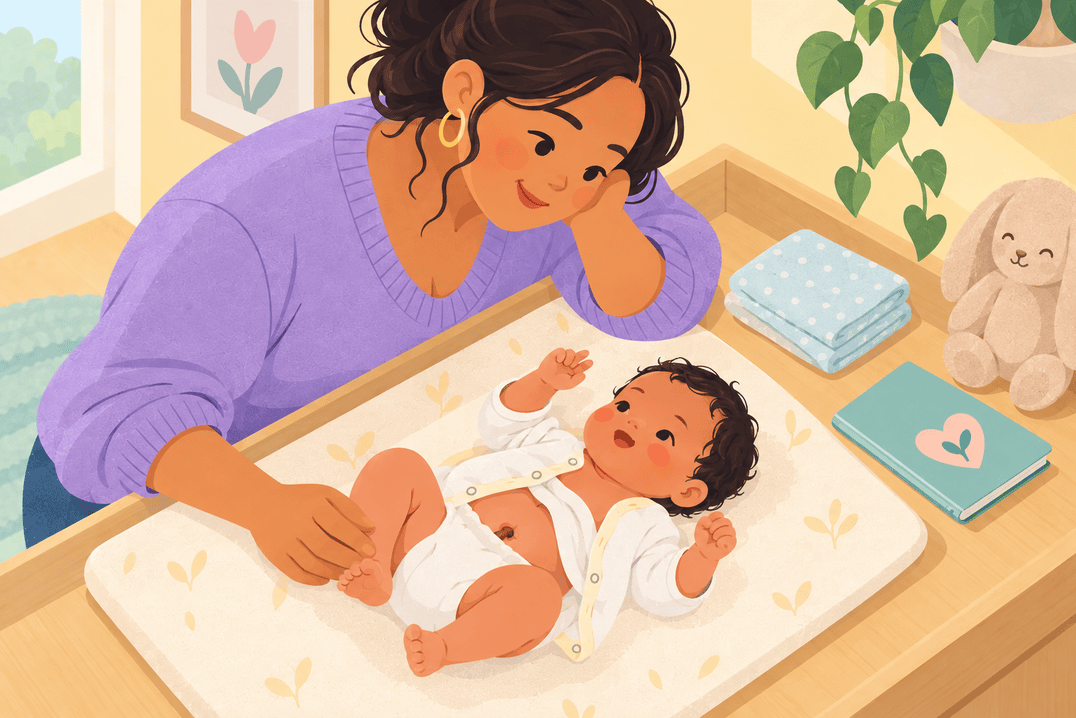
Pat the skin dry rather than rubbing it. Put on a fresh diaper that fits comfortably without digging in. Keep its edge away from the healing cord area. Our cord care guide explains how to keep the stump clean and dry without pulling it.
Protect skin that becomes irritated
Change wet or dirty diapers promptly. If the skin becomes sore, a pharmacist or clinician can advise about a suitable barrier product; a thin layer is usually enough. A little time without a diaper may help, with your baby warm, supervised and on a washable surface.
Avoid talcum powder, antiseptics and fragranced products. Do not add a medicated cream simply because a rash looks similar to an online photograph. Rashes can have different causes, and treatment should match the assessment. Ask for help if the rash persists, spreads or makes your baby uncomfortable.
Notice changes without making each diaper a test
Diaper contents can provide useful information about feeding and health. The wet diaper guide explains what to record and when reduced output needs attention. Not every variation means illness, but a concerning change is worth describing to your care team.
If your newborn seems unwell, feeds poorly or develops fever, seek medical help rather than treating only the skin. A temperature of 38°C or above in a newborn needs emergency assessment. Finish by safely disposing of waste, cleaning the changing surface and washing your hands.
References

Lifeing Editorial
Stories for a little more understanding, a little more reassurance, and the everyday moments in between.
Related posts
Cheese during pregnancy: How Pasteurization and Preparation Matter