
Combined pill basics: How It Changes Ovulation and Bleeding
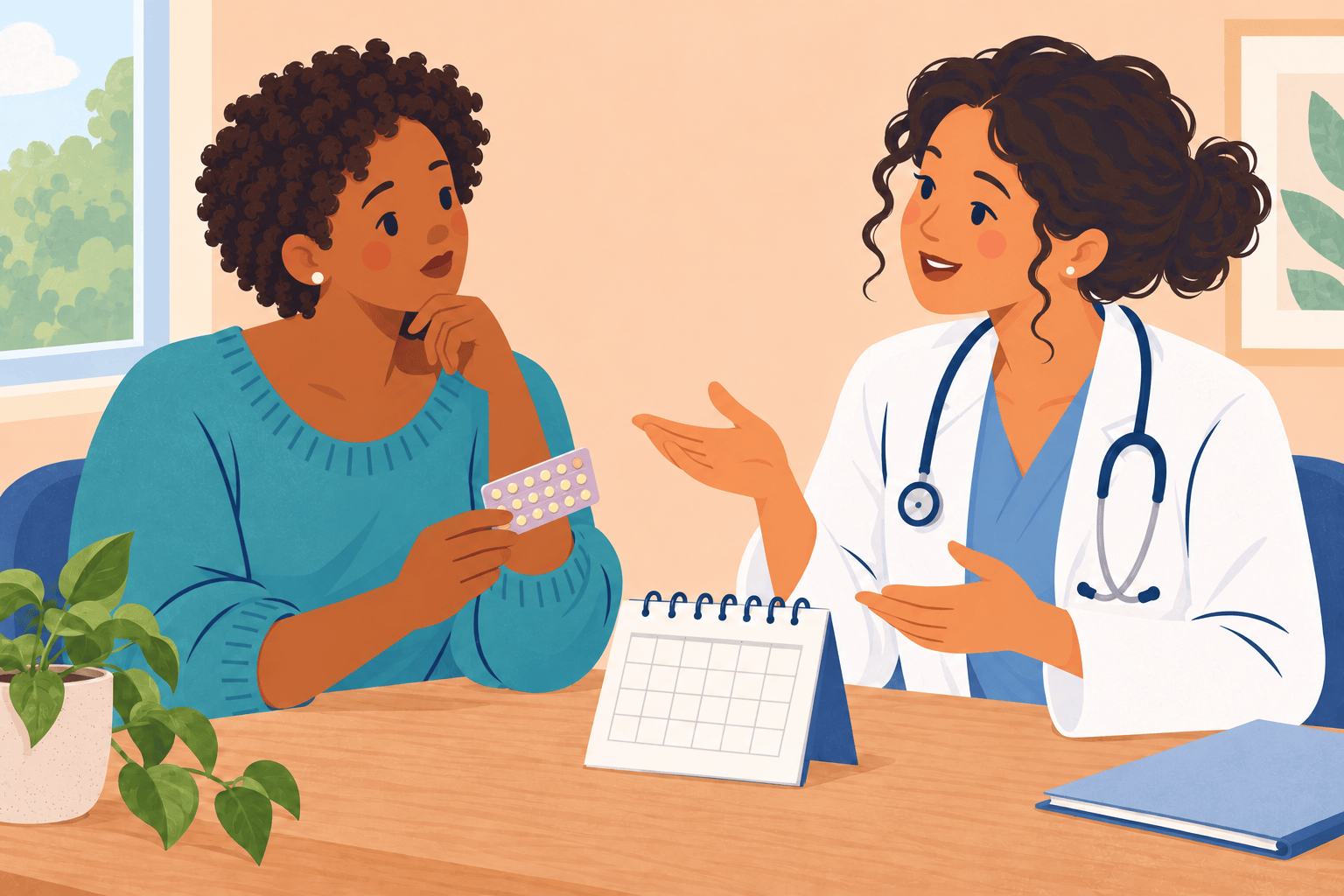
The combined contraceptive pill contains estrogen and a progestogen. Its main contraceptive action is to prevent ovulation, the release of an egg. It also changes cervical mucus and the uterine lining. The bleeding pattern while taking it therefore does not represent an untreated menstrual cycle.
Understand the bleeding in a pill pack
Some packs contain active tablets followed by inactive tablets. Other regimens include a planned interval without tablets. Bleeding during the interval without hormones is called a withdrawal bleed. It can be lighter than a natural period, and some suitable regimens reduce or omit scheduled bleeds.
The pill break guide explains why a monthly withdrawal bleed is not medically necessary for everyone using combined contraception. The exact schedule still matters: extending a break or missing active tablets can affect protection.
Check suitability before choosing it
A clinician should review your medical and medication history and check blood pressure. Migraine with aura, a history of blood clots, some cardiovascular or liver conditions, smoking at older reproductive ages, and other factors may make estrogen unsuitable.
This review should also include recent pregnancy or birth, breastfeeding, and new medicines. A routine internal pelvic examination is not generally required simply to prescribe the combined pill to someone without relevant symptoms.
A progestogen only pill is one possible alternative, but every method has its own suitability considerations. The best choice also depends on how easy you find daily tablet taking.
Separate benefits from guarantees
The pill may help with heavy or painful bleeding, acne, and some symptoms related to the menstrual cycle. It does not guarantee the same improvement for everyone or identify the cause of symptoms just because they respond.
It does not protect against sexually transmitted infections. Condoms remain relevant when infection protection is needed.
Leave with practical instructions
Ask when pregnancy protection begins, how to identify active tablets, and what to do after missed doses or sickness. Check possible interactions before starting another medicine or herbal product.
Arrange a way to obtain the next pack before your supply runs out. If side effects interfere with daily life, ask for a review rather than repeatedly stopping and restarting without a contraception plan.
References
- NHS: What the combined pill does (opens in a new tab)
- NHS: Who can take the combined pill (opens in a new tab)
- NHS: How to take the combined pill (opens in a new tab)
- CDC: Combined hormonal contraception practice guidance (opens in a new tab)
- FSRH: Combined hormonal contraception guideline, amended October 2023 (opens in a new tab)

Lifeing Editorial
Stories for a little more understanding, a little more reassurance, and the everyday moments in between.
Related posts


Combining LH tests with cycle notes: Building a Clearer Record