
Progestogen only pills: How They Differ From Combined Pills

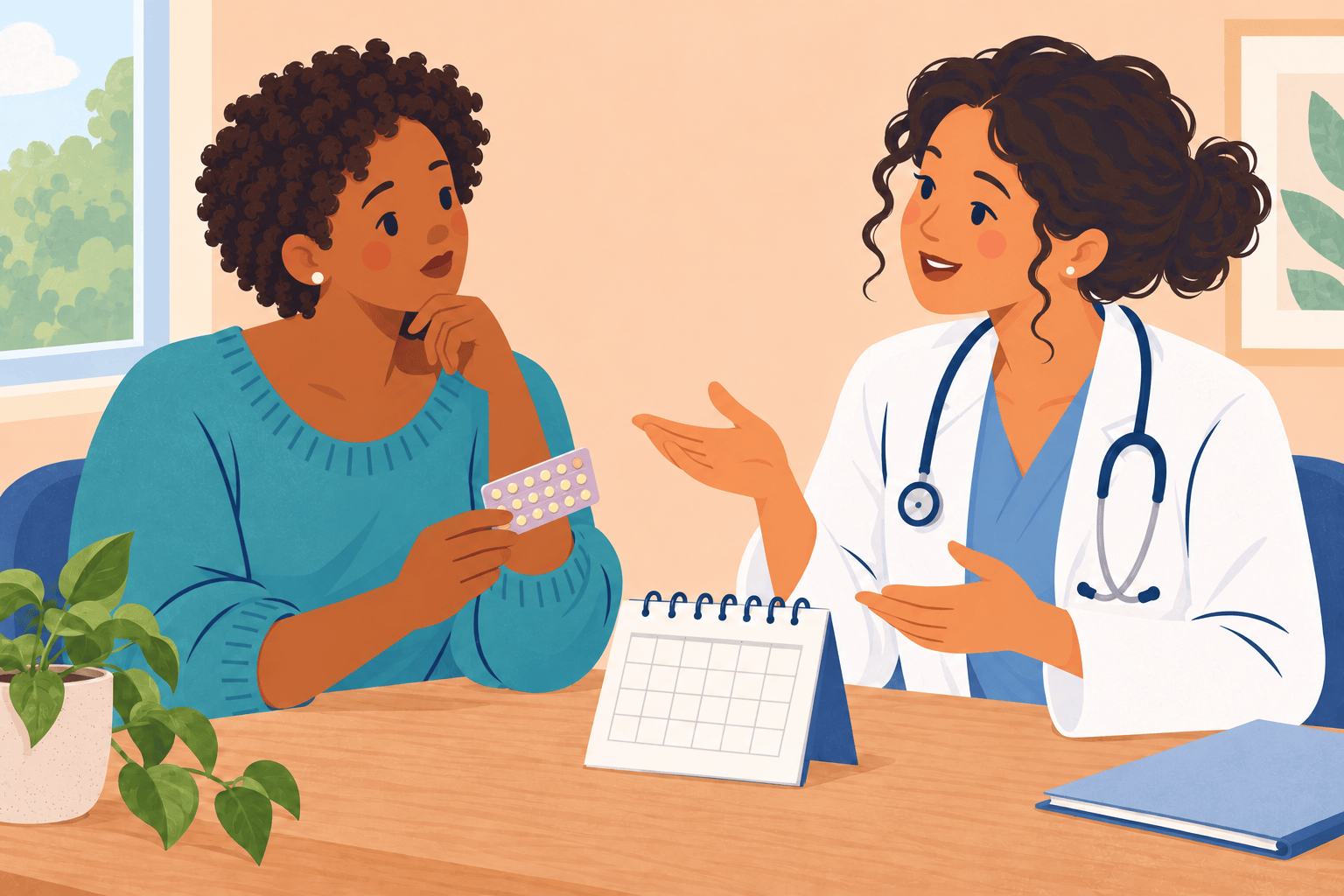
A progestogen only pill contains a progestogen without estrogen. It is sometimes called a mini pill. This can be an option for many people who cannot use estrogen, including some who cannot take the combined pill, but it still requires a suitability and medicine review.
The name describes a group of products, not one universal set of instructions.
Understand the differences within the group
Traditional progestogen only pills work importantly through changes in cervical mucus and do not consistently stop ovulation in every cycle. Other formulations suppress ovulation more consistently. The mechanism and dosing instructions depend on the active ingredient.
The combined pill guide explains how pills containing estrogen differ. Neither type protects against sexually transmitted infections, so condoms remain relevant when infection protection is needed.
Check your timing window and pack
Traditional products, desogestrel, and drospirenone pills have different late dose windows. In UK instructions, these are commonly three, twelve, and twenty four hours respectively. These windows are not permission to take pills at random times; a consistent daily routine is still useful.
Most progestogen only packs contain active tablets every day. Some drospirenone packs contain active tablets followed by inactive tablets. Follow the sequence in your own pack and start the next pack as instructed. Do not add an extra break because bleeding has started or stopped.
If a dose is outside its window, consult the product leaflet or a pharmacist. The missed pill guide explains why the type, timing, and recent sex all matter.
Expect a different bleeding pattern
Bleeding may become lighter, irregular, more frequent, or absent. Spotting does not automatically mean the pill has failed, and absent bleeding does not itself diagnose pregnancy. Persistent troublesome changes or symptoms such as significant pain need assessment.
Discuss suitability and protection before switching
Tell the prescriber about breast cancer history, liver or kidney conditions, other significant illness, and all medicines or supplements. Some products have particular interaction concerns, including medicines that affect potassium.
Ask when protection begins and how long any additional contraception is needed. The answer differs between products and starting circumstances. If daily tablet timing remains difficult, another method may fit better than repeatedly managing missed doses.
References
- NHS: Who can take the progestogen only pill (opens in a new tab)
- NHS: How to take the progestogen only pill (opens in a new tab)
- NHS: Progestogen only pill side effects (opens in a new tab)
- CDC: Progestin only pill practice guidance (opens in a new tab)
- Exeltis: Slynd patient information leaflet (opens in a new tab)
- NHS: What the combined pill does (opens in a new tab)

Lifeing Editorial
Stories for a little more understanding, a little more reassurance, and the everyday moments in between.
Related posts

Questions for your midwife: Starting a Useful Pregnancy Notebook