
Condom breakage: Immediate Steps and Follow Up Questions
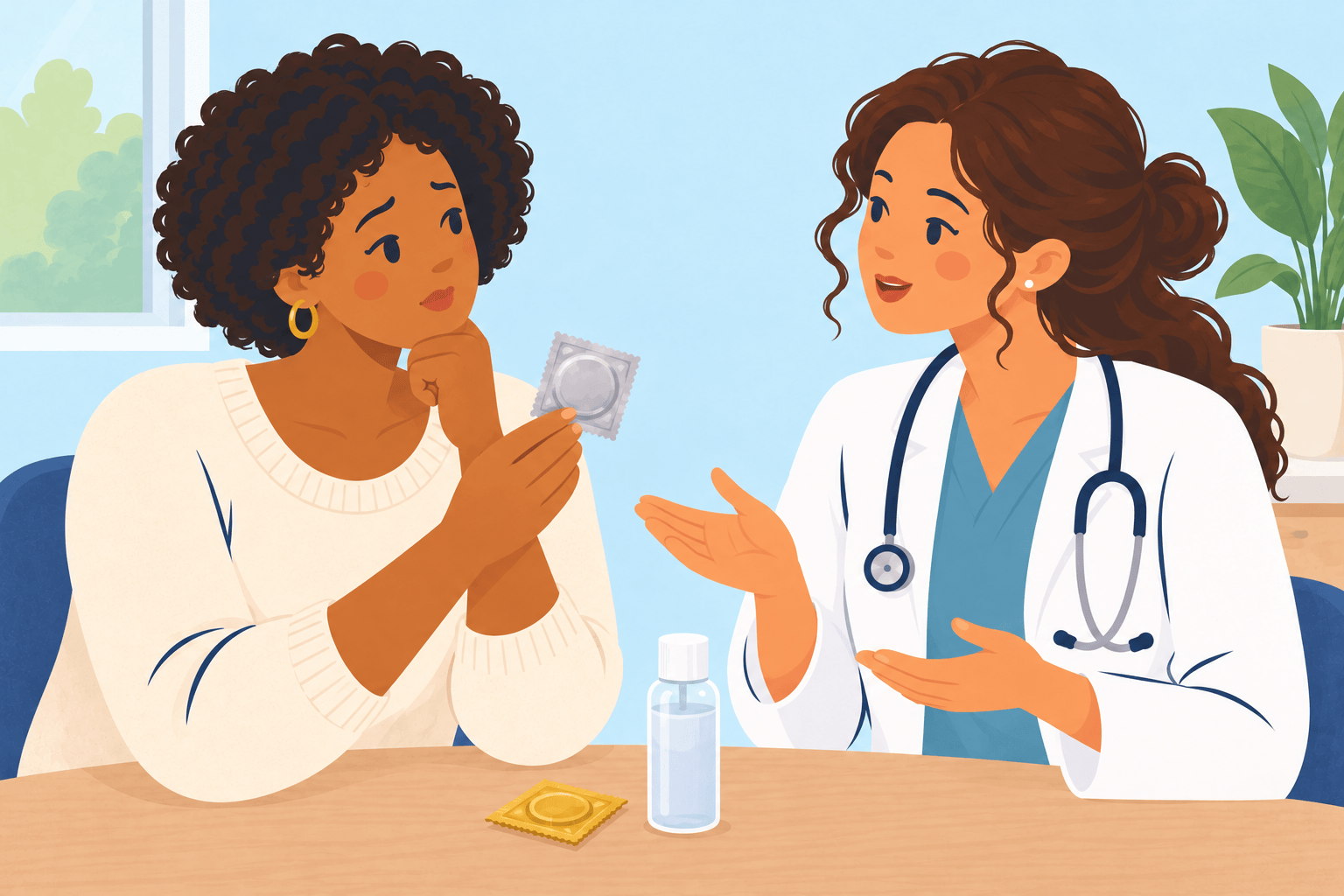
If a condom breaks or comes off during sex, stop and replace it before continuing. Then seek prompt advice about pregnancy and infection prevention. The next steps depend on what contact occurred, whether another reliable contraceptive method was being used, and how long ago it happened.
Assess pregnancy prevention promptly
If semen may have reached the vagina and pregnancy is not wanted, contact a pharmacist or sexual health clinic about emergency contraception. Mention your regular method and any missed doses or other problems. Do not wait for symptoms, a late period, or an app prediction of fertile days.
The emergency contraception guide explains the available options. A pregnancy test immediately after the incident cannot tell you whether that episode will lead to pregnancy. Ask for a follow up test date as well as immediate advice.
If the condom slipped off inside the vagina
A retained condom cannot travel beyond the vagina into the abdomen. If you can comfortably reach it, try gently removing it with clean fingers. Do not use sharp objects or force. If you cannot remove it, are unsure whether part remains, or do not feel comfortable trying, ask a healthcare professional for help.
Removing it does not reverse any exposure to semen. Explain the slippage to the clinic even if you retrieve the condom intact. The pregnancy and infection assessment is separate from getting it out.
Consider infection exposure as a separate issue
Emergency contraception does not prevent sexually transmitted infections. Ask what testing is appropriate and when, since some infections are not detectable immediately after exposure.
If HIV exposure is possible, seek urgent assessment for preventive treatment called PEP. It must start within seventy two hours, and sooner is better. Do not delay that assessment while waiting for a routine STI appointment.
Reduce another problem without blaming yourself
Check the expiry date, packaging, application technique, and lubricant compatibility before using another condom. Hold the base during withdrawal and use a new condom for each act. The condom fit guide and lubricant guide can help identify a practical change. A break or slip is a reason to make a plan, not a reason to avoid asking for care.
Choose a pregnancy testing date
If you do not know when your next period is due, test at least twenty one days after the sex in which protection may have failed. If you test earlier because a period is late, an additional test may still be needed for a more recent exposure. Keep the dates of separate incidents clear.
Take a positive result seriously even if you usually use condoms. No method is completely effective, and feeling well does not make a positive test irrelevant. A clinician can discuss pregnancy care or your options if you are unsure what you want. The pregnancy testing guide explains how to use and interpret a test.
References
- NHS: Condoms (opens in a new tab)
- CDC: Correct condom use (opens in a new tab)
- Planned Parenthood: A condom retained in the vagina (opens in a new tab)
- NHS: Emergency contraception (opens in a new tab)
- CDC: HIV prevention after exposure (opens in a new tab)
- NHS: Doing a pregnancy test (opens in a new tab)
- FSRH: Emergency contraception clinical guideline (opens in a new tab)

Lifeing Editorial
Stories for a little more understanding, a little more reassurance, and the everyday moments in between.
Related posts

Condom sizes and fit: Reducing Problems During Use