
Emergency contraception choices: Why Timing and Method Matter

If contraception was not used or may have failed, seek advice about emergency contraception as soon as possible. You do not need to wait until the next morning. A pharmacist or sexual health service can help choose an option based on timing, your regular method, medicines, and personal circumstances.
Know the main options
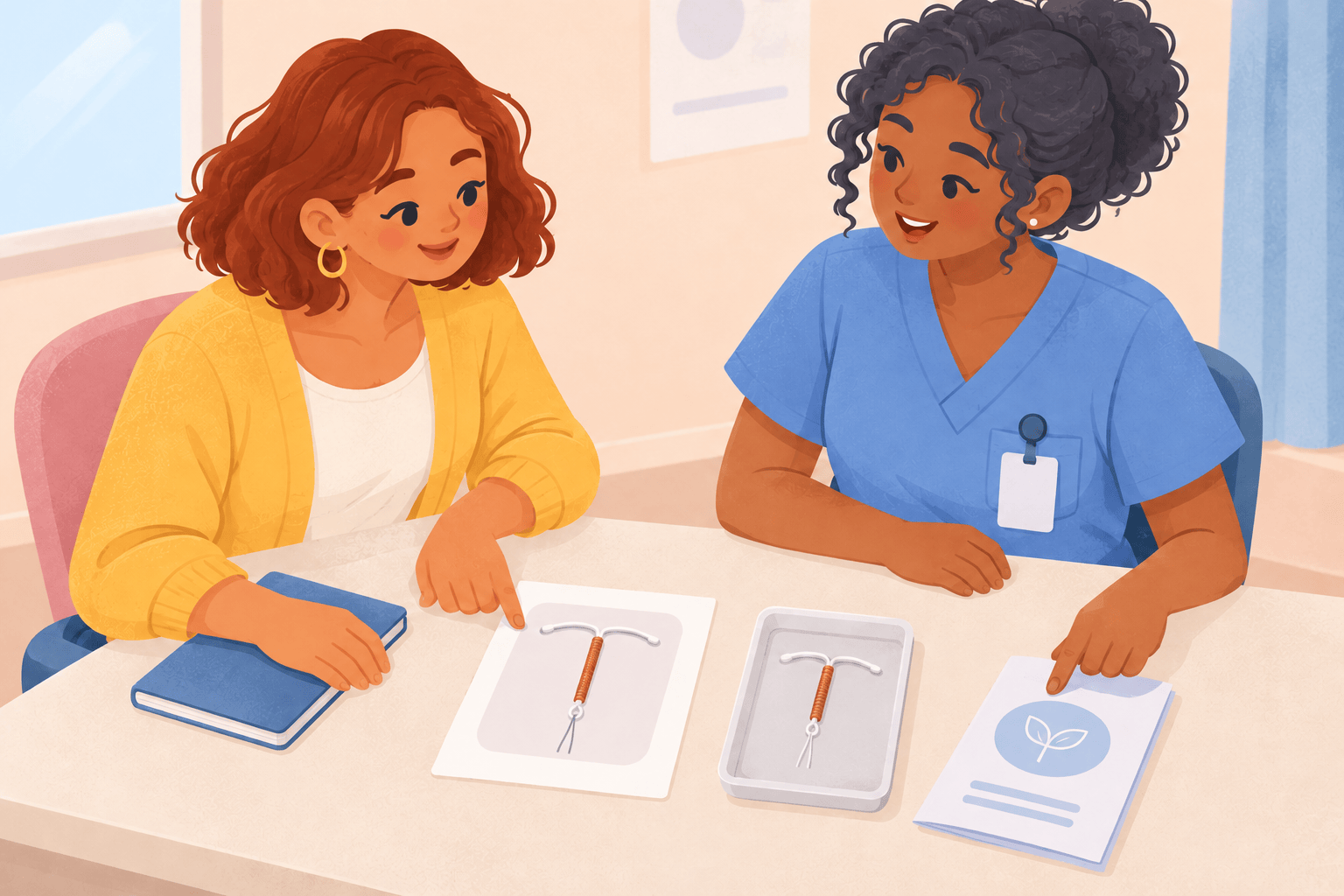
A copper coil is the most effective established emergency method and can provide ongoing contraception afterward. It requires a fitting appointment. Emergency pills are another option and mainly work by preventing or delaying ovulation; they do not end an established pregnancy.
In the UK, levonorgestrel pills are normally used within seventy two hours after sex, while ulipristal acetate can be used within one hundred and twenty hours. Seek advice promptly even if you think a time window has passed, because a clinic can assess whether a copper coil remains an option based on cycle timing.
The emergency copper coil guide explains what that appointment involves. An app estimate of ovulation should not be used to decide that seeking help is pointless.
Give the full timeline
Mention every recent episode of sex that could have caused pregnancy, not just the most recent one. Bring the name of your usual contraception and explain missed tablets, late injections, vomiting, or a condom problem.
Tell the pharmacist about all medicines and herbal products. Some can reduce pill effectiveness. Body weight can also influence the choice between options, but it should not be a reason to deny or delay access to emergency contraception.
Leave with a plan for afterward
An emergency pill does not protect you from pregnancy after further sex. Starting or resuming hormonal contraception can need different timing depending on which emergency pill you took. Ask for exact instructions and use the continued protection guide to prepare your questions.
Ask when to take a pregnancy test and what to do if you vomit after the dose. Emergency contraception does not protect against sexually transmitted infections, so discuss testing or other urgent care if relevant. Getting help now and arranging follow up are separate steps; do not delay the first while waiting for the second.
References
- NHS: Emergency contraception (opens in a new tab)
- NHS: Taking emergency contraceptive pills (opens in a new tab)
- NHS: Emergency pill suitability and interactions (opens in a new tab)
- CDC: Emergency contraception practice guidance (opens in a new tab)
- WHO: Emergency contraception (opens in a new tab)
- FSRH: Emergency contraception clinical guideline (opens in a new tab)

Lifeing Editorial
Stories for a little more understanding, a little more reassurance, and the everyday moments in between.
Related posts

Endometriosis and bladder symptoms: What to Tell Your Doctor