
Counting cycle days: Where Day One Really Starts
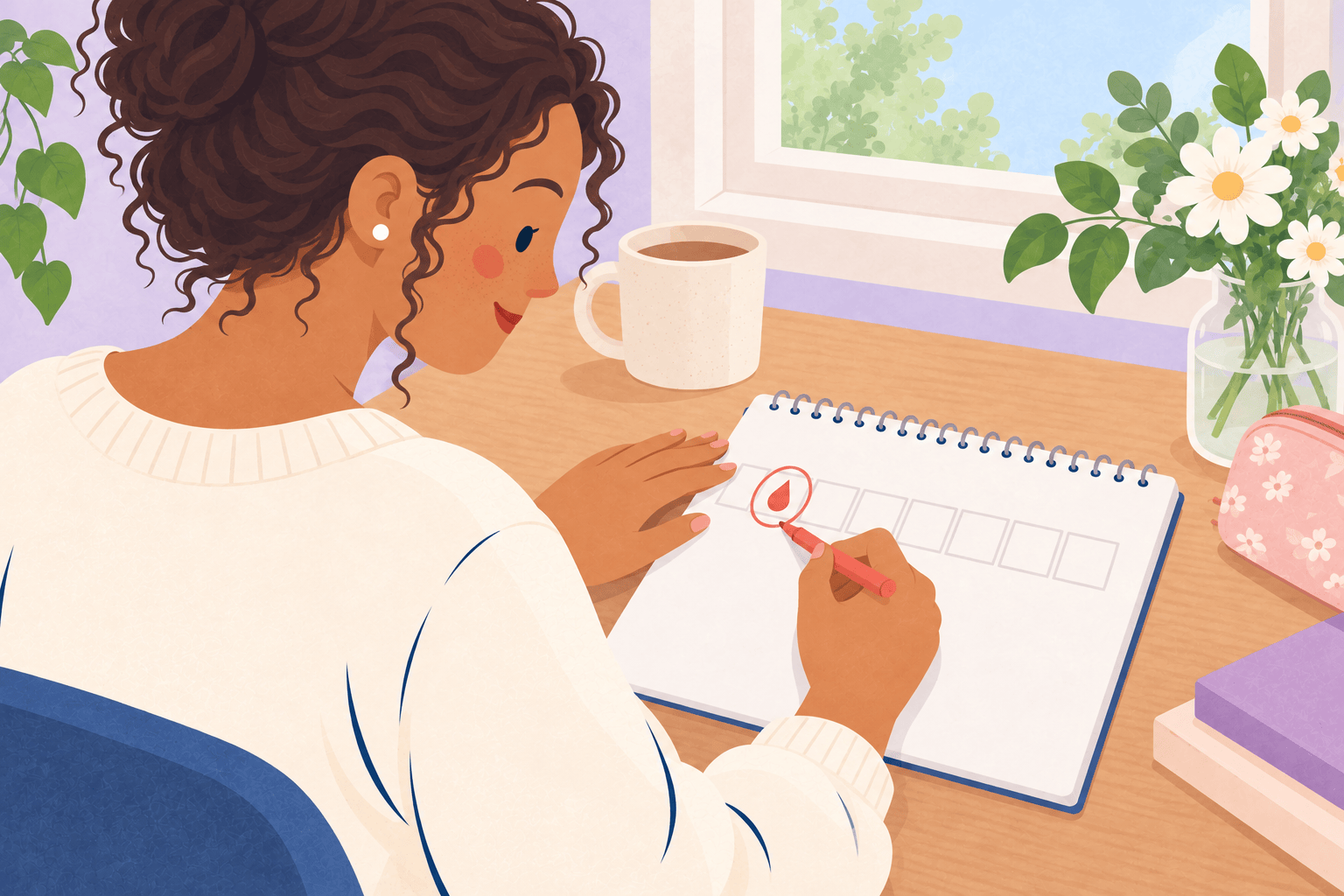
Cycle day one is the first day of your period. The final day of that cycle is the day before your next period starts. Keeping those two boundaries clear makes a record easier to interpret, whether you are discussing bleeding, planning a test, or following fertility treatment instructions.
Count start date to start date
If one period begins on June 4 and the next begins on July 2, the cycle lasted 28 days. July 2 becomes day one of the new cycle. The days when you were not bleeding still belong to the cycle.
This is different from period length, which describes the number of days the bleeding itself lasts. Recording both avoids a common misunderstanding when someone asks, “How long are your cycles?”
Keep uncertain bleeding visible
A little spotting can make the start date hard to choose. Note what happened: spotting on Monday, then your usual period flow on Tuesday, for example. You can preserve both observations without pretending there was a clear boundary.
If a fertility service asks you to call on day one, use that service’s definition and timing instructions. Do not guess how a late evening bleed affects a medication or appointment schedule. Contact the service when you are unsure.
Do not let an app change the facts
Log the date bleeding actually started, even if it differs from a forecast. Avoid entering a predicted period as though it already happened. An incomplete month is better marked as uncertain than filled with invented dates.
For routine tracking, a calendar or notebook is enough. The period tracking guide suggests additional details that can make a consultation more useful.
Let the clinical question determine test timing
Not every hormone test belongs on a fixed cycle day. For example, a progesterone test used to assess recent ovulation is generally timed relative to the expected next period, rather than automatically on day 21. Follow the clinician’s instructions and explain if your dates change. Counting accurately helps with planning, but a day number alone does not confirm ovulation.
References

Lifeing Editorial
Stories for a little more understanding, a little more reassurance, and the everyday moments in between.
Related posts

Days past ovulation: Counting DPO When the Date Is Uncertain