
Cradle Cap: Gentle Care for a Flaky Scalp
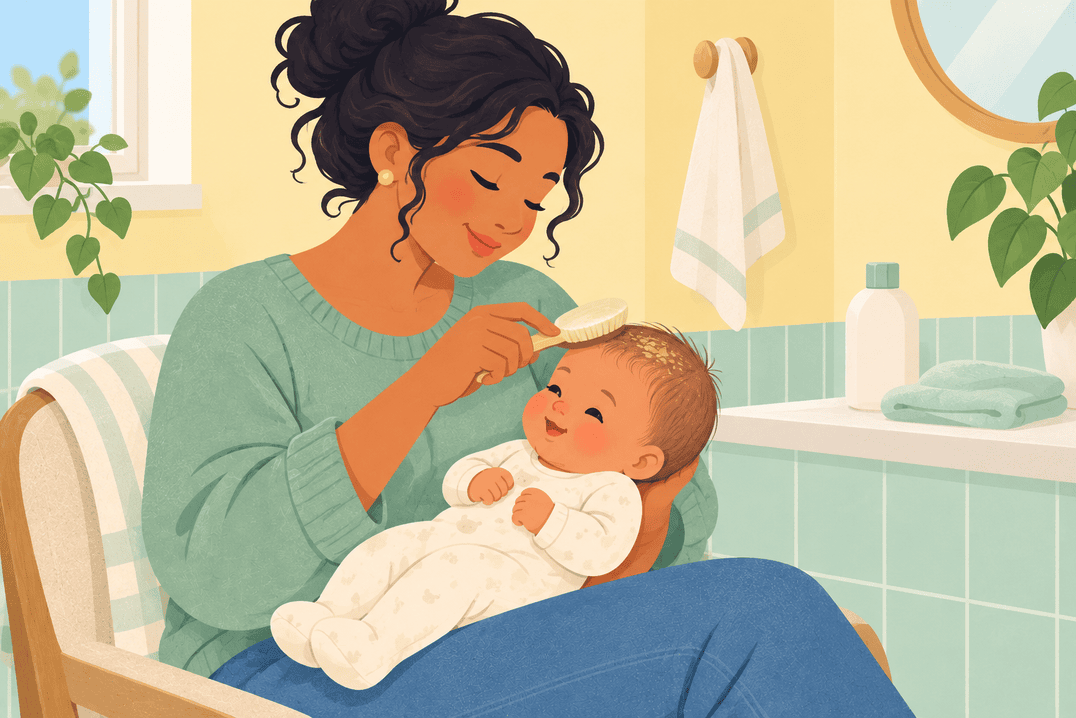
Greasy scales on a baby’s scalp can look striking even when the baby is comfortable. Typical cradle cap is common, is not contagious and usually settles with time. It is not usually painful or itchy. If the scalp seems sore or your baby is bothered by it, ask for advice rather than assuming every flake is cradle cap.
The aim of care is to keep the scalp comfortable, not to remove every scale in one session. Picking or scraping can damage the skin.
Start with a gentle routine
Use a mild baby shampoo without fragrance, following its directions. During washing, massage gently with your fingers or use a soft baby brush to loosen scales that are already ready to lift. Do not use fingernails, a stiff brush or an adult dandruff treatment.
For firmly attached scales, ask a pharmacist about a suitable emollient or other baby scalp product to soften them before washing. Follow the product’s instructions about application and removal. Do not assume a cooking oil or essential oil is appropriate simply because it is described as natural.
Avoid olive oil and peanut oil on the scalp. If ordinary care is not helping, ask about a product designed for cradle cap rather than choosing a medicated shampoo on your own. A baby with eczema or another skin condition may need a different washing plan.
Keep washing safe and comfortable
Prepare the towel and supplies before starting, support your baby’s head and shoulders, and keep them supervised throughout. Use warm rather than hot water and keep shampoo out of their eyes. Pat dry gently without rubbing the scalp.
You do not have to keep washing until all visible scales disappear. Choose a routine your baby tolerates, and ask about frequency if the skin becomes dry. The dry skin guide explains how to keep ordinary washing simple.
If an emollient is recommended, remember that residue on towels, clothing and bedding can make those fabrics ignite more easily. Keep them away from flames and cigarettes. Products may also make skin and bath surfaces slippery, so maintain a secure hold.
Notice symptoms that do not fit simple cradle cap
Arrange a medical review if there is marked itching, pain, an unpleasant smell, significant hair loss or a rash spreading widely. Bleeding, leaking fluid, swelling or worsening skin also needs assessment. If your baby has a fever or seems unwell, seek advice promptly rather than continuing scalp care alone.
Small amounts of hair can come away with loose scales and usually grow back. That is different from a persistent area of hair loss or a scalp that appears inflamed. Describe what you have noticed and how it has changed.
Scaly skin can also occur around the eyebrows or in other areas. Do not put scalp products near the eyes unless advised. For an affected nappy area, the diaper rash guide explains gentle care and reasons for review.
Ask for a review when progress stalls
If there is no improvement after a few weeks of gentle treatment, ask your clinician to check the diagnosis and plan. Bring the names of anything you have used. There is no need to escalate through stronger products without guidance.
Cradle cap and baby eczema can require different approaches. Explaining whether your baby is itchy, uncomfortable or sleeping poorly helps the clinician choose care for the actual problem, rather than treating the appearance alone.
References

Lifeing Editorial
Stories for a little more understanding, a little more reassurance, and the everyday moments in between.
Related posts


Cramping after embryo transfer: When to Call Your Clinic