
Diaper Rash: Protecting Skin and Getting Help When It Persists
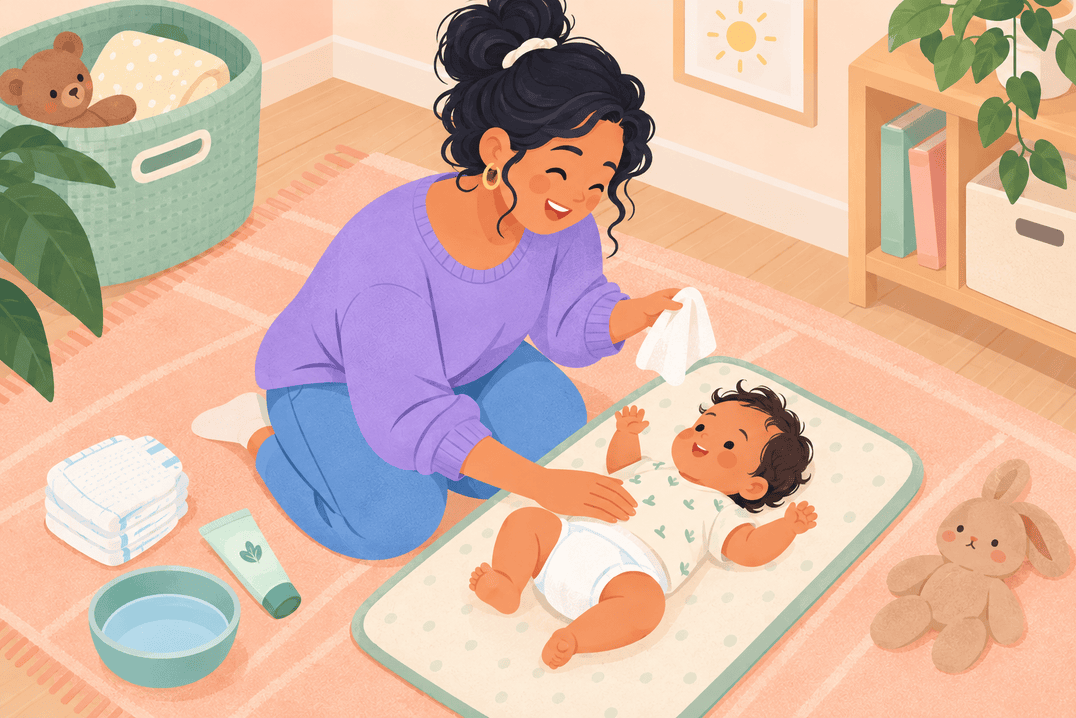
Diaper rash, also called nappy rash, can make an ordinary change uncomfortable. Moisture, contact with urine or stool, rubbing and irritating products can all contribute. It can happen despite careful care, and a persistent rash deserves a review rather than blame or increasingly vigorous cleaning.
Start by noticing where the skin is affected and whether your baby otherwise seems well. A mild irritated area and a rash with blisters, discharge or fever need different responses.
Make each change gentler
Change wet or dirty nappies promptly. Clean away urine and stool with water and a soft cloth, or wipes without alcohol or fragrance if your baby tolerates them. Avoid scrubbing. Pat dry gently and allow short periods without a nappy when it is practical and your baby can stay comfortably warm and supervised.
Check the fit. A tight nappy can rub; a suitable absorbent nappy helps keep moisture away. For reusable nappies, follow washing instructions and change wet liners promptly. Prepare the clean nappy and supplies before starting so you can keep your baby safely within reach throughout the change.
Avoid talcum powder, antiseptic lotions, fragranced products, soap and bubble bath on irritated nappy skin. Adding several products at once makes it harder to tell what helps or irritates. A simple routine is easier to repeat consistently.
Ask about a suitable barrier product
A pharmacist can recommend a barrier cream appropriate for the baby’s skin. Products containing zinc oxide are commonly used. Follow the particular product’s instructions about how much to apply and ask how to clean and reapply it gently.
Guidance on the thickness of a barrier layer varies with the product and the severity of irritation. There is no need to scrub the skin to remove every trace of clean cream at each change. Remove soiling gently and ask for advice if cleaning is painful or the skin is very raw.
Ordinary moisturiser, barrier cream and a prescribed treatment are not necessarily interchangeable. The dry skin guide covers everyday washing and moisturising, while a sore nappy area may need a different product and plan.
When the usual routine is not enough
Arrange a medical review if the rash does not improve, keeps returning, spreads outside the nappy area or becomes more uncomfortable. Seek prompt advice for blisters, pus, leaking skin or a baby who is hard to console. Fever should not simply be attributed to local irritation.
A baby in the first three months with a temperature of 38°C or higher needs immediate medical assessment. Get emergency help for difficulty waking, breathing difficulty, blue or grey colouring, or a rash that does not fade under pressure. Our rash with fever guide explains why the baby’s overall condition matters.
Persistent irritation can have more than one cause. A clinician may need to consider a fungal or bacterial infection, another skin condition or a reaction to a product. The pattern alone is not enough for a parent to choose an antifungal, antibiotic or steroid cream safely.
Prepare for a useful review
Write down when the rash started, which wipes, nappies and creams you use, and whether your baby has had diarrhoea or recent medicines. Bring the product names and explain what changed after using them. Photographs can show progression if you have them, but do not delay care to take pictures.
If treatment is prescribed, ask exactly where, how often and for how long to apply it, and whether to continue the barrier product. Confirm when improvement should begin and what to do if it does not. Do not extend a steroid treatment or switch to a stronger one yourself.
If your baby also has itchy patches elsewhere, mention them; the eczema guide explains the value of a separate skin care plan. Keep the agreed instructions available for everyone who changes your baby’s nappy.
References

Lifeing Editorial
Stories for a little more understanding, a little more reassurance, and the everyday moments in between.
Related posts


Diarrhea in Babies: Watching for Dehydration