
Rash With Fever or Spots That Do Not Fade: When to Get Help
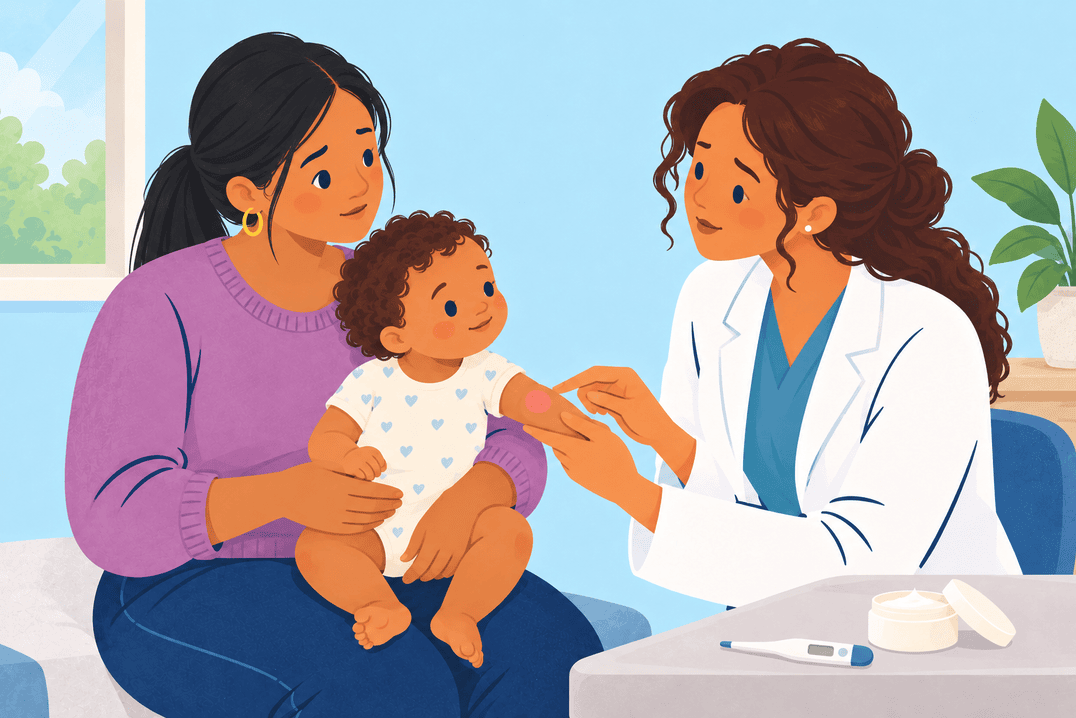
A rash with fever can have several causes, and its appearance alone cannot establish which one is responsible. Start with how your child is breathing, responding and drinking. A child who seems seriously unwell needs help even when the rash is small or difficult to see.
Call your local emergency service for a rash with breathing difficulty, blue or grey colouring, difficulty waking, confusion, a stiff neck, or sudden swelling of the mouth or throat. A rash that does not fade under pressure also needs immediate emergency assessment.
A rash that does not fade needs immediate assessment
A rash that remains visible when the side of a clear glass is pressed firmly against it is sometimes described as non blanching. It may look like small spots or larger patches. This needs immediate emergency assessment, even when you have not measured a fever. Do not wait for spots to become bigger, spread or turn purple. Do not delay calling for help while repeatedly checking it. If you cannot tell what you are seeing and your child seems unwell, seek urgent medical assessment.
Meningitis and other serious illnesses do not always cause a rash. A rash can also change during an illness. A rash that fades, or the absence of one, cannot rule out a serious problem. Look at the child rather than treating one test as permission to wait.
Rashes and colour changes can be harder to see on brown or black skin. Palms, soles, lips and the inside of the eyelids may make changes easier to notice. Do not postpone care because you cannot find a colour change that matches an online image.
A glass test shows whether a mark fades; it does not identify the cause or tell you how serious the illness is. Do not use a photograph, a video consultation or an earlier reassuring examination as a reason to ignore a new rash that does not fade. If the rash changes this way after you have already sought care, get assessed again immediately.
Age and behaviour matter
A baby in the first three months with a temperature of 38°C or higher needs immediate medical assessment. UK guidance also treats 39°C or higher at three to six months as needing immediate assessment. A lower temperature is not reassuring when a baby is feeding poorly, unusually sleepy, floppy or otherwise unwell.
For an older child, contact a clinician promptly about a worrying rash with fever, reduced drinking or a change in behaviour. Our fever guide explains the observations to report. Do not wait for several symptoms to appear together.
Give the clinician a clear timeline
Describe where the rash started, whether it is spreading, whether it hurts or itches, and when the fever began. Mention recent medicines, vaccinations, travel and contact with someone who has an infectious illness. A photograph may help show a change over time, but taking one must not delay urgent help.
If you suspect a contagious illness such as measles, call the clinic before arriving so staff can arrange assessment safely. Tell emergency staff about the concern as well if emergency care is needed. Do not stay at home with a seriously unwell child simply to avoid exposing others.
Do not assume every new rash is the same
Some infections require particular treatment or advice for close contacts. Other rashes may relate to medicines or a recent vaccine. The guide to fever after vaccination explains why timing can be helpful without proving a cause.
Avoid starting leftover antibiotics, steroid creams or a new rash treatment while trying to identify the cause yourself. Follow the clinician’s advice and ask when to seek another review. Get help again if the child becomes less responsive, breathing changes or the rash worsens after an earlier assessment.
Once your child has been assessed, check the relevant nursery return guidance. Feeling better and completing any required time away from nursery are separate parts of the return plan.
References
- NHS: Rashes in babies and children (opens in a new tab)
- NHS: Meningitis symptoms and urgent care (opens in a new tab)
- NHS: When to get urgent medical help for babies and children under five (opens in a new tab)
- NHS: Fever in children (opens in a new tab)
- UK Health Security Agency: What to expect after vaccinations (opens in a new tab)
- NICE: Recognition and management of bacterial meningitis and meningococcal disease (opens in a new tab)

Lifeing Editorial
Stories for a little more understanding, a little more reassurance, and the everyday moments in between.
Related posts

Reading to babies: Making Books Part of Everyday Interaction