
Cramps before your period: Tracking Their Timing and Severity

Cramps can begin a day or two before menstrual bleeding. For some people that is a familiar pattern; for others it is a new change. The important questions are how early pain begins, how long it lasts, and how much it affects your day.
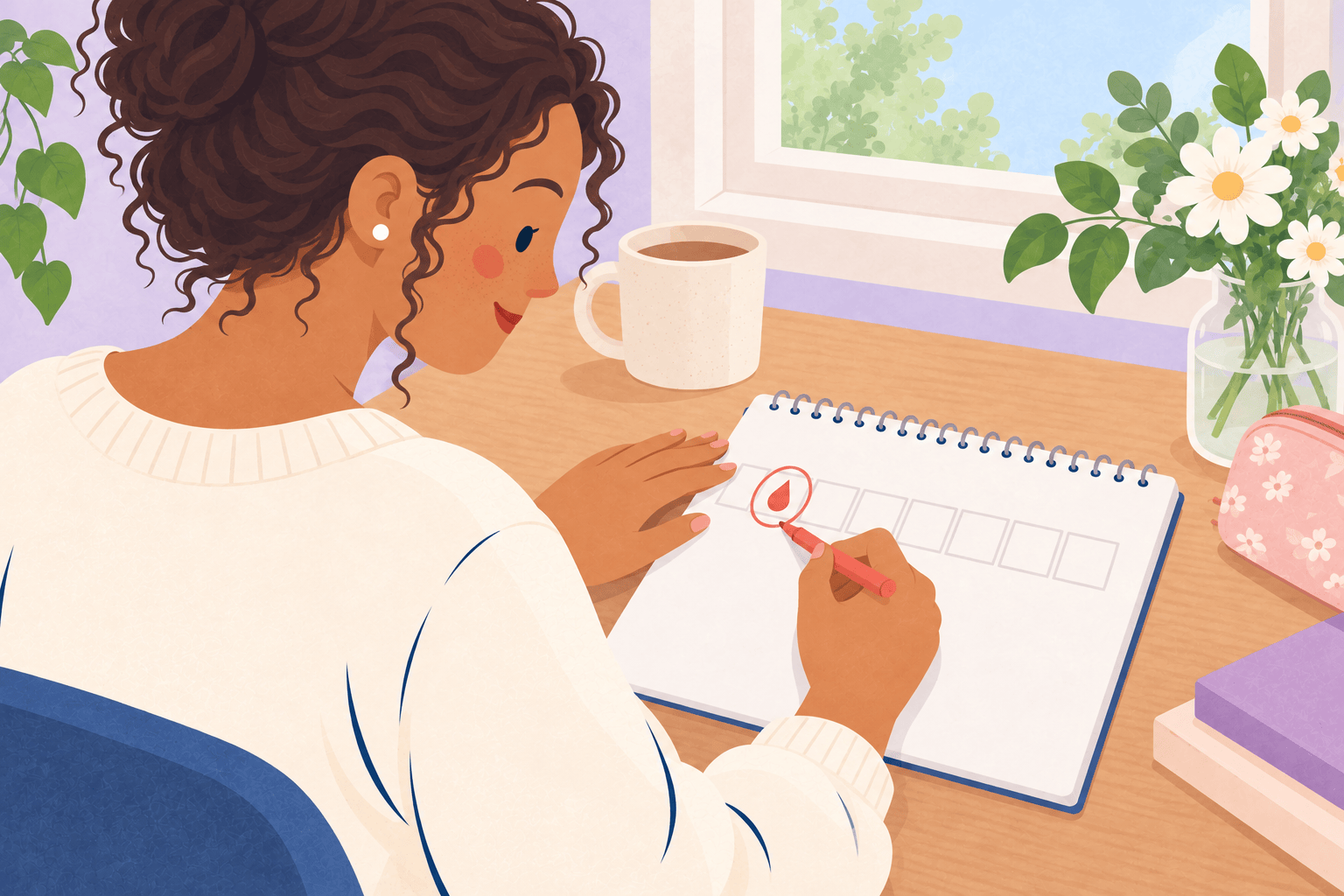
Record pain and bleeding separately
Write down the first day of pain as well as the first day of your usual flow. Note clear days and any spotting. This prevents an app or calendar label from hiding several days of symptoms before the period itself.
For example, “Cramps began Sunday evening, usual flow started Tuesday, pain settled Wednesday” is a useful description. The guide to counting cycle days helps keep the bleeding record consistent while preserving other symptoms.
Use timing to plan, not to diagnose
A predictable pattern can help with arranging supplies, rest, and a medicine discussion. Some medicines for cramps work best when started early in the symptoms. Ask a pharmacist or clinician how that applies to your chosen product and whether it is suitable for you.
Do not take extra doses or keep extending treatment because the period has not arrived. Our painkiller guide covers the questions to ask about timing, duration, and combinations.
Reassess a pattern that is changing
Pain that starts progressively earlier, continues after bleeding ends, or interferes with daily activities needs review. Conditions affecting the reproductive organs can cause pain outside the usual first days of menstruation. Timing alone cannot identify which cause applies.
Mention pain with sex, bowel movements, or urination. Include symptoms between periods rather than recording only the days you expect to matter.
Consider a late period and urgent symptoms
If pregnancy is possible and the expected period does not arrive, use a pregnancy test according to the timing instructions. A cramping sensation cannot confirm or rule out pregnancy.
Pelvic pain with possible pregnancy needs urgent advice. Sudden severe or worsening pain, fainting, shoulder tip pain, or difficulty breathing needs emergency care, whether or not bleeding has begun. Do not keep waiting for an expected period to explain symptoms that are becoming more concerning.
References

Lifeing Editorial
Stories for a little more understanding, a little more reassurance, and the everyday moments in between.
Related posts

Cycle changes after medication: What to Record Before Your Visit