
Cutting grapes for young children: Why Shape Matters
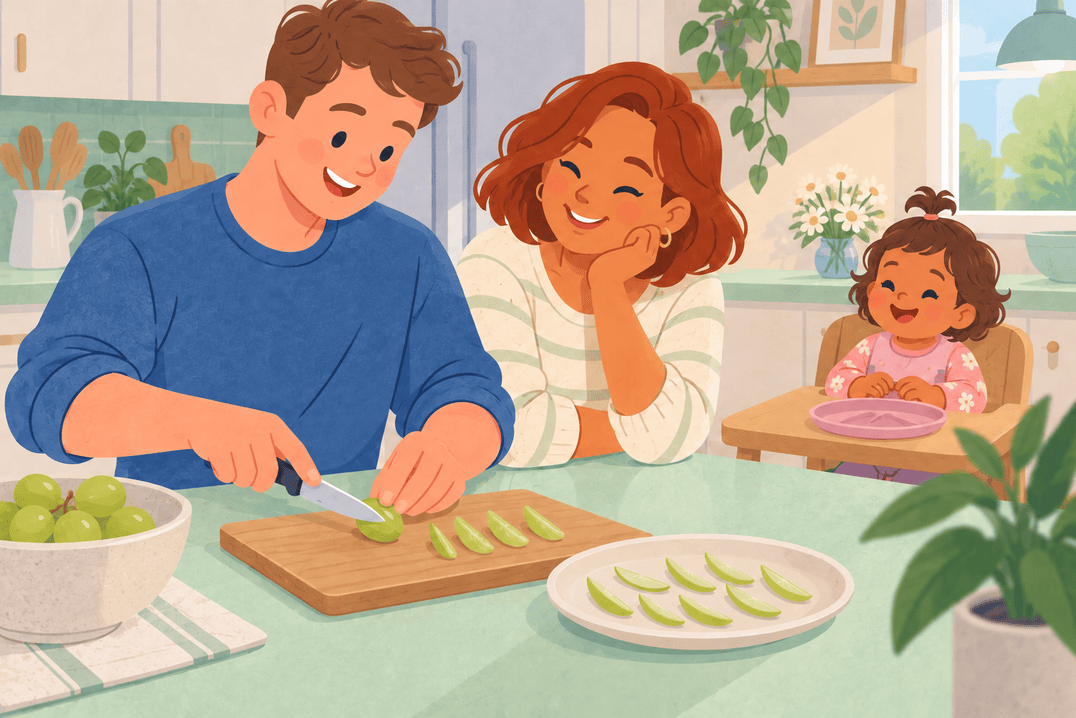
A whole grape is small enough to fit into a child’s mouth but can also block the airway. The important change is its shape, not simply making it look like a smaller snack. For babies and young children, prepare grapes as narrow lengthways quarters and adapt further if their eating skills require it.
Make the cuts along the length
Wash the grapes and remove stems. Place one on a stable cutting surface, with the longest direction running from the stem end towards the opposite end. Cut it in half along that length, then cut each half lengthways again.
The result should be four narrow pieces, rather than round discs. Cutting across the middle produces shorter rounded pieces and does not change the shape in the same way. A single lengthways cut leaves broad halves, so make the second cut too.
Remove any seeds. Check the finished pieces before serving, especially if another caregiver has prepared them or you have used a cutting gadget. The task is to produce suitable pieces, not simply to pass every grape through the same tool.
Consider the grape and the child
Grapes vary in size and firmness. A large firm grape may need further adaptation; quartering does not make every piece automatically appropriate. For a baby still learning textures, offer a softer suitable fruit if you cannot prepare the grape in a form they can manage.
Tough skin can also be difficult for very young children. Removing it may help with texture, but peeling alone does not remove the round shape of a whole grape. Our texture guide explains how to consider chewing and swallowing skills alongside age.
Do not use teeth, confidence or a previous uneventful snack as proof that whole grapes are now safe. Children with swallowing difficulties need their individual feeding plan, which may require a different texture altogether.
Check fruit offered outside your kitchen
Fruit bowls, party plates and packed lunches can contain whole grapes even when the rest of the food is suitable. Tell anyone feeding your child exactly how you cut them. “Small pieces” is less clear than showing narrow lengthways quarters.
Keep grapes for a seated, supervised snack rather than handing them over while your child runs or rides in a car. Preparation and supervision work together; neither replaces the other.
Apply the same thinking to other foods
Our toddler choking hazard guide covers cherry tomatoes, sausages, hard fruit and sticky foods. Different foods need different changes, so one cutting rule is not a complete meal safety plan.
If your child cannot breathe, cry or cough effectively, get emergency help and use age appropriate choking first aid. Do not wait for a colour change. Our gagging and choking guide explains the signs to learn before meals, alongside practical first aid training.
References
- NHS Healthier Together: Choking prevention (opens in a new tab)
- Child Accident Prevention Trust: Safer food preparation for children (opens in a new tab)
- NHS Best Start in Life: Preparing food safely (opens in a new tab)
- CDC: Choking hazards (opens in a new tab)
- Resuscitation Council UK: Paediatric life support guidelines (opens in a new tab)

Lifeing Editorial
Stories for a little more understanding, a little more reassurance, and the everyday moments in between.
Related posts


CVS testing: Questions About Timing, Results, and Risks