
Discharge before your period: Changes You May Notice

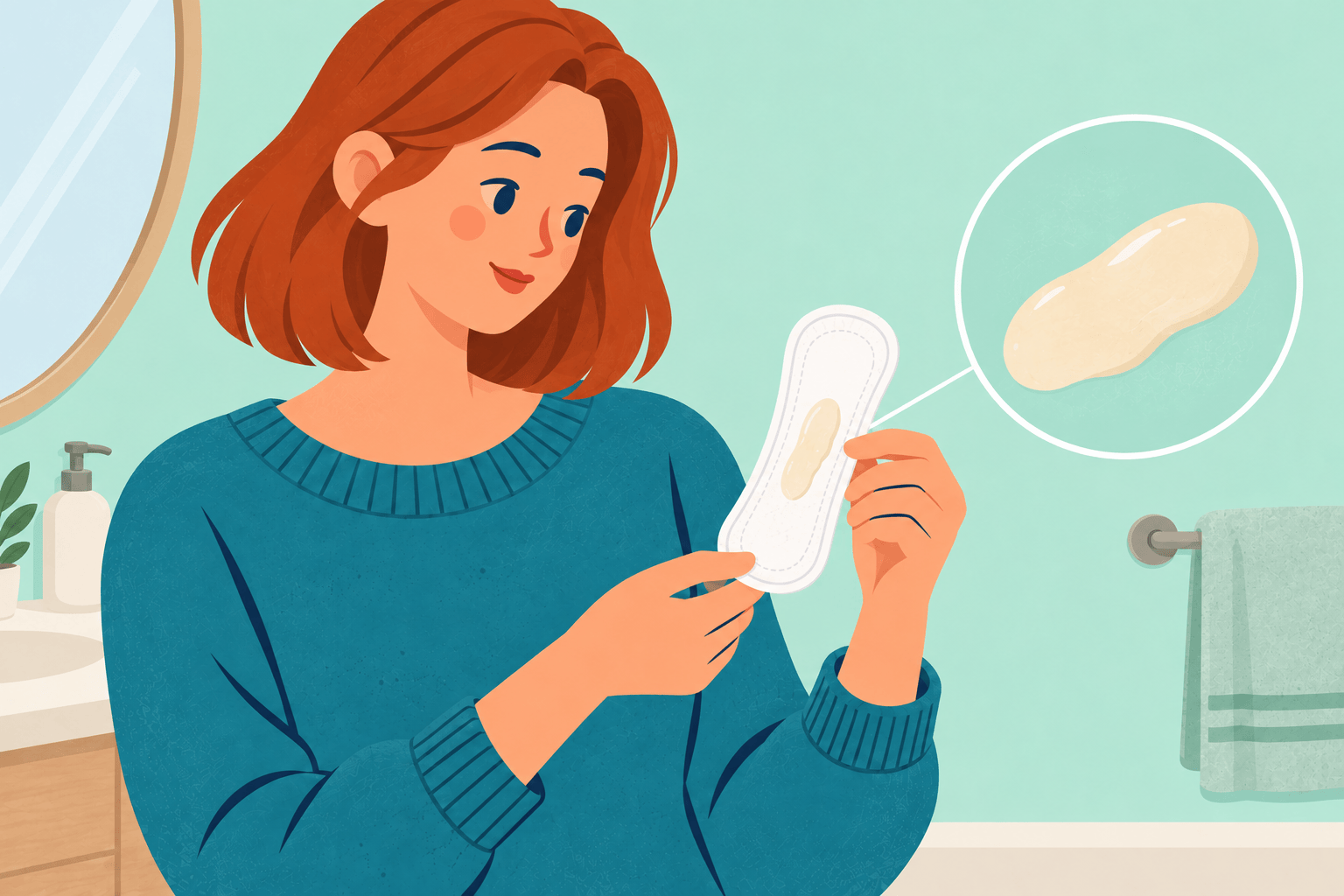
Discharge before a period can vary from one person or cycle to another. You may notice white or thicker fluid, or relatively little. There is no single appearance that proves a period is about to start, and an unfamiliar texture cannot confirm pregnancy.
Keep the expected date in perspective
A cycle prediction is an estimate, especially if your periods are irregular. Rather than deciding that discharge must fit a particular cycle day, record what you notice and whether it comes with any symptoms.
Our cycle discharge overview describes the ordinary range. A familiar variation without discomfort is different from a new change with itching, soreness, or an unpleasant smell.
Do not turn discharge into a pregnancy result
If pregnancy is possible and your period is late, use a pregnancy test at the appropriate time. Most tests can be used from the first day of a missed period. If you do not know when your period is due, test at least 21 days after the last unprotected sex.
The pregnancy test timing guide explains next steps when a result is negative but your period has not arrived. Discharge does not override a test result or settle uncertainty when testing was too early.
Separate thickness from irritation
Thick white discharge can occur with a yeast infection, particularly alongside itching or soreness, but that appearance is not diagnostic. If symptoms are new, bothersome, or keep returning, arrange assessment rather than assuming they will disappear when bleeding starts.
The thick discharge with itching guide explains why repeated antifungal treatment can miss another cause. Mention any pharmacy treatment already used and whether it helped.
Care for the area without trying to change the cycle
Avoid internal washing, fragranced products, and home remedies intended to remove normal fluid. Gentle external care is enough. There is no need to produce a particular amount of discharge before menstruation.
A short note about timing, symptoms, contraception, and pregnancy possibility can support a useful appointment. You do not need to record several cycles before seeking help for a new concern.
If discharge accompanies pelvic pain, fever, or unusual bleeding, seek prompt medical advice rather than waiting for your expected period. Severe pain, faintness, or heavy bleeding needs emergency assessment. Timing near a period should never be used to dismiss symptoms that are severe or different for you.
References
- NHS: Vaginal discharge (opens in a new tab)
- CDC: Conditions causing vaginal symptoms (opens in a new tab)
- CDC: Vulvovaginal candidiasis (opens in a new tab)
- NHS: Doing a pregnancy test (opens in a new tab)
- Office on Women’s Health: Douching and vaginal care (opens in a new tab)
- NHS: Pelvic inflammatory disease (opens in a new tab)

Lifeing Editorial
Stories for a little more understanding, a little more reassurance, and the everyday moments in between.
Related posts
Discharge odor changes: Knowing When to Ask for Help