
How Vaginal Discharge Changes Throughout Your Cycle

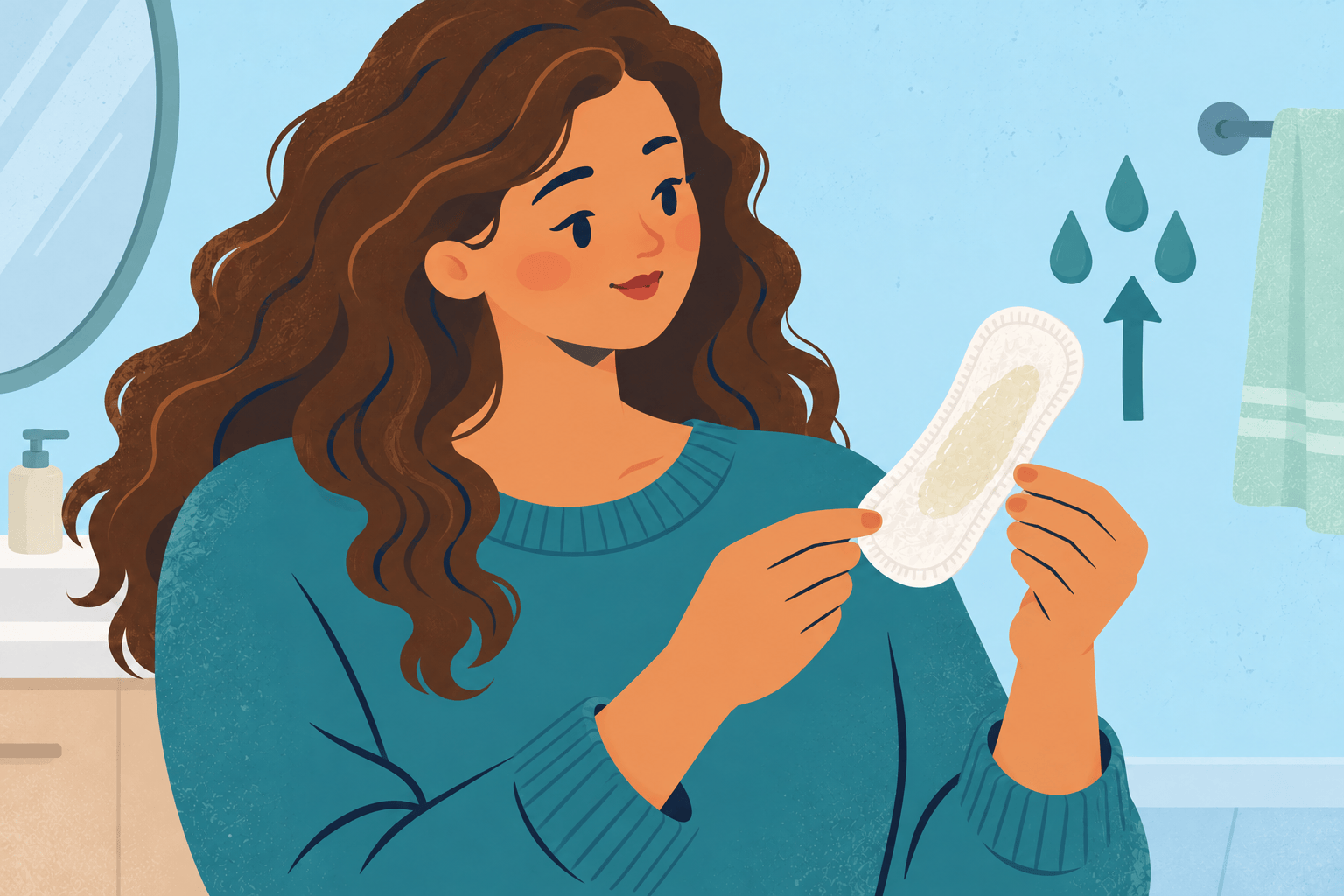
Discharge is something you may notice on underwear, when wiping, or while tracking your cycle. It helps keep the vagina moist and protected. Changes can be useful observations, but every texture does not need to become a fertility prediction or an infection diagnosis.
Understand the ordinary range
Normal discharge may be clear or white, sticky or slippery. Around ovulation, fluid can become clearer and wetter. There is no single appearance that everyone should have throughout the month, and a photograph cannot define your personal normal.
Discharge may also be more noticeable with pregnancy, sexual activity, or contraception. Its appearance alone cannot confirm pregnancy. The clear stretchy discharge guide explains what observations can and cannot tell you about fertility.
Observe symptoms as well as appearance
If you want to keep notes, record when a change began and whether you also have itching, soreness, pain, a new unpleasant odor, or bleeding. A brief description is enough; you do not need to repeatedly inspect the area or measure fluid.
If you use discharge observations for contraception, seek instruction in a recognized fertility awareness method. A single mucus observation or app prediction is not equivalent to following its rules. Ask a trained professional whether the method suits your circumstances.
Avoid diagnosing yourself from a pattern
Several causes of vaginal symptoms overlap. A clinician may need your history, an examination, and specific tests to distinguish them. Normal looking discharge does not rule out every infection, and an unfamiliar color does not identify a medicine.
Our vaginal swab guide explains why tests answer particular questions. If symptoms continue after treatment or a negative result, ask what further assessment is appropriate.
Keep care gentle
The vagina clears fluid naturally. Wash the external area gently with warm water and avoid douching or scented intimate products. Even mild soap may irritate sensitive skin, so avoid products that sting or worsen dryness.
You do not need a product to remove normal discharge or make it match an online image.
Know when to seek help
Arrange advice for an unfamiliar ongoing change, especially with itching, discomfort, unusual bleeding, or pain when urinating. New pelvic pain with discharge warrants prompt assessment, and pregnancy possibility should be mentioned immediately.
Severe or worsening pain, faintness, heavy bleeding, or feeling very unwell needs emergency care. Do not wait to complete a cycle record before getting help for those symptoms.
References

Lifeing Editorial
Stories for a little more understanding, a little more reassurance, and the everyday moments in between.
Related posts

Is Labor Starting? Contractions, Waters Breaking, and When to Call