
Dressing a newborn: Checking Warmth Without Overheating
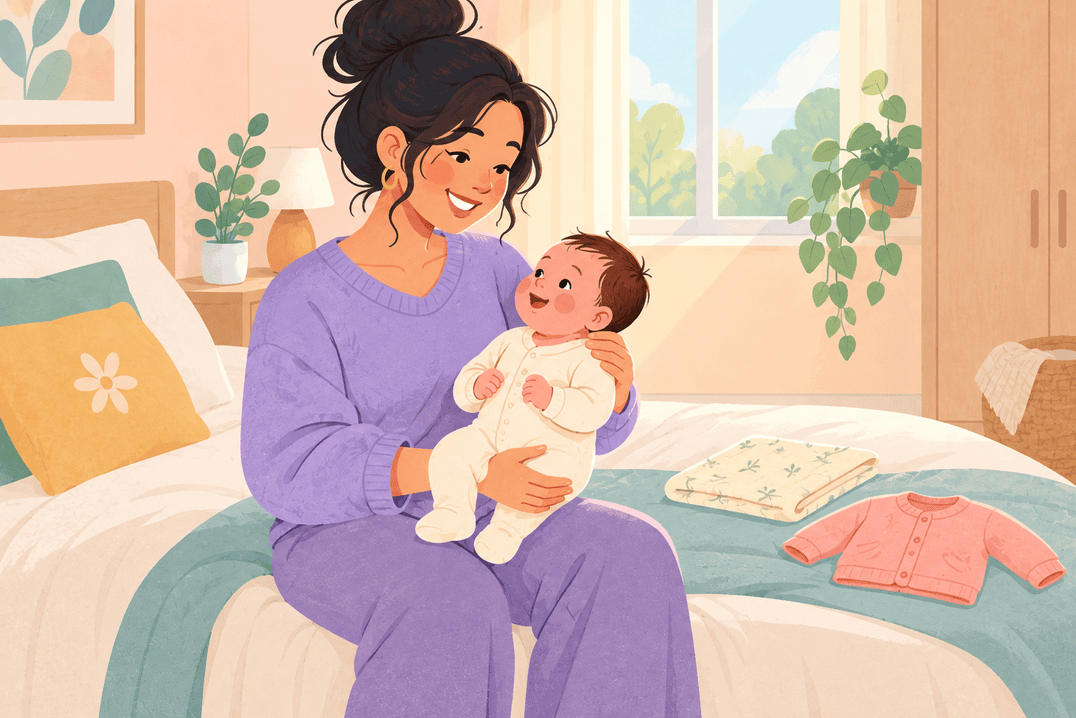
Dressing a newborn is about keeping them comfortable while making feeding, changing and holding manageable. You do not need an exact outfit for every hour of the day. Use clothing that fits, check your baby and adjust when the surroundings change.
Start with clothes that are easy to manage
Soft, simple clothes with accessible fastenings make diaper changes less fiddly. Several light layers are easier to adjust than one heavy outfit. Check that fingers and toes are not caught in loose threads and that clothing is not restricting movement.
Lay out what you need before undressing your baby. Support the head and neck and move their limbs gently through openings rather than pulling on hands or feet. If you are finding the handling awkward, ask for a demonstration and review comfortable newborn holds.
Check the chest or back of the neck
Cool hands or feet do not necessarily mean the whole baby is cold. Feel the chest or the back of the neck to judge comfort. Hot or sweaty skin suggests that one or more layers should be removed.
A room thermometer can help you understand the setting. UK safer sleep guidance recommends a room temperature of about 16 to 20°C as a guide. Your baby’s comfort still needs checking, and different fabrics and layers hold heat differently. No clothing chart can guarantee that every baby will be comfortable in the same outfit.
Reconsider layers at sleep time
Remove outdoor hats and heavy outdoor clothing when you come inside. Babies do not need hats indoors for routine sleep at home. Follow any different instructions given for a specific medical situation.
Choose sleepwear that fits properly and follow the manufacturer’s sizing and temperature information. Keep your baby’s head uncovered and avoid duvets, quilts or extra loose bedding. The safer sleep guide explains how clothing fits into the wider sleeping setup.
Do not explain illness away as an outfit problem
Feeling your baby’s skin helps with comfort, but it does not measure a fever. If you think your baby is unwell, use a digital thermometer according to the instructions and seek advice. A temperature of 38°C or above in a newborn needs immediate medical assessment through an emergency service. Do not simply remove a layer and wait for a routine appointment.
If your baby is difficult to wake, has trouble breathing or looks blue or grey, seek emergency help. Changing clothes should never delay assessment of a sick newborn.
References
- NHS: Clothes and equipment for your baby (opens in a new tab)
- The Lullaby Trust: Room temperature and checking your baby (opens in a new tab)
- NHS: Taking your baby’s temperature (opens in a new tab)
- The Lullaby Trust: Safer sleep overview (opens in a new tab)
- NHS: Urgent medical help for babies and children (opens in a new tab)

Lifeing Editorial
Stories for a little more understanding, a little more reassurance, and the everyday moments in between.
Related posts
Driving after a cesarean: Discussing Recovery and Practical Requirements