
Fifteen month old toddler: Following Skills and Sharing Concerns Early

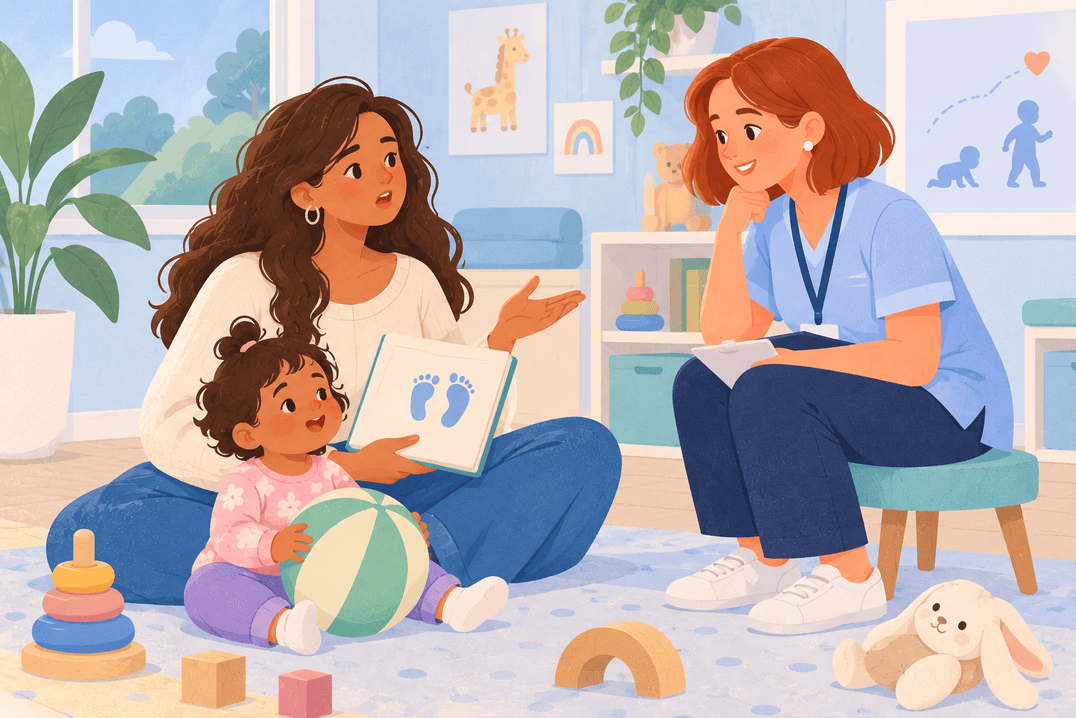
Fifteen months is a useful checkpoint for discussing how your toddler moves, communicates and participates in daily life. It is not an examination to practise for. The goal is to notice strengths, describe difficulties and make sure concerns lead to a clear next step.
Look across several areas
The developmental checklist at this age includes trying one or two words beyond names such as mama or dada, pointing to ask for something or request help, and following a direction given with words and a gesture. A word attempt does not need adult pronunciation to be worth mentioning.
Other observations include taking a few independent steps, feeding with the fingers, using familiar objects in an appropriate way and making a stack of at least two blocks. Showing an interesting object, copying another child’s play and expressing affection also contribute to the picture.
These observations describe what most children do by fifteen months. They are not a validated screening test and do not diagnose a condition. Consider what you see in familiar situations rather than one unusually tired or quiet moment.
Raise missing skills without waiting for eighteen months
If your child is not attempting words beyond parent names, not taking independent steps or missing another listed skill, speak with your clinician. Assessment can consider the whole developmental history and any effect of prematurity or medical conditions.
Our guides to late talking and walking concerns explain useful observations to bring. Seeking advice does not assume a diagnosis. It creates an opportunity to check hearing, development or movement and identify support where needed.
Keep home activities responsive
When your toddler gestures towards a familiar item, name it and respond. During a book or song, leave pauses so they can join in through a sound, action or word. There is no need to demand a spoken answer before meeting a need.
For play, offer intact age suitable blocks or a simple container activity and stay involved. Show an action once, then let your child explore. Keep small unsafe objects out of reach; a milestone about stacking or handling objects is not a reason to provide choking hazards.
Include eating in the discussion
Offer varied meals and suitable snacks, adapting texture and shape to your child’s skills. Continue supervising eating while they are seated upright. Increasing independence does not make walking with food safe.
Mention persistent difficulties with meals, a very restricted range of manageable textures or concern about growth. A feeding problem can affect daily participation and deserves its own attention rather than being treated as a side issue in a developmental review.
Leave with a follow up plan
Ask what assessment is recommended, how a referral will happen and whom to contact if you do not hear back. Record the agreed next step so another caregiver can help follow it through. If you remain concerned after reassurance, return with specific examples.
Loss of an established skill needs prompt medical assessment at any age. Do not wait for a routine appointment or assume that a new ability explains away the loss. Support at home can continue while assessment is arranged, but it should not become a reason to delay it.
References
- CDC: Developmental milestones at fifteen months (opens in a new tab)
- CDC: Getting help with developmental concerns (opens in a new tab)
- NHS: Helping your baby learn to talk (opens in a new tab)
- NHS Best Start in Life: Feeding after twelve months (opens in a new tab)
- CDC: Choking hazards and safer food preparation (opens in a new tab)
- American Academy of Pediatrics: The power of play (opens in a new tab)
- Communication Health Support Association: Feeding and swallowing disorders in children (opens in a new tab)
- American Academy of Pediatrics: Corrected age for premature babies (opens in a new tab)

Lifeing Editorial
Stories for a little more understanding, a little more reassurance, and the everyday moments in between.
Related posts

Finger foods: Preparing Shapes and Textures for Safer Eating