
Flooding at night: Planning for Heavy Menstrual Bleeding
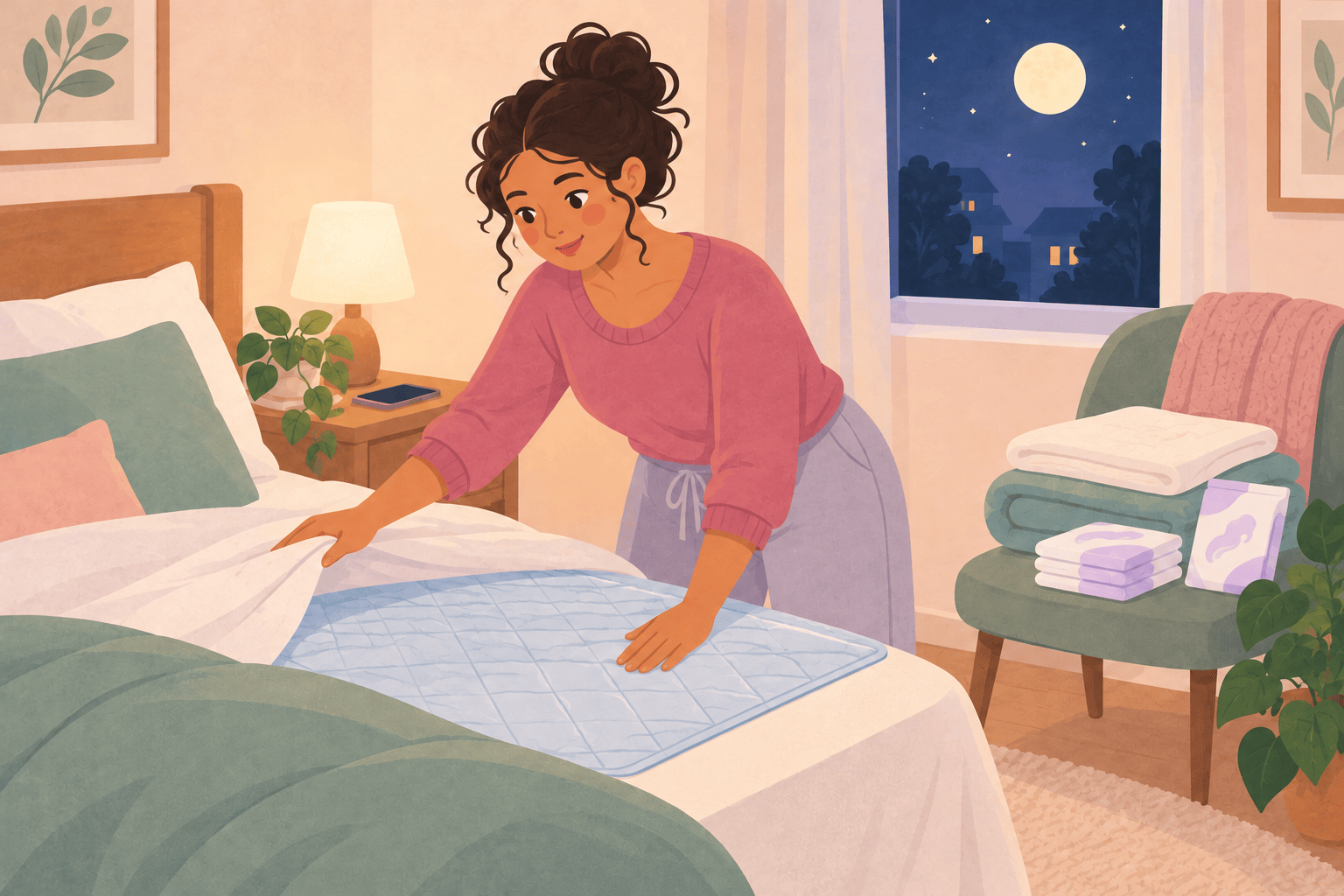
Waking to soaked bedding or needing repeated product changes can make a heavy period exhausting. Planning for the night may make things more manageable, but persistent flooding deserves medical attention. It should not become a problem you are expected to solve only with towels and alarms.
Record what wakes you
Note whether a product was full, whether it moved, and how many times you needed to change it. Include pain, clots, and whether flooding also happens during the day. Those details help distinguish an occasional leak from a sustained heavy flow.
In the morning, a short entry is enough: “Woke twice with full pads and had to change bedding.” You can use the bleeding diary guide without measuring blood or keeping a detailed overnight log.
Keep practical support simple
Set out clean underwear, spare products, and a washable bedding layer if that helps you feel prepared. Keep a clear route to the bathroom and a phone nearby if you are feeling unwell. These are comfort measures, not treatments for blood loss.
Follow the instructions for the product you use, including maximum wear time. Do not extend that time simply because a product is advertised for heavy flow. If managing the bleeding means repeatedly losing sleep, include that impact when asking for treatment.
Notice symptoms beyond the leak
Ongoing tiredness or breathlessness can accompany anemia. The article on heavy periods and anemia explains what an assessment may involve. A clinician should also consider why the bleeding is heavy.
Repeatedly soaking products within an hour or two needs prompt advice. Heavy bleeding with fainting, marked dizziness, chest pain, or significant trouble breathing needs emergency care. Do not wait for morning when these symptoms occur.
Make a plan for the next cycle
At an appointment, explain what would make the biggest difference: fewer overnight changes, less flooding, or better control of pain. Ask what improvement to expect from treatment and when to return if the night pattern continues. Sleep disruption is part of the burden of heavy periods, not a minor detail.
References

Lifeing Editorial
Stories for a little more understanding, a little more reassurance, and the everyday moments in between.
Related posts


Folate versus folic acid: Understanding the Terms Before Choosing a Supplement