
Heavy bleeding emergencies: What to Tell the Care Team

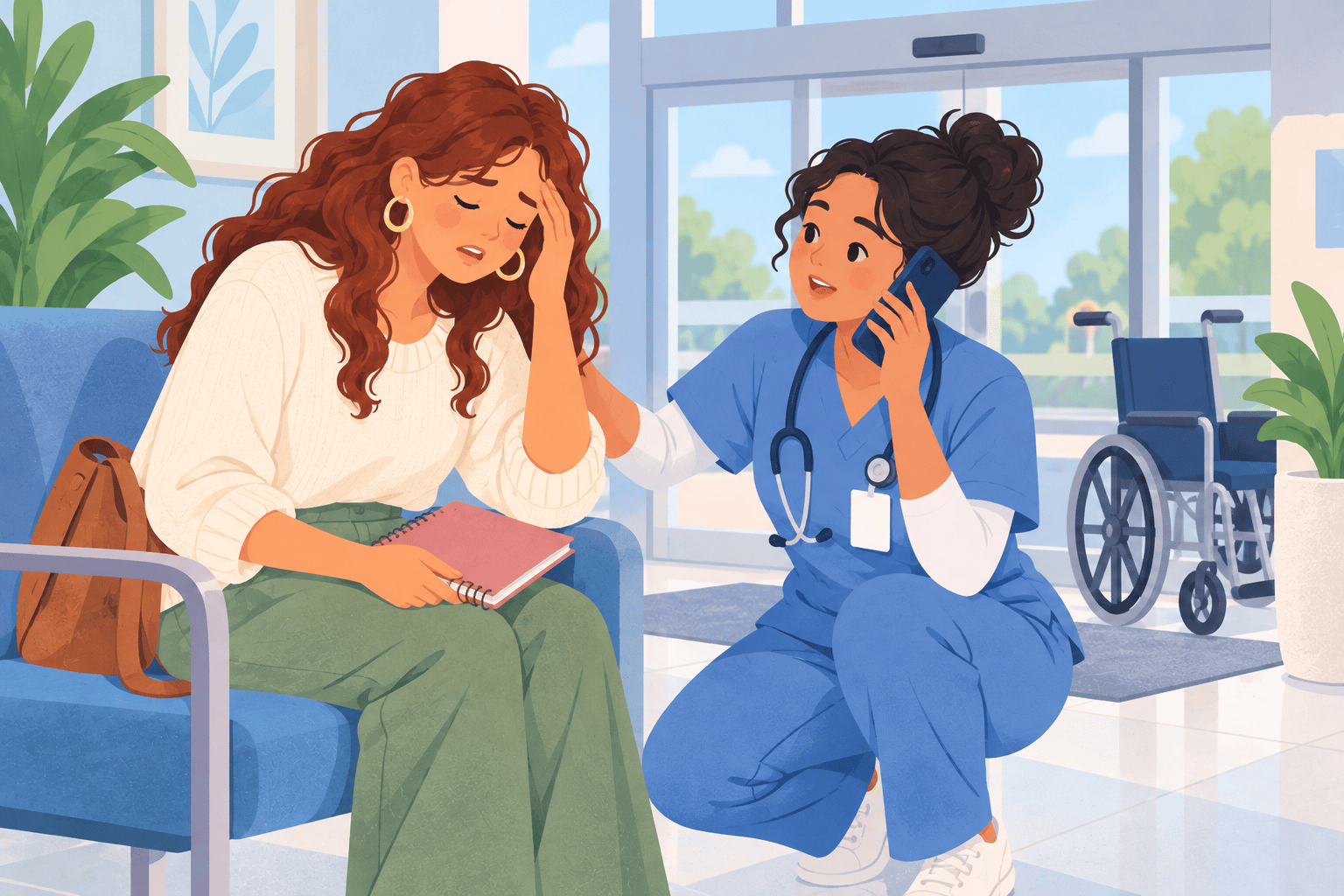
If vaginal bleeding is heavy and you feel faint, severely dizzy, have chest pain, or struggle to breathe, seek emergency help now. Do not wait to finish reading or to count another hour of product changes. Call your local emergency number when you are severely unwell or cannot travel safely.
Lead with the immediate problem
Begin with a direct description: “I am bleeding heavily and feel like I may faint.” Give your location and follow the emergency team’s instructions. If someone is with you, ask them to help with the call and stay nearby.
Sit or lie somewhere safe if you feel faint. Do not drive yourself. Searching for a period diary, medicine package, or photograph should not delay getting help.
Share the information you know
The care team may ask when bleeding began, how quickly products are soaking, whether there are clots, and whether the amount is increasing. Describe pain and any fainting, breathing difficulty, or chest symptoms.
Say if pregnancy is possible, if you recently gave birth, or if you have gone through menopause. Also mention anticoagulants, other medicines, allergies, and known bleeding disorders. It is fine to say you do not know an exact date or amount.
Do not assume it is an ordinary period
Severe bleeding can need treatment before its cause is fully established. Pregnancy related bleeding and other causes require different assessment. Severe abdominal pain with fainting or marked dizziness is also an emergency when pregnancy is possible, even without a positive home test.
The heavy periods with dizziness guide discusses why a previous normal blood test does not rule out a current problem. Do not take extra medicine beyond your prescribed instructions while trying to manage an emergency at home.
Ask about the plan after urgent treatment
Once you are stable, ask what is known about the cause, which results are still pending, and when follow up will happen. You may need treatment for anemia and a plan to prevent further heavy bleeding.
For that later conversation, heavy period treatment choices can help you compare options. Emergency care addresses the immediate episode; ongoing care should also address why it happened.
References

Lifeing Editorial
Stories for a little more understanding, a little more reassurance, and the everyday moments in between.
Related posts

Heavy period treatment choices: How Your Preferences Shape the Plan