
Heavy periods with dizziness: When to Seek Urgent Help
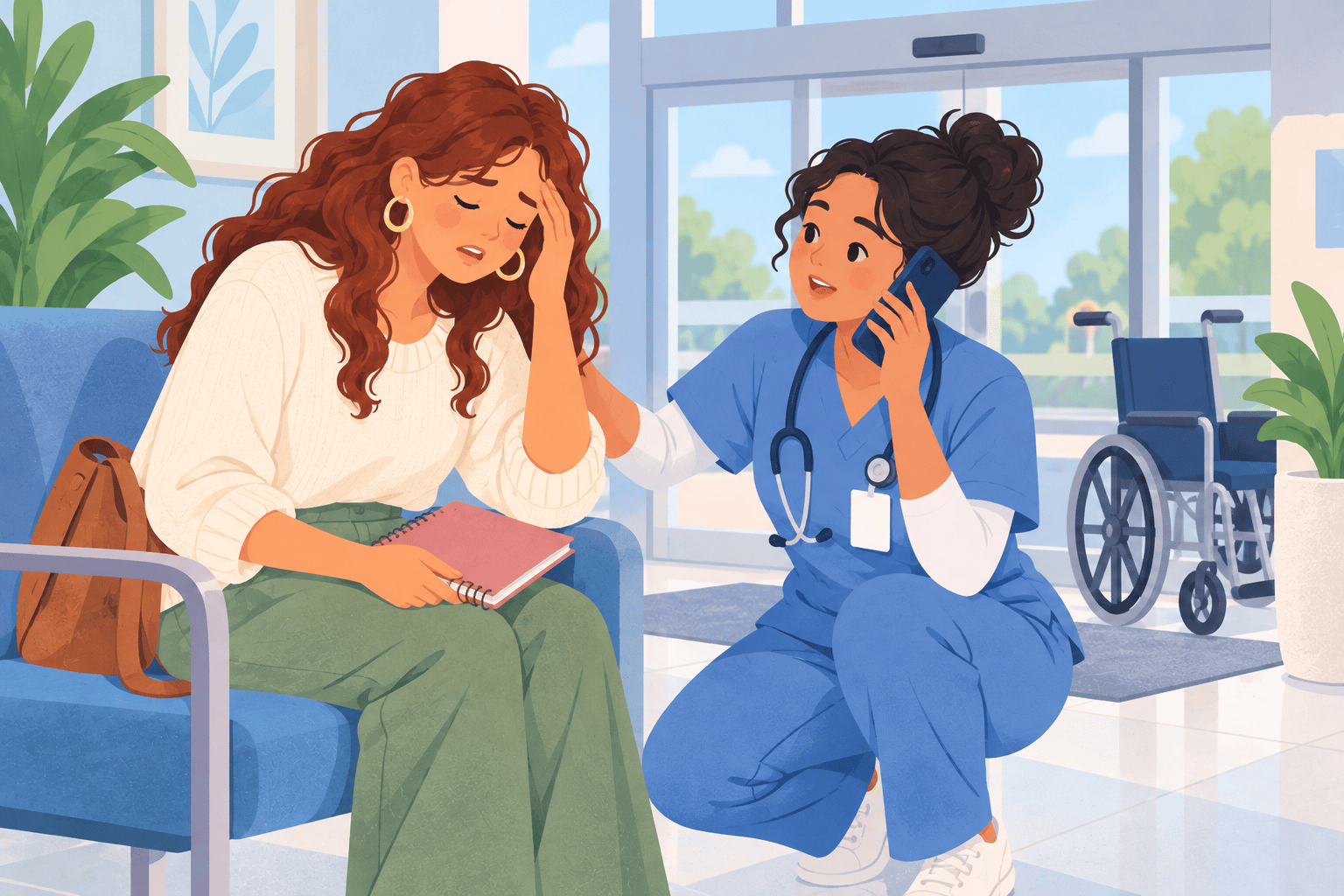
Heavy bleeding with dizziness should not be brushed off as an ordinary part of a period. Dizziness has several possible causes, but alongside substantial blood loss it can signal a need for urgent assessment. How you feel matters as much as a count of pads or tampons.
Recognize an emergency
Seek emergency care for heavy bleeding with fainting, severe or worsening dizziness, chest pain, or significant shortness of breath. This is especially concerning when you are repeatedly soaking products every hour. You do not need to wait for a precise amount of blood loss before getting help.
If you feel close to fainting, sit or lie somewhere safe and ask another person for help. Do not drive yourself. Call your local emergency number if symptoms are severe or you cannot safely get to care.
Explain what is happening now
Start with the symptoms and current flow: “I am bleeding heavily and feel faint when I stand.” Give the approximate start time, product changes, pain, and whether pregnancy is possible. Mention anticoagulants or other medicines and any known bleeding disorder.
The guide to heavy bleeding emergencies suggests a short handover. Do not delay calling while searching for old records or completing a diary.
Do not assume it is only low iron
Anemia from repeated blood loss can cause tiredness, weakness, and breathlessness. Acute blood loss and other medical problems can also cause symptoms. A clinician needs to assess your current condition rather than relying on a previous blood result.
Taking an iron tablet or drinking water is not a substitute for emergency assessment when you are bleeding heavily and feel severely unwell. The article on heavy periods and anemia covers the longer term investigation once urgent concerns have been addressed.
Follow up even if the episode settles
If dizziness was mild and has resolved but heavy periods keep returning, arrange medical advice. Explain the episode and ask whether blood tests and treatment are needed. Before leaving care, check what symptoms should prompt another urgent call and what the plan is for the next period.
References

Lifeing Editorial
Stories for a little more understanding, a little more reassurance, and the everyday moments in between.
Related posts


Hemorrhoids in pregnancy: Comfort Measures and When to Seek Advice