
Hemorrhoids in pregnancy: Comfort Measures and When to Seek Advice
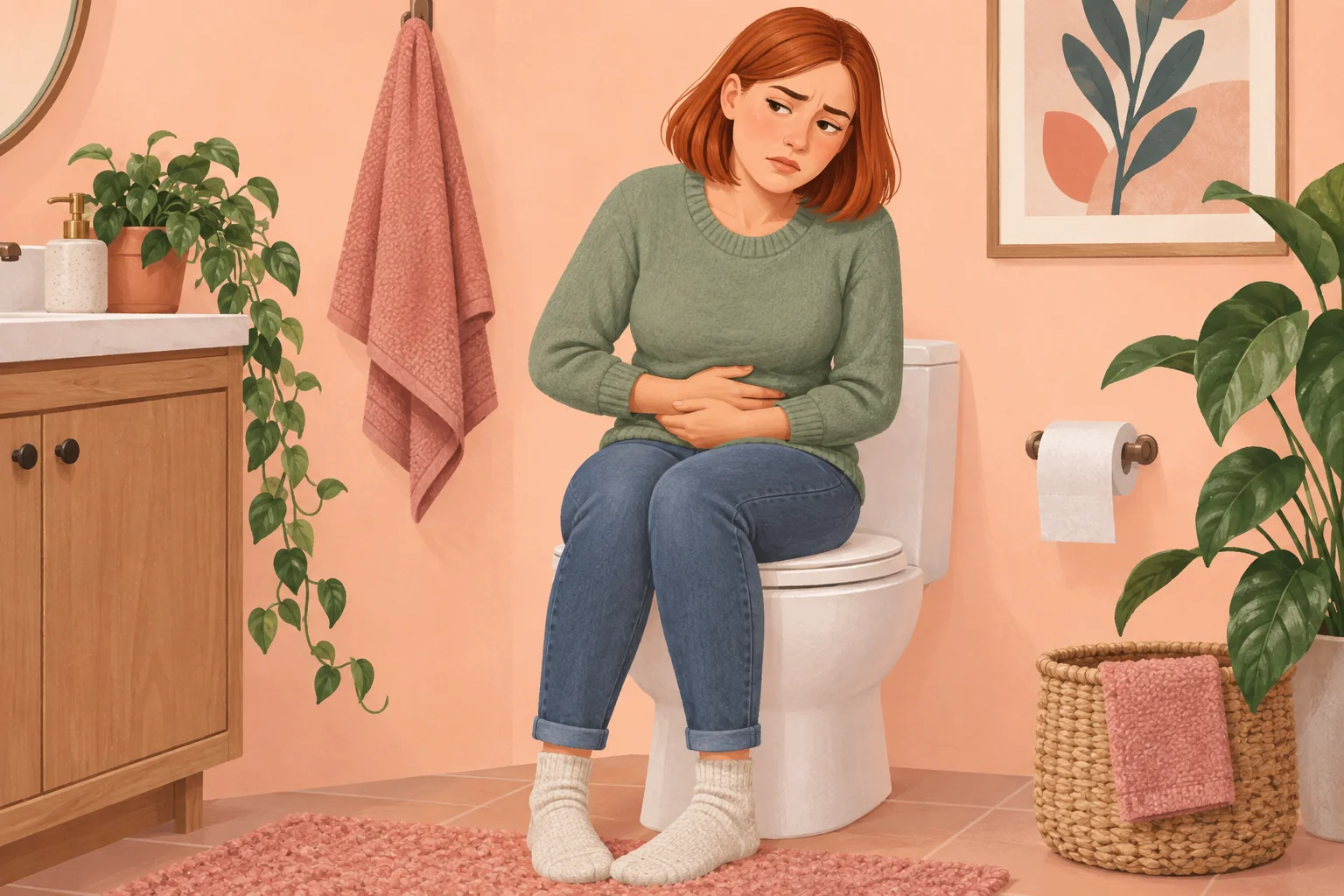
Hemorrhoids, also called piles, are swollen blood vessels around or inside the anus. During pregnancy they can cause itching, soreness, a lump, or bright red blood after a bowel movement. These symptoms are worth discussing, particularly when bleeding is new or the source is unclear.
Reduce pressure when using the toilet
Constipation and straining can make piles more uncomfortable. Fluids, fibre containing foods, and suitable movement can help keep stools easier to pass. The guide to constipation during pregnancy explains how to review your routine and medicines.
Try to respond when you need to open your bowels and avoid forcing a bowel movement. If going to the toilet is consistently painful, ask for treatment rather than repeatedly straining through it.
Choose gentle comfort measures
A cool, damp cloth held against the area may ease discomfort. Clean gently after using the toilet and pat rather than rub. Avoid adding fragranced products if they irritate the skin.
Sitting or standing for long periods may feel uncomfortable. Change position when you can and tell your care team if your work makes breaks difficult. Practical adjustments should fit the day you actually have.
Check creams and other treatments
Ask a pharmacist, midwife, or doctor which product is suitable in pregnancy and how long to use it. Explain whether the main problem is pain, itching, bleeding, or constipation. Treating the bowel difficulty may be part of the plan as well as treating local discomfort.
Do not assume a previously prescribed cream is appropriate for every new episode.
Be clear about bleeding
Tell your clinician whether blood appears on toilet paper, in the stool, or from the vagina. If you are unsure, say so. Bleeding during pregnancy needs its own advice and should not be dismissed as piles.
Go to an emergency department or call your local emergency number for bleeding that will not stop, a lot of blood or large clots, or severe pain. Bleeding with faintness also needs emergency help. Fever, pus, or feeling generally unwell needs urgent medical advice. Ongoing or recurring bleeding deserves review even when the amount seems small.
References

Lifeing Editorial
Stories for a little more understanding, a little more reassurance, and the everyday moments in between.
Related posts

Herbal fertility products: Why Natural Does Not Guarantee Safety