
Heavy periods in teenagers: When to Arrange a Medical Visit
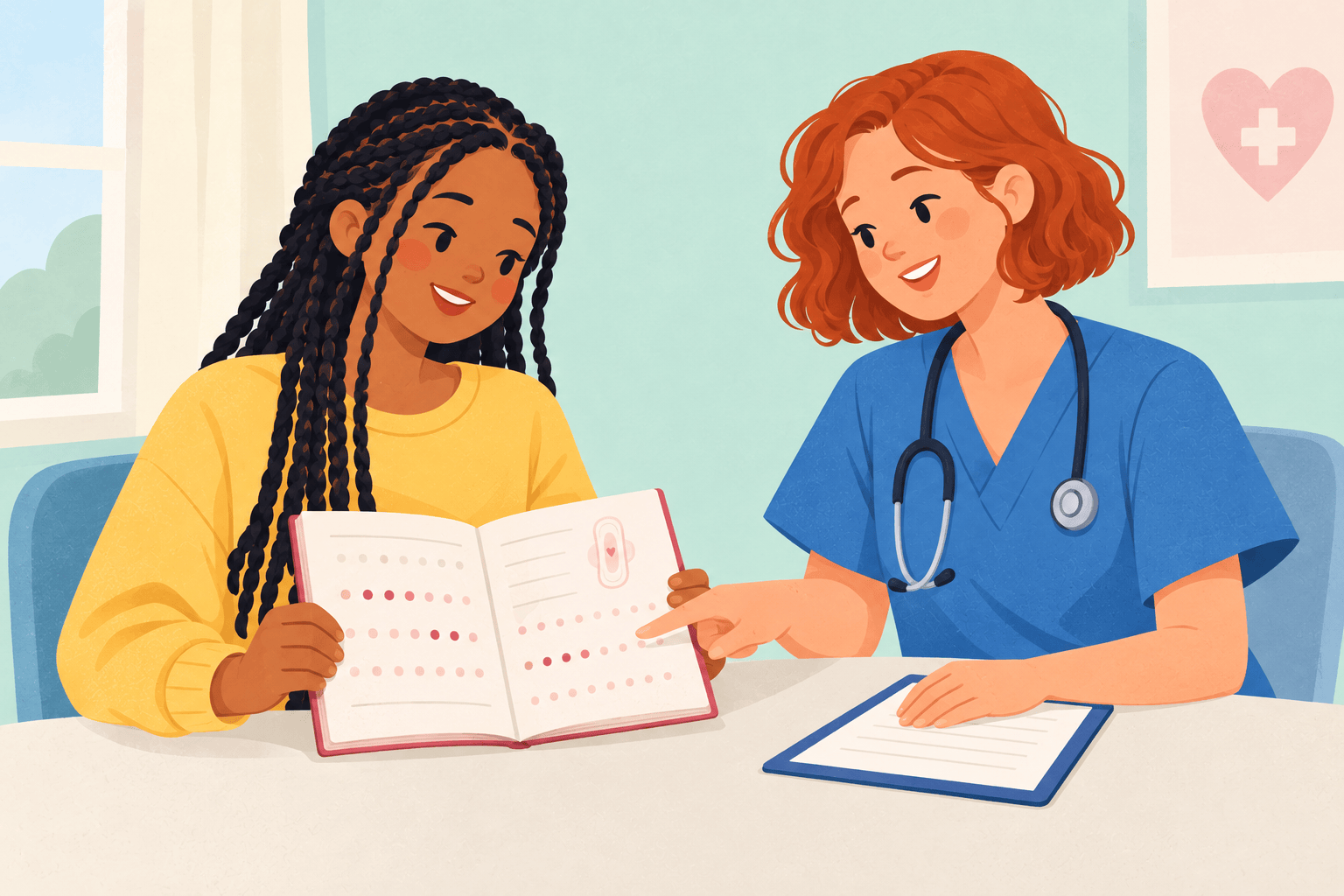
Heavy periods in a teenager deserve attention even when cycles have only recently started. Early hormonal patterns can contribute, but repeated flooding, prolonged bleeding, or symptoms that interrupt school should not simply be dismissed as something to grow out of.
Describe what the bleeding changes
Tell a clinician if bleeding lasts more than a week, repeatedly soaks through a pad or tampon within an hour or two, requires nighttime changes, or leaks onto clothes or bedding. Mention missed lessons, sports, and sleep as well as the products used.
Our bleeding diary guide can help keep the record brief. There is no need to calculate an exact amount of blood before asking for care.
Recognize when help is urgent
Very heavy bleeding with fainting, marked dizziness, chest pain, or difficulty breathing needs emergency assessment. If bleeding is continuing heavily and the teenager feels weak or unwell, seek urgent medical advice rather than waiting for a routine appointment.
Tiredness or reduced exercise tolerance over time can also matter. Blood loss may contribute to anemia, so explain changes in energy even if the teenager has learned to manage the leaks.
Include bleeding outside periods
Mention easy bruising, frequent nosebleeds, prolonged bleeding after dental work, or a family history of a bleeding disorder. Heavy bleeding from the first periods can sometimes be an early sign of a problem with blood clotting.
Irregular ovulation is another possible explanation, and other hormone or health conditions may need consideration. The history helps the clinician choose tests; it should not be used to diagnose the cause at home. Our blood tests guide explains common questions about testing.
Ask about treatment and follow up
Assessment may include a blood count, iron studies, and further tests based on the history. A clinician may also ask privately about pregnancy possibility and sexual health when relevant.
Treatment can include medicines that reduce bleeding, hormonal options, and iron treatment if needed. These choices depend on the cause and the teenager’s health. A hormonal medicine used for bleeding control does not mean the clinician assumes the young person is sexually active.
Leave with a plan for how soon bleeding should improve, when to review the response, and what symptoms require earlier help. Better protection can make the day easier, but it is not a substitute for treating troublesome bleeding.
References

Lifeing Editorial
Stories for a little more understanding, a little more reassurance, and the everyday moments in between.
Related posts


Heavy periods with dizziness: When to Seek Urgent Help