
Late period after illness: What to Track While You Recover
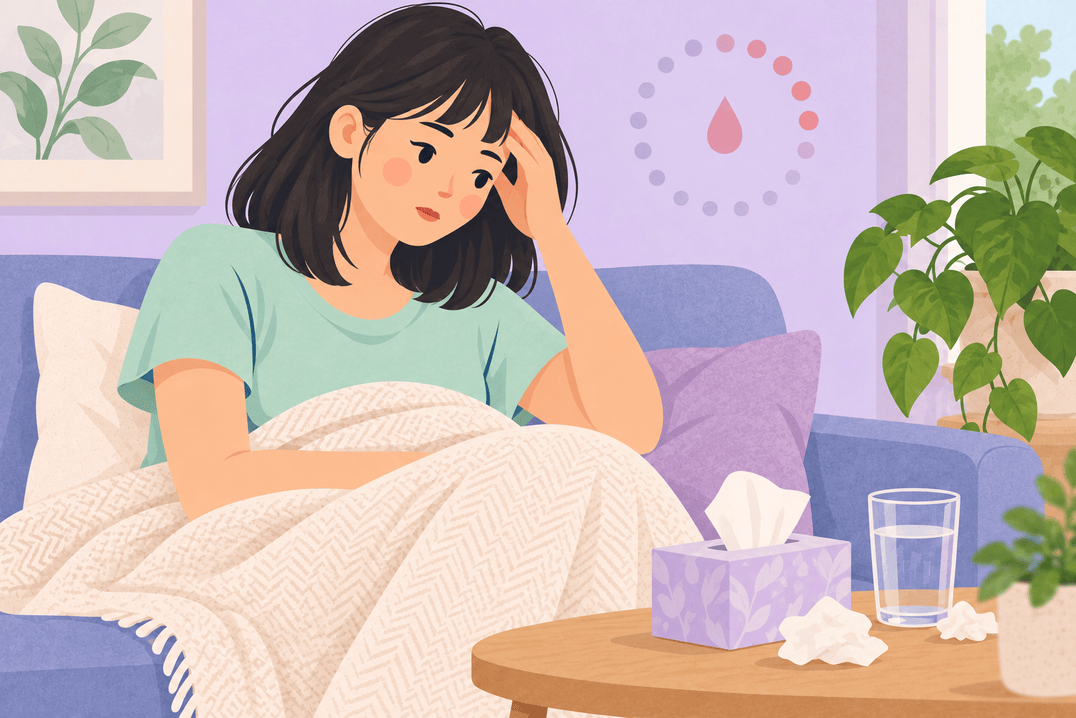
A period that is late after an illness can be easy to attribute to recovery. Illness and the changes around it may be relevant, but the timing alone does not establish the cause. Keep the recent illness in your history while considering the usual next steps for a delayed period.
Record the illness as context
Write down when you became unwell, how long symptoms lasted, and whether eating, weight, sleep, or activity changed substantially. Include new medicines and any treatment you received.
There is no reliable rule that a particular infection delays a period by a fixed number of days. Avoid adjusting a tracker by an invented interval just to make its prediction look correct.
Keep pregnancy testing on the plan
If pregnancy is possible, test at the appropriate time rather than waiting indefinitely for recovery to explain the delay. Follow the product instructions and record the date and result.
If your expected period date is uncertain, the guide to pregnancy test timing explains how to plan testing from the relevant dates. An early negative result can need repeating.
Describe ongoing symptoms separately
Tell the clinician if fatigue, appetite problems, pain, or other symptoms persist after the illness. Do not assume they all belong to the same explanation as the delayed period.
You can prepare a short timeline: “Illness began on this date, eating was difficult for this long, this medicine was started, and my last period began here.” This gives the appointment a clearer starting point than trying to diagnose a hormonal change yourself.
Set a review point
Speak to a healthcare professional if a second pregnancy test is negative and your period has not arrived, or if the pattern continues to change. Missing three periods in succession is a reason for assessment, and concerning symptoms should be discussed sooner.
The article on suddenly stopped periods can help you prepare. Recovery and investigation can happen together; you do not need to choose between taking your recent illness seriously and checking another possible cause.
References

Lifeing Editorial
Stories for a little more understanding, a little more reassurance, and the everyday moments in between.
Related posts

Late period after travel: How Routine Changes May Play a Role