
Leg cramps at night: Finding More Comfortable Ways to Rest
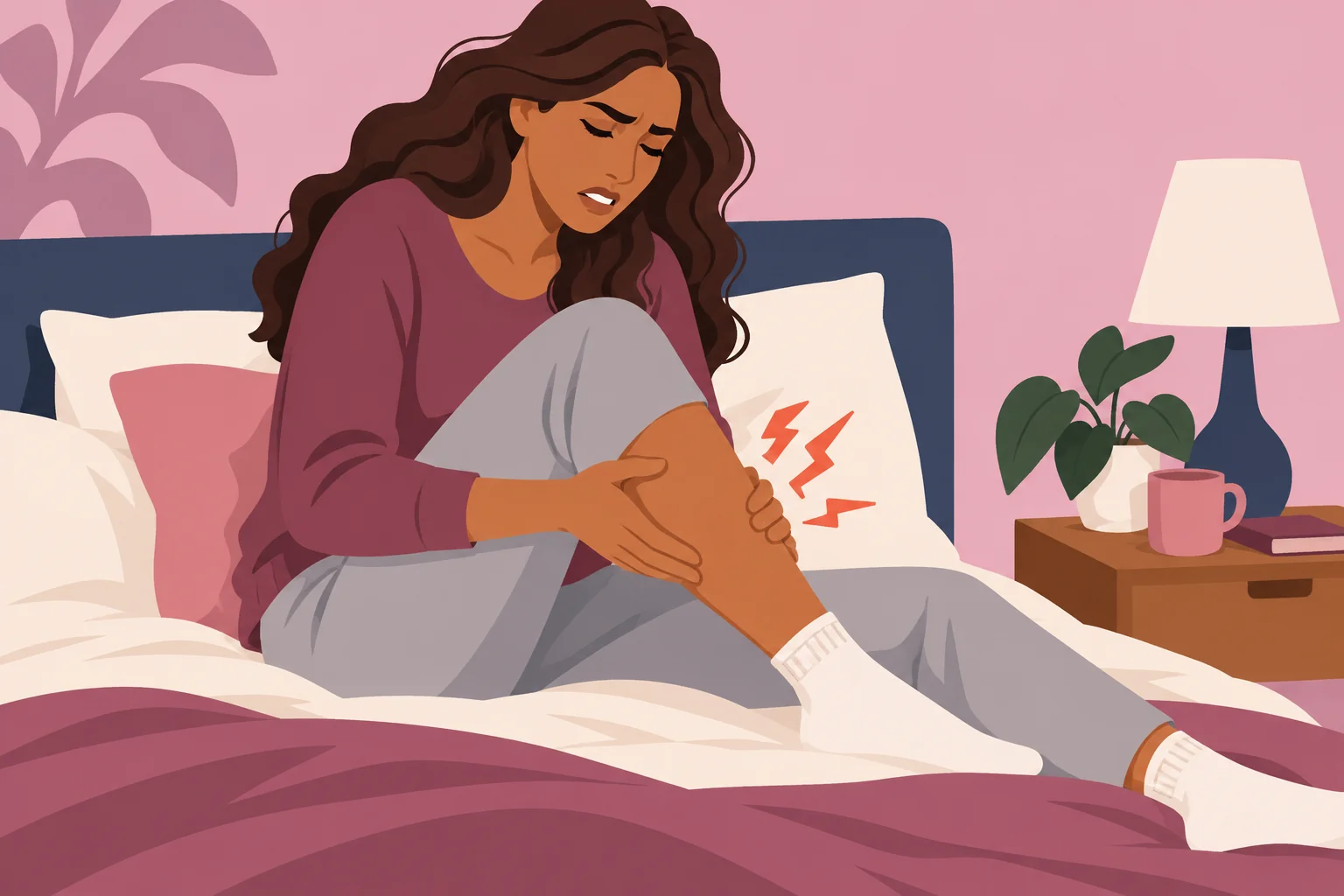
A sudden calf or foot cramp can wake you sharply during pregnancy. Night cramps are common, but not every painful leg is a muscle cramp. The distinction matters when pain continues or comes with swelling or changes in skin color.
Ease a brief cramp gently
Moving your toes toward your ankle may help a cramped calf relax. Gentle ankle and leg movement during the day may also be useful. Choose movements you can do comfortably and avoid forcing a stretch through unusual pain.
If getting out of bed, take your time and use stable support. A dark room and a painful leg are a poor combination for rushing.
Notice what remains after the episode
Tell your care team if cramps happen frequently, disturb sleep, or leave ongoing pain. Note whether both legs are affected at different times or the problem is consistently in one leg. Mention medicines, reduced mobility, and any recent illness.
If another pregnancy pain makes movement difficult, the guide to pelvic girdle pain may help you explain the wider picture.
Check persistent pain or swelling promptly
Persistent pain or tenderness, swelling, warmth, or red, blue, or darkened skin in one leg needs immediate medical advice about possible deep vein thrombosis. You do not need to have every symptom. Skin changes may be less easy to see on darker skin. Seek advice even if you first thought it was a cramp.
Leg pain or swelling with shortness of breath or chest pain is an emergency. Call your local emergency number and do not drive yourself.
Check before adding supplements
A cramp does not prove that you need magnesium or another supplement. Ask your clinician before starting a product, especially if you already take pregnancy vitamins or medicines.
Use your midwife question list to ask about frequent cramps and a suitable activity plan. Keep urgent symptoms separate from questions you can save for a routine visit.
References

Lifeing Editorial
Stories for a little more understanding, a little more reassurance, and the everyday moments in between.
Related posts

Libido changes around ovulation: A Clue With Important Limits