
Light periods: When a Smaller Flow Is Worth Investigating
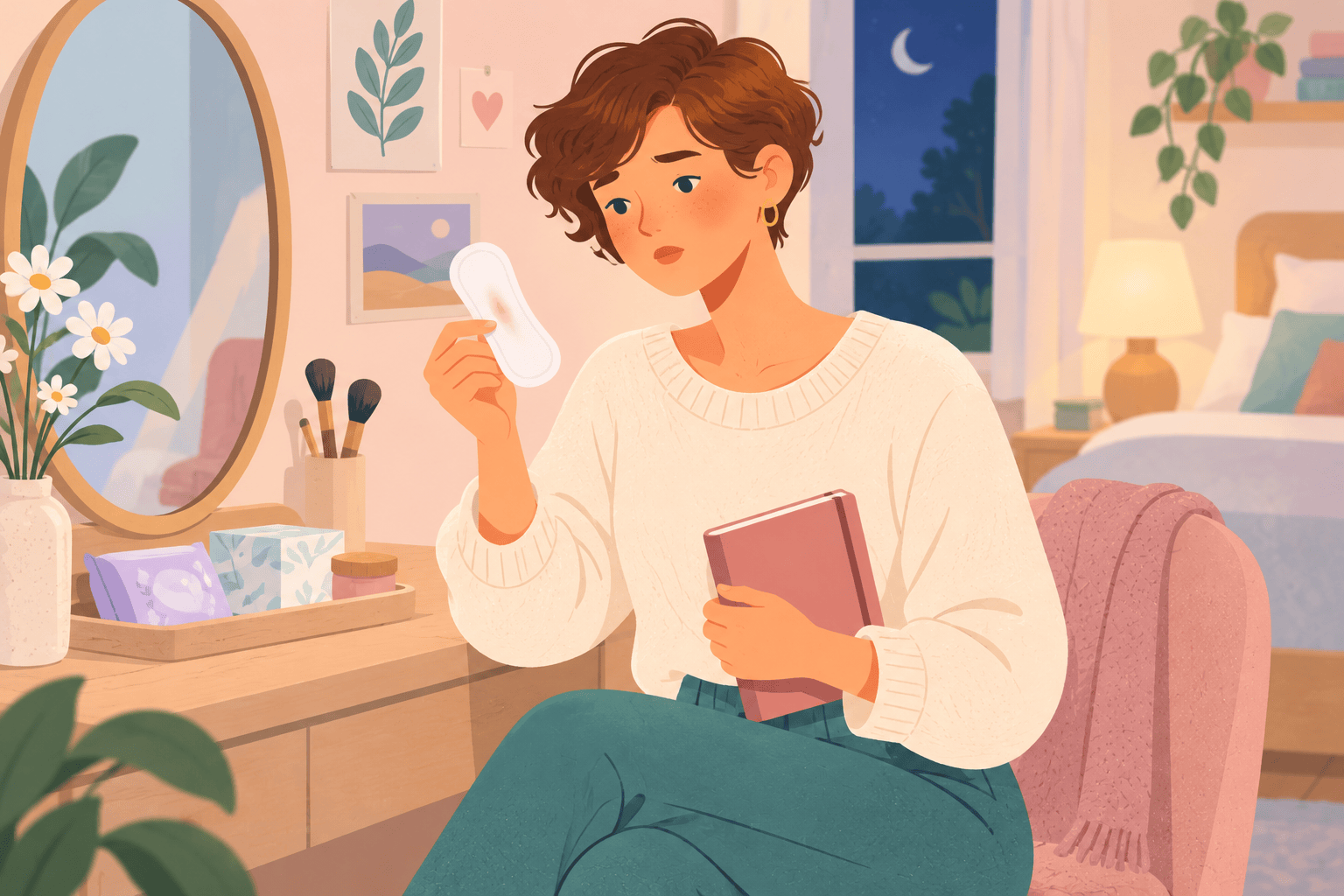
A lighter period is a description, not a measure of how healthy or fertile you are. Some people usually have a small flow. For someone else, a clear reduction may be part of a broader change worth discussing. The starting point is what is different for you.
Make the comparison specific
Record how many days you bled and roughly how the amount compared with your usual period. Note whether you recently changed menstrual products, since their capacity can affect your impression of flow.
“Two days of spotting instead of my usual four days of flow” is more informative than “too light.” The one day period guide looks more closely at a sudden reduction in duration.
Consider contraception and other context
Some hormonal contraceptive methods reduce menstrual bleeding or stop it. A smaller flow in that setting does not have the same meaning as an unexplained change without hormonal contraception.
Other possible influences include changes in ovulation, thyroid function, energy intake, or exercise. These possibilities need your history and sometimes an examination or tests; the amount of blood alone cannot distinguish them.
Test if pregnancy is possible
Unusually light bleeding does not reliably rule out pregnancy. Use a properly timed test rather than deciding from colour, clots, or how the bleed felt. Follow the instructions and repeat an early negative result when appropriate.
If the period does not return, the guide to three missed periods explains why ongoing absence needs attention. You can seek care sooner when other symptoms concern you.
Know when to raise the change
Arrange medical advice if the reduction persists, cycles become widely spaced, or there are other changes such as unexplained weight loss. Bleeding between periods or after sex should also be checked, even when the amount is small.
Bring your contraceptive and medicine details and explain whether you are trying to conceive. That helps the clinician choose an investigation and care plan suited to your circumstances rather than a treatment intended only to make the flow look heavier.
References

Lifeing Editorial
Stories for a little more understanding, a little more reassurance, and the everyday moments in between.
Related posts

Living with PCOS: Planning Long Term Health Checks