
Menstrual cups: Questions About Fit, Cleaning, and Removal
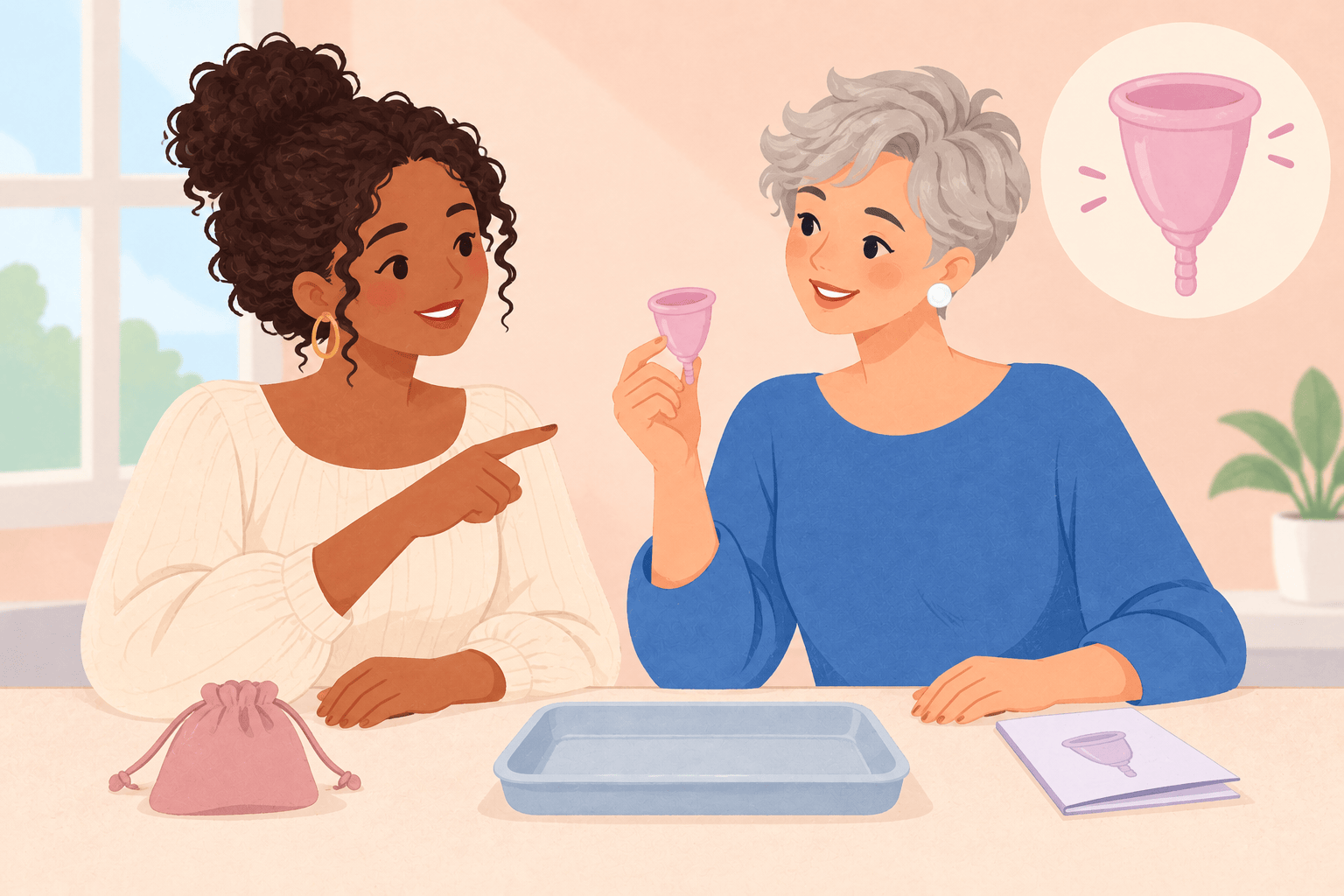
A menstrual cup collects period fluid inside the vagina. Cups vary in shape, material, and size, so read the instructions for the one you own rather than assuming that every design works the same way.
Check fit without forcing it
Insertion and removal may take practice. Choose a time when you have privacy and do not feel rushed. Follow the folding and positioning instructions, and stop if using the cup causes pain or significant discomfort.
A larger cup is not automatically more comfortable or more suitable. If you repeatedly have pain, pressure, or leakage despite following the instructions, ask the manufacturer about fit and a clinician about persistent symptoms. Our product comparison includes options that do not require insertion.
Empty and clean it on its own schedule
Wash your hands before and after handling the cup. Empty it before it fills and never exceed its stated wear time. Some cups permit longer intervals than others, so do not borrow a timing rule from another brand.
Follow the instructions for cleaning between uses and for sanitizing between periods. Check the recommended water temperature, cleaning product, and any boiling time. Avoid assuming that a quick rinse replaces the full care routine. Plan how you will manage this before a day with limited access to clean water.
Release the seal before removal
For a cup that seals against the vaginal walls, gently pinch the base as directed to release the seal before drawing it out. Do not pull forcefully on the stem. Menstrual discs have a different position and removal technique, so cup instructions should not be applied to them automatically.
If a cup cannot be removed easily, seek medical help rather than inserting a tool or repeatedly pulling through pain.
Ask about a coil before combining products
If you use a copper or hormonal coil, discuss cup use with your clinician. Evidence suggests that cup use may increase the chance of the coil coming out. Avoid catching or pulling its threads during removal, and follow the advice given for your device.
If the threads change or you think the coil has moved, use alternative contraception and contact the service promptly. Recent sex may require emergency contraception advice.
Respond to illness promptly
Stop using a cup that causes a rash, swelling, itching, or pain and seek advice. Rarely, toxic shock syndrome can occur with cup use. Sudden fever, vomiting, diarrhea, dizziness, or a rash needs urgent assessment; confusion, collapse, or breathing difficulty needs emergency care. Remove the cup if possible without delaying help. See the toxic shock syndrome guide for further symptoms.
References

Lifeing Editorial
Stories for a little more understanding, a little more reassurance, and the everyday moments in between.
Related posts

Menstrual health appointments: Questions Worth Taking With You