
Nausea with period cramps: What Can Help You Cope
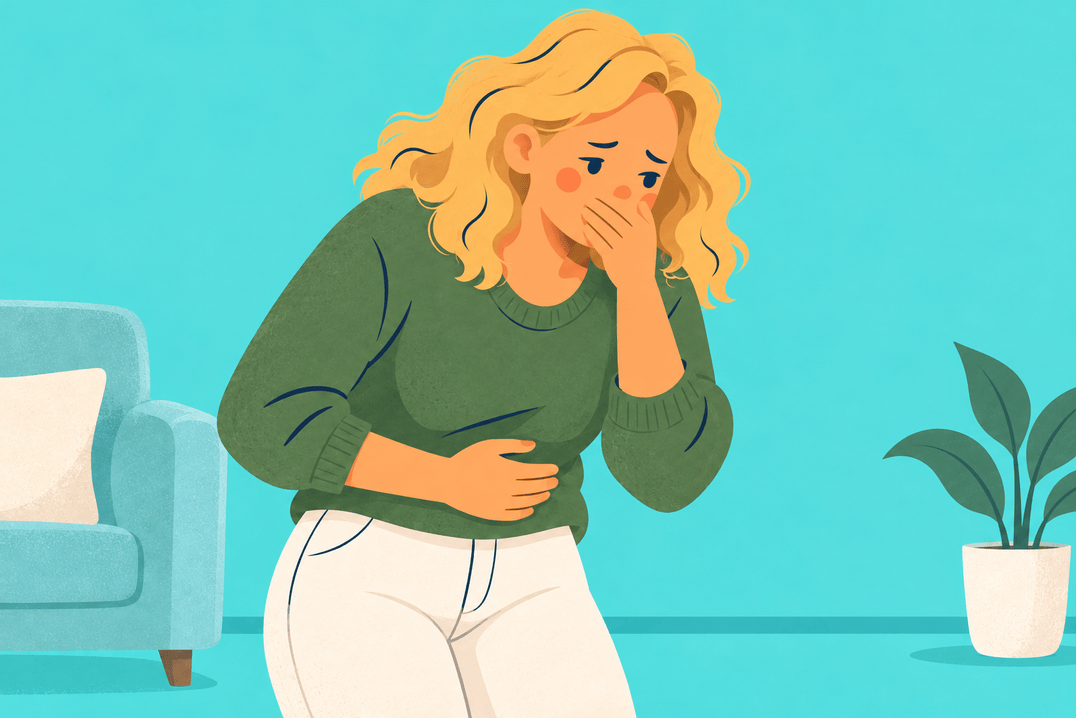
Nausea can accompany menstrual cramps. It can also come from another cause, including a medicine or illness. The useful distinction is between a familiar mild pattern you can manage and symptoms that are new, persistent, or stopping you from drinking and functioning.
Make eating and drinking easier
Try small, frequent meals instead of forcing a large meal. Take regular small sips of a drink and avoid cooking smells that make you feel worse. Fresh air or a quieter place may help you get through a wave of nausea.
These are comfort measures, not a treatment for every cause of vomiting. If eating repeatedly becomes difficult around your period, tell a clinician rather than accepting it as something you must organize your life around.
Review the medicine as well as the cramps
Some pain medicines, including ibuprofen, can cause nausea or stomach discomfort. Write down what you took, the dose on the label, and when nausea began. Ask a pharmacist whether the medicine remains suitable and how it should be taken.
Do not add extra doses to compensate for vomiting without advice. The guide to painkillers for period pain explains why timing, active ingredients, and health history matter.
Watch for difficulty replacing fluids
Repeated vomiting can lead to dehydration. Seek urgent advice if you are passing much less urine, have dark urine, feel persistently dizzy on standing, or cannot keep fluids down. A pharmacist can advise about an appropriate oral rehydration product when fluid loss is a concern.
Severe abdominal or pelvic pain, fainting, confusion, or difficulty breathing needs emergency care. If pregnancy is possible and there is pelvic pain, seek urgent assessment rather than assuming the symptoms are ordinary cramps.
Bring the recurring pattern to an appointment
Record whether nausea appears before the pain, after a medicine, or throughout the period. Mention diarrhea, headaches, fever, and any symptoms between periods. A repeated pattern is useful evidence but does not establish its cause.
The period cramp overview covers when pain deserves assessment. Ask about a plan that addresses both pain and nausea, with a clear next step if the first approach does not help.
References

Lifeing Editorial
Stories for a little more understanding, a little more reassurance, and the everyday moments in between.
Related posts

Newly Pregnant: The First Practical Steps to Take