
Period Cramps Taking Over Your Day? Relief Options and Warning Signs
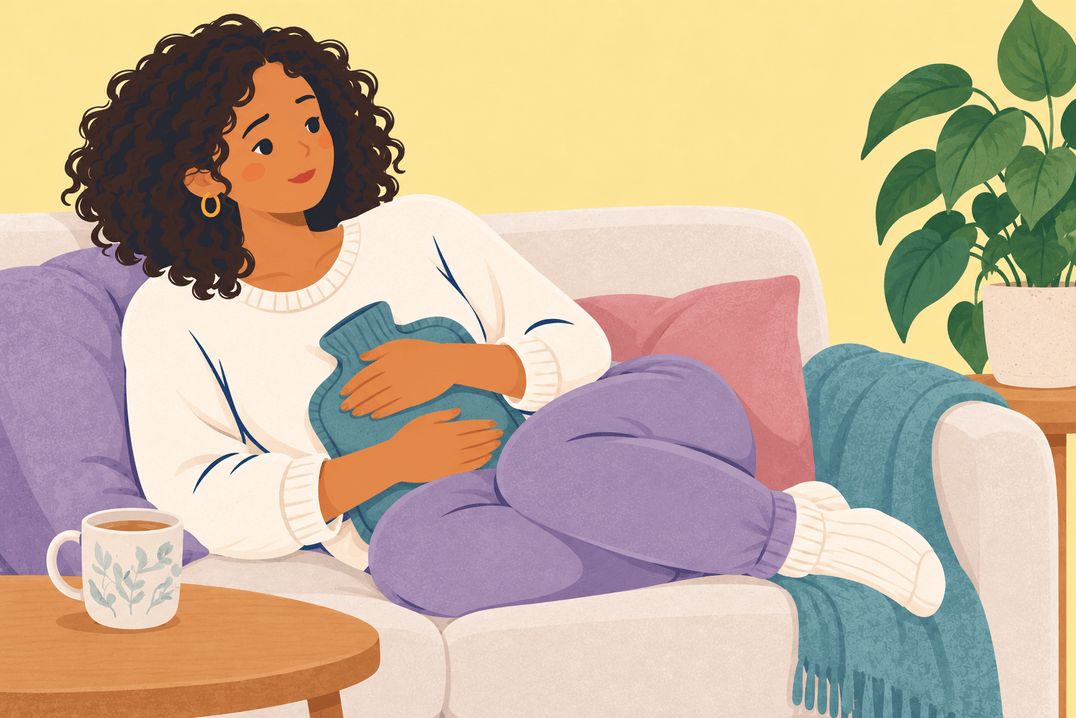
Period cramps can interrupt work, sleep, exercise, and plans with friends. You do not need to describe your pain as unbearable before asking for support. How much it changes your day matters.
Start with comfort
A warm bath, gentle movement, or a heat pad can help some people. Wrap a hot water bottle in a towel and follow the product’s safety instructions. Massage around your abdomen or back may also feel soothing. The heat safety guide explains how to protect your skin.
Choose the option that is practical today. A short walk is enough if a full workout feels unrealistic. If heat does not help, that does not mean you have used it incorrectly or failed at self care.
Ask about medicines that suit you
Pain relief such as paracetamol or ibuprofen may help. Read the label and ask a pharmacist if you are unsure, particularly if pregnancy is possible or you take other medicines. A clinician can discuss additional options when everyday measures are insufficient.
Tell the pharmacist what you have already taken, including combination products. Keep the packaging or write down the name so the discussion is specific. Our painkiller guide covers timing, suitability, and avoiding duplicate ingredients.
Notice the pattern
Record when pain begins, where you feel it, and what you have tried. Include the effect on your life: missing a shift, waking at night, or being unable to concentrate. These details can make a consultation more useful than a pain score alone.
You might ask: “What should I try first, how will we know it is working, and when should I come back?”
When pain disrupts everyday life
Severe menstrual pain deserves assessment even if you have managed to work around it for years. Describe what it stops you doing, how long that disruption lasts, and whether the pattern is changing. Missing activities is a reason to seek care, not a measure of how well you tolerate pain.
If initial treatment is ineffective or difficult to tolerate, ask about further investigation or referral. A normal examination or ultrasound does not rule out endometriosis. The period pain treatment plan guide helps you set practical goals and agree on a review point.
When cramps need assessment
Seek urgent advice for severe or unusually worsening pelvic pain that is not relieved by painkillers. Book an appointment if periods increasingly interfere with daily activities, or you also have pain during sex, urination, or bowel movements. Conditions such as endometriosis or fibroids can cause painful periods. Sudden severe or worsening pelvic pain, faintness, shoulder pain, or heavy bleeding needs emergency care. Pelvic pain with possible pregnancy needs urgent advice, even without bleeding.
If bleeding is also difficult to manage, read heavy periods and blood clots.
References

Lifeing Editorial
Stories for a little more understanding, a little more reassurance, and the everyday moments in between.
Related posts


Preeclampsia: Why Pregnancy Checks Matter and Which Symptoms Need Help