
Heating pads for cramps: Using Warmth Safely
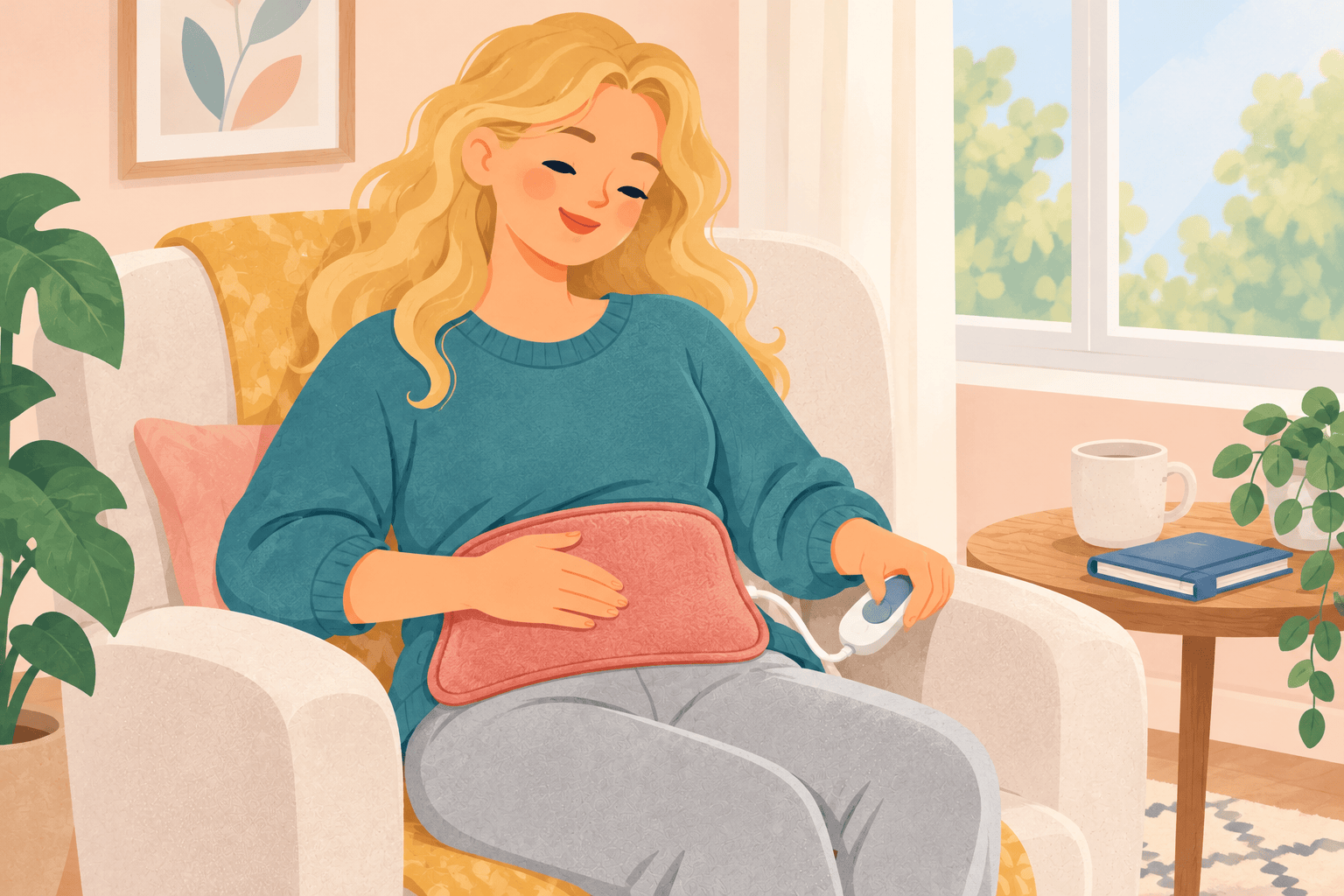
Warmth can make period cramps easier to manage, but a heating pad should feel comfortable rather than intensely hot. The aim is relief without damaging your skin. Different products have different instructions, so treat those instructions as part of using the product safely.
Choose a manageable source of warmth
A warm shower or bath may suit you better than a pad. If you use a hot water bottle, check its condition, avoid boiling water, and wrap it in a towel. Commercial heat packs and electric pads need their own heating, placement, and time instructions.
You do not need the strongest setting for the treatment to count. Start gently and check your skin. The period cramp overview describes other comfort options if warmth is not helpful.
Protect your skin throughout
Use the protective layers specified for the product and avoid putting your full body weight on a heat pack. Do not fall asleep while using heat treatment. Remove the source if it stings, feels too hot, or makes pain worse.
Avoid applying heat over broken or infected skin. If you cannot reliably feel temperature in the area, get professional advice before using it. Persistent redness, blistering, or a suspected burn needs medical advice rather than another application.
Notice whether it helps you function
Try recording a simple outcome, such as being able to sit comfortably or rest for a while. Heat may help symptoms without removing the reason for the cramps. Needing repeated heat throughout the day is information to share at an appointment, especially if pain prevents normal activities.
A period pain treatment plan can include comfort measures alongside medicines or assessment when appropriate. You do not need to keep increasing the temperature because the first attempt did not work.
Know when warmth is not enough
Seek urgent medical advice for severe or unusually worsening period pain that is not relieved by your usual measures. Arrange a review for pain that repeatedly disrupts daily life or comes with pain during sex, urination, or bowel movements. Do not let temporary comfort delay an assessment of a changing pattern.
References

Lifeing Editorial
Stories for a little more understanding, a little more reassurance, and the everyday moments in between.
Related posts

Heavy bleeding emergencies: What to Tell the Care Team